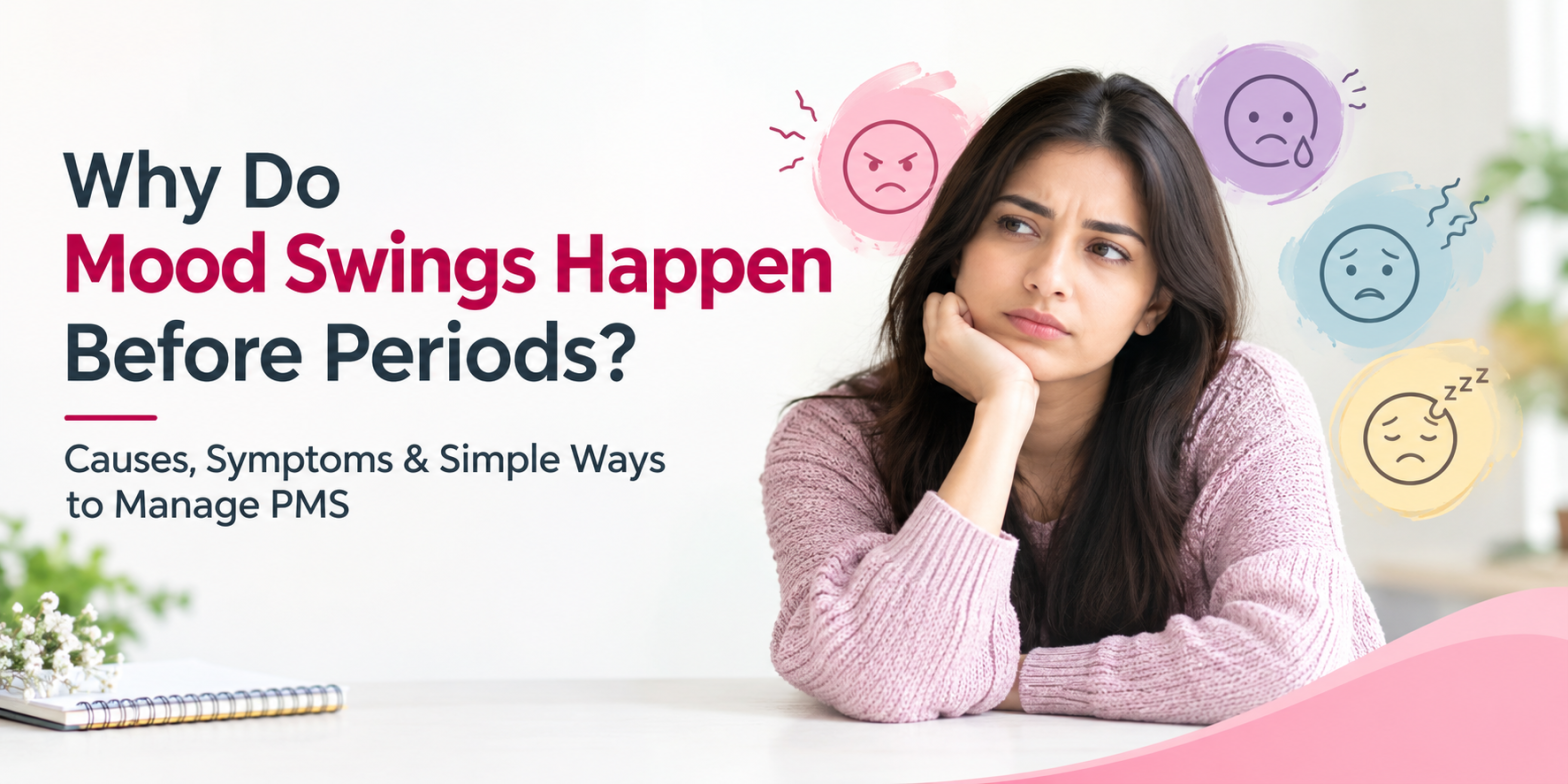
Why Do Mood Swings Happen Before Periods? Causes, Symptoms & Simple Ways to Manage PMS
By Dr. Anju Suryapani in Obstetrics & Gynaecology
Sep 10, 2026
Why Do Mood Swings Happen Before Periods? Causes, Symptoms & Simple Ways to Manage PMS
Have you ever found yourself tearing up over a minor delay, feeling unprovoked anger, or experiencing sudden anxiety a week or two before your period? If you frequently search questions like “periods se pehle gussa kyu aata hai” or “period se pehle depression feel hona”, know that you are not alone.
Most women experience noticeable emotional and physical changes during the second half of their menstrual cycle. These monthly shifts are not “all in your head” or a sign of overreacting. They are real biological responses driven by natural hormonal fluctuations, collectively known as Premenstrual Syndrome (PMS).
Understanding why period mood swings happen, identifying common symptoms, and adopting simple daily management strategies can help you regain control over your mind and body.
Also Read: Best Hospital for Acne During Periods in Delhi
What Is PMS (Premenstrual Syndrome)?
Premenstrual Syndrome (PMS) refers to a cluster of physical, emotional, and behavioral symptoms that occur during the luteal phase of the menstrual cycle—typically 7 to 14 days before your period starts.
For most women, premenstrual symptoms peak 3 to 5 days before bleeding begins and subside naturally within 1 to 2 days after menstruation starts.
Why Do Mood Swings Happen Before Periods? (Causes of PMS)
Understanding why premenstrual mood swings happen comes down to how changing reproductive hormones interact with your brain’s chemical messengers.
1. Estrogen and Progesterone Fluctuations
In the first half of your cycle, estrogen rises, boosting your energy and focus. After ovulation, estrogen drops while progesterone increases and then rapidly plummets right before your period. This sharp drop triggers rapid mood swings, irritability, and sudden fatigue.
2. Serotonin Drop (The “Happy Chemical”)
Estrogen directly supports the production of serotonin, a brain chemical that regulates mood, sleep, and happiness. When estrogen drops, serotonin levels plummet too. This drop leads to premenstrual sadness, crying spells, sugar cravings, and sleep disruptions.
3. Blood Sugar Instability
Hormonal changes increase insulin sensitivity shifts during the luteal phase, leading to rapid blood sugar crashes. This often mimics or worsens anxiety, sudden anger, and brain fog.
Also Read: Navigating Menopause: Expert Advice and Support from Metro Hospital
Common PMS Symptoms: Physical & Emotional
Women search for various signs to confirm if their discomfort is cycle-related. Common PMS symptoms include:
- Emotional Symptoms: Unprovoked anger, sudden sadness or crying, anxiety, irritability (chidchidapan), restlessness, and difficulty concentrating.
- Physical Symptoms: Abdominal bloating (pet me sujan/gass), breast tenderness, headaches, lower back pain, acne breakouts, and severe fatigue (thakan).
- Behavioral Symptoms: Food cravings (especially for sweets, chocolate, and salty snacks), insomnia or oversleeping, and social withdrawal.
PMS vs. PMDD: When Is It More Than Just Mood Swings?
If your premenstrual emotional shifts feel extreme, you might be dealing with Premenstrual Dysphoric Disorder (PMDD).
While PMS is manageable, PMDD is a severe medical condition affecting 3% to 8% of women. Symptoms include severe depression, intense panic attacks, feelings of hopelessness, and extreme conflict with loved ones. If premenstrual mood changes severely impact your daily life, consulting a gynecologist is crucial.
How to Manage PMS Mood Swings: Simple Lifestyle & Diet Tips
If you are looking for “period me chidchidapan kaise dur kare” or “pms ko kaise thik kare”, incorporating these evidence-based habits can offer significant relief:
1. Optimize Your Diet for Hormonal Balance
- Eat Complex Carbs: Whole grains (oats, brown rice, dahlia), sweet potatoes, and pulses keep blood sugar stable and boost serotonin naturally.
- Limit Refined Sugar & Processed Foods: Steering clear of sugary drinks and bakery treats helps prevent rapid blood sugar spikes and crashes that often trigger irritability and anxiety.
- Cut Back on Caffeine & Alcohol: Coffee and alcohol increase premenstrual anxiety, worsen sleep, and exacerbate breast pain.
- Focus on Magnesium & Vitamin B6: Leafy greens, nuts, seeds, and bananas help reduce bloating, anxiety, and fluid retention.
2. Stay Active with Light Exercise
Light physical activity releases endorphins—your body’s natural mood boosters. Gentle walking, yoga, stretching, and pilates lower cortisol (stress hormone) levels without overfatiguing your body.
3. Prioritize Quality Sleep
Lack of sleep severely worsens premenstrual emotional reactivity. Aim for 7 to 9 hours of restorative sleep by maintaining a consistent bedtime routine.
4. Practice Stress Management
Chronic stress disrupts progesterone and estrogen balance further. Deep breathing exercises, meditation, or journaling for 10 minutes daily can calm an overactive nervous system.
5. Track Your Cycle
Using a period tracking app helps you anticipate premenstrual days, allowing you to schedule lighter workloads and practice extra self-care when symptoms peak. Why Do Mood Swings Happen Before Periods? Causes, Symptoms & Simple Ways to Manage PMS
Have you ever found yourself tearing up over a minor delay, feeling unprovoked anger, or experiencing sudden anxiety a week or two before your period? If you frequently search questions like “periods se pehle gussa kyu aata hai” or “period se pehle depression feel hona”, know that you are not alone.
Most women experience noticeable emotional and physical changes during the second half of their menstrual cycle. These monthly shifts are not “all in your head” or a sign of overreacting. They are real biological responses driven by natural hormonal fluctuations, collectively known as Premenstrual Syndrome (PMS).
Understanding why period mood swings happen, identifying common symptoms, and adopting simple daily management strategies can help you regain control over your mind and body.
What Is PMS (Premenstrual Syndrome)?
Premenstrual Syndrome (PMS) refers to a cluster of physical, emotional, and behavioral symptoms that occur during the luteal phase of the menstrual cycle—typically 7 to 14 days before your period starts.
For most women, premenstrual symptoms peak 3 to 5 days before bleeding begins and subside naturally within 1 to 2 days after menstruation starts.
Why Do Mood Swings Happen Before Periods? (Causes of PMS)
Premenstrual mood swings happen when natural hormone changes alter the brain’s mood-regulating chemicals.
1. Estrogen and Progesterone Fluctuations
In the first half of your cycle, estrogen rises, boosting your energy and focus. After ovulation, estrogen drops while progesterone increases and then rapidly plummets right before your period. This sharp drop triggers rapid mood swings, irritability, and sudden fatigue.
2. Serotonin Drop (The “Happy Chemical”)
Estrogen directly supports the production of serotonin, a brain chemical that regulates mood, sleep, and happiness. When estrogen drops, serotonin levels plummet too. This drop leads to premenstrual sadness, crying spells, sugar cravings, and sleep disruptions.
3. Blood Sugar Instability
Hormonal changes increase insulin sensitivity shifts during the luteal phase, leading to rapid blood sugar crashes. This often mimics or worsens anxiety, sudden anger, and brain fog.
Common PMS Symptoms: Physical & Emotional
Women search for various signs to confirm if their discomfort is cycle-related. Common PMS symptoms include:
- Emotional Symptoms: Unprovoked anger, sudden sadness or crying, anxiety, irritability (chidchidapan), restlessness, and difficulty concentrating.
- Physical Symptoms: Abdominal bloating (pet me sujan/gass), breast tenderness, headaches, lower back pain, acne breakouts, and severe fatigue (thakan).
- Behavioral Symptoms: Food cravings (especially for sweets, chocolate, and salty snacks), insomnia or oversleeping, and social withdrawal.
PMS vs. PMDD: When Is It More Than Just Mood Swings?
If your premenstrual emotional shifts feel extreme, you might be dealing with Premenstrual Dysphoric Disorder (PMDD).
While PMS is manageable, PMDD is a severe medical condition affecting 3% to 8% of women. Symptoms include severe depression, intense panic attacks, feelings of hopelessness, and extreme conflict with loved ones. If premenstrual mood changes severely impact your daily life, consulting a gynecologist is crucial.
How to Manage PMS Mood Swings: Simple Lifestyle & Diet Tips
If you are looking for “period me chidchidapan kaise dur kare” or “pms ko kaise thik kare”, incorporating these evidence-based habits can offer significant relief:
1. Optimize Your Diet for Hormonal Balance
- Eat Complex Carbs: Whole grains (oats, brown rice, dahlia), sweet potatoes, and pulses keep blood sugar stable and boost serotonin naturally.
- Reduce Sugar & Refined Foods: Avoiding bakery items and sugary drinks prevents rapid energy crashes that trigger moodiness.
- Cut Back on Caffeine & Alcohol: Coffee and alcohol increase premenstrual anxiety, worsen sleep, and exacerbate breast pain.
- Focus on Magnesium & Vitamin B6: Leafy greens, nuts, seeds, and bananas help reduce bloating, anxiety, and fluid retention.
2. Stay Active with Light Exercise
Light physical activity releases endorphins—your body’s natural mood boosters. Gentle walking, yoga, stretching, and pilates lower cortisol (stress hormone) levels without overfatiguing your body.
3. Prioritize Quality Sleep
Lack of sleep severely worsens premenstrual emotional reactivity. Aim for 7 to 9 hours of restorative sleep by maintaining a consistent bedtime routine.
4. Practice Stress Management
Chronic stress disrupts progesterone and estrogen balance further. Deep breathing exercises, meditation, or journaling for 10 minutes daily can calm an overactive nervous system.
5. Track Your Cycle
Using a period tracking app helps you anticipate premenstrual days, allowing you to schedule lighter workloads and practice extra self-care when symptoms peak. Frequently Asked Questions (FAQs)
Q1. How many days before a period do mood swings start?
Premenstrual mood swings usually start 7 to 10 days before your period during the luteal phase (after ovulation) and naturally disappear within 1 to 2 days after bleeding begins.
Q2. Why do anger and irritability happen before periods?
Anger and irritability occur due to the sharp drop in estrogen and serotonin levels after ovulation. This drop disrupts brain chemistry, making you more sensitive to stress and emotional triggers.
Q3. What to eat during PMS to improve mood?
During PMS, eat complex carbohydrates (oats, brown rice, whole wheat), magnesium-rich foods (nuts, seeds, spinach), fruits (bananas, apples), and drink plenty of water. Avoid high-sugar snacks, excess salt, and caffeinated drinks.
Q4. How to stop period mood swings and irritability naturally?
You can reduce premenstrual moodiness by doing light daily exercise (like 30-minute walking), getting 8 hours of sleep, avoiding sugar and caffeine, taking doctor-recommended Vitamin B6 or Magnesium supplements, and practicing deep breathing exercises.
Q5. When should I see a doctor for premenstrual mood swings?
You should consult a gynecologist if your mood swings cause severe depression, panic attacks, thoughts of self-harm, or if they severely disrupt your work, studies, and relationships every month.
Consult Expert Gynecologists at Metro Group of Hospitals
Premenstrual mood swings are a natural biological response, but you do not have to struggle through them every month. At Metro Group of Hospitals, our team of experienced Gynecologists and Endocrinologists provides comprehensive care to help you manage hormonal health comfortably and effectively.
Experiencing severe PMS, irregular periods, or hormonal imbalances?
Book an expert consultation today.
🌐 Website: www.metrohospitals.com
📞 Helpline: +91 8447 666 333