Hidden Stroke Signs in Women: Why We Mistake Danger for Daily Fatigue
By Dr. Sonia Lal Gupta in Neurology Neurosciences
Oct 26, 2026
Hidden Stroke Signs in Women: Why We Mistake Danger for Daily Fatigue
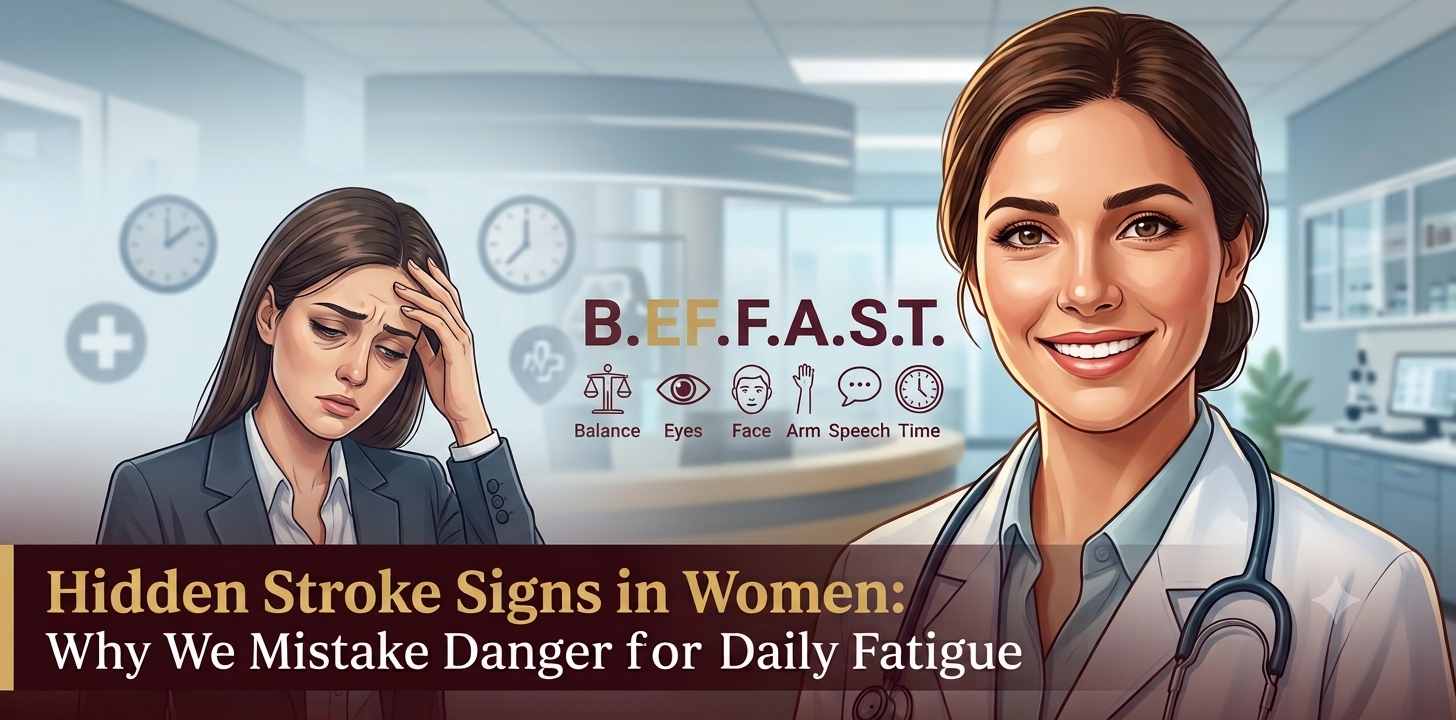
When we picture a stroke, the medical textbook images immediately come to mind: sudden facial drooping, severe arm weakness, and slurred speech. While these classic indicators—commonly summarized by the emergency acronym B.E.F.A.S.T. (Balance, Eyes, Face, Arm, Speech, Time)—apply to everyone, medical research confirms a critical truth: strokes in women often present differently.
In women, stroke symptoms can be dangerously quiet, non-traditional, and easily dismissed as mere burnout, routine migraine, or daily stress. Unfortunately, this diagnostic delay can cost precious brain tissue and vital recovery time.
Understanding why women experience unique stroke risk factors—ranging from pregnancy and hormonal fluctuations to oral contraceptive pills (OCPs) and hormone replacement therapy—can empower you or your loved ones to act swiftly.
Also Read: Stroke: Causes, symptoms and treatment
The Subtle, Non-Traditional Stroke Symptoms in Women
Women often experience non-typical neurological signals that do not fit the traditional stroke mold. Because these symptoms mirror exhaustion or minor illnesses, women frequently delay going to the emergency room.
1. Sudden Fatigue and Unexplained Exhaustion
Unlike ordinary tiredness after a demanding day, stroke-related fatigue strikes unexpectedly and severely. It may feel like a sudden drop in energy levels, accompanied by an overwhelming urge to lie down immediately, often paired with confusion or brain fog.
2. Atypical Pain (Facial, Limb, or Chest Pain)
While chest pain is usually linked to cardiac events, a stroke affecting specific sensory pathways in the brain can cause sudden, sharp, or unusual pain in the face, neck, or extremities, occasionally mimicking a nerve pinch or acute musculoskeletal pain.
3. Sudden Nausea, Vomiting, or Hiccups
Ischemic or hemorrhagic events in the brainstem or posterior circulation can trigger persistent, uncontrollable hiccups, intense nausea, or sudden vomiting. These gastrointestinal symptoms are frequently mistaken for food poisoning or viral gastroenteritis.
4. Sudden Agitation, Hallucinations, or Behavioral Changes
A stroke in the parietal or temporal lobes can alter mood and mental state overnight. Sudden confusion, altered orientation, unexplained fear, agitation, or subtle personality shifts can be early red flags of compromised cerebral blood flow.
5. Shortness of Breath and Palpitations
Sudden difficulty catching your breath, accompanied by a racing heart or feeling faint, can signal posterior circulation involvement.
Also Read: How to reduce risk of Stroke?
Unique Gender-Specific Risk Factors: Hormones, Pregnancy & OCPs
Beyond general lifestyle factors like high blood pressure, diabetes, and elevated cholesterol, a woman’s vascular health is intimately tied to her endocrine system throughout life.
1. Pregnancy and the Postpartum Window
During pregnancy and the immediate postpartum period (up to six weeks post-delivery), a woman’s body naturally enters a hypercoagulable state—a physiological adaptation designed to prevent severe hemorrhage during childbirth.
- Preeclampsia and Eclampsia: Hypertensive disorders of pregnancy dramatically strain blood vessels, increasing the lifetime risk of ischemic and hemorrhagic strokes.
- Venous Sinus Thrombosis: Blood clots can form in the brain’s venous sinuses, leading to localized pressure, severe headaches, and stroke symptoms.
2. Oral Contraceptive Pills (OCPs) & Estrogen Sensitivity
Combination oral contraceptive pills containing estrogen can increase blood clot formation by raising plasma levels of clotting factors.
- The Migraine with Aura Connection: Women who experience migraines with aura (visual disturbances, zigzag lines, or tingling sensations before a headache) have an elevated baseline stroke risk. Combining estrogen-based OCPs with a history of migraine with aura significantly compounds this vascular risk.
- Smoking & Contraception: For women over 35 who smoke, taking birth control pills dramatically increases the risk of dangerous arterial blood clots and stroke.
Also Read: Stroke: Causes, symptoms, diagnosis and treatment
3. Hormone Replacement Therapy (HRT) and Menopause
As estrogen levels decline during menopause, women lose a natural protective effect on blood vessel elasticity. While Hormone Replacement and Stroke Risk is a nuanced topic, clinical trials indicate that systemic, high-dose oral HRT—especially when initiated years after menopause onset—can slightly elevate ischemic stroke risk due to changes in vascular compliance and coagulation.
Stroke vs. Migraine vs. Stress: How to Spot the Difference
| Symptom Feature | Ordinary Migraine / Stress | Potential Acute Stroke |
| Onset | Gradual build-up over hours | Sudden, peak intensity within seconds/minutes |
| Pain Nature | Throbbing, localized, familiar | “Worst headache of life” or strange atypical pain |
| Neurological Loss | Temporary visual aura, resolves slowly | Sudden loss of function (vision loss, numbness, weakness) |
| Mental Clarity | Irritated, tired, but coherent | Sudden confusion, disorientation, difficulty speaking |
Rule of Thumb: If a headache or fatigue is accompanied by sudden numbness, loss of balance, or difficulty speaking, treat it as a medical emergency.
The B.E.F.A.S.T. Warning Checklist
Always keep the B.E.F.A.S.T. protocol in mind:
- B – Balance: Sudden loss of balance, dizziness, or unsteadiness.
- E – Eyes: Sudden vision changes or double vision in one or both eyes.
- F – Face: Facial drooping or asymmetry when trying to smile.
- A – Arm: Weakness, numbness, or drifting down in one raised arm.
- S – Speech: Slurred speech, difficulty repeating simple phrases.
- T – Time: Time is brain tissue. Call emergency services immediately.
Also Read: Best Stroke Treatment Hospital in Noida, Uttar Pradesh
Preventive Measures & Lifestyle Management
Protecting your cerebrovascular health requires proactive screening and tailored lifestyle choices:
- Know Your Numbers: Monitor blood pressure regularly. Hypertension remains the single most treatable stroke risk factor.
- Review Your Medications: Discuss your complete medical history with your gynecologist before starting OCPs or HRT, especially if you have a family history of blood clots or experience migraines with aura.
- Screen for Atrial Fibrillation (AFib): Irregular heart rhythms become more common with age and significantly increase stroke risk.
- Prioritize Vascular Wellness: Adopt a Mediterranean-style diet rich in antioxidants, engage in 150 minutes of moderate aerobic exercise weekly, and avoid all forms of tobacco products.
Expert Stroke Care at Metro Hospitals
When a stroke occurs, every minute counts. Timely medical intervention makes all the difference between achieving a complete recovery and living with long-term disability.
At Metro Group of Hospitals, our advanced Neuroscience & Stroke Units offer round-the-clock emergency care, featuring:
- 24×7 Emergency Brain Attack Teams trained for rapid triage.
- Advanced Neuro-imaging (3T MRI, High-Speed CT Angiography) for instant differentiation between ischemic and hemorrhagic strokes.
- Advanced clot-busting therapies (thrombolysis) and minimally invasive procedure capabilities (mechanical thrombectomy) to dissolve or physically remove blood clots.
- Dedicated Neuro-Rehabilitation Protocols for comprehensive post-stroke recovery.
Don’t ignore subtle body signals. If you suspect you or a loved one is experiencing unusual neurological symptoms, seek urgent emergency evaluation at your nearest Metro Hospital facility.
Disclaimer: This article is intended strictly for educational and awareness purposes and should not replace professional medical advice, diagnosis, or treatment. Always consult a qualified physician or neurologist for medical concerns.
Frequently Asked Questions (FAQs)
Q1. What are the most common hidden stroke symptoms in women?
Ans: Women frequently experience non-traditional stroke signs such as sudden severe fatigue, acute facial or extremity pain, persistent hiccups, nausea, disorientation, shortness of breath, or sudden mood changes. These are often mistaken for stress, exhaustion, or migraines.
Q2. How are stroke symptoms in women different from those in men?
Ans: While men typically present with classic B.E.F.A.S.T. symptoms (facial drooping, arm weakness, slurred speech), women are more likely to experience atypical symptoms like sudden exhaustion, confusion, hallucinations, agitation, and non-cardiac chest or facial pain.
Q3. Can taking oral contraceptive pills (OCPs) increase stroke risk?
Ans: Yes. Estrogen-based birth control pills can elevate plasma clotting factors, increasing the risk of blood clots. For women over 35 who smoke or have a history of migraines with aura, taking OCPs significantly compounds the risk of stroke.
Q4. Is there a link between Hormone Replacement Therapy (HRT) and stroke risk?
Ans: Systemic oral Hormone Replacement Therapy (HRT) can slightly increase ischemic stroke risk, particularly when initiated years after menopause onset. Women considering HRT should undergo a full vascular risk evaluation with a specialist.
Q5. How does pregnancy or the postpartum period affect stroke risk?
Ans: During pregnancy and for six weeks after delivery, a woman’s body naturally increases blood clotting factors to prevent excess bleeding during childbirth. Conditions like preeclampsia, eclampsia, and cerebral venous sinus thrombosis during or after pregnancy drastically increase stroke vulnerability.
Q6. How can you tell the difference between a migraine aura and a stroke?
Ans: Migraine symptoms usually develop gradually over several minutes and resolve slowly. A stroke occurs abruptly with peak intensity within seconds, often accompanied by sudden functional loss, severe confusion, or difficulty speaking. If in doubt, treat it as a medical emergency.
Q7. Which hospital provides 24×7 emergency stroke care in Delhi NCR?
Ans: Metro Group of Hospitals provides round-the-clock emergency stroke care across Delhi NCR (including Noida, Preet Vihar, and Faridabad), equipped with 24×7 Brain Attack Teams, 3T MRI, CT Angiography, and advanced thrombolysis/thrombectomy facilities.
Q8. Can young women under 40 have a stroke?
Ans: Yes. Young women can experience strokes due to pregnancy complications, autoimmune vascular conditions, oral contraceptive use, migraines with aura, or congenital heart defects like Patent Foramen Ovale (PFO).
Q9. What immediate action should be taken if someone shows stroke signs?
Ans: Call emergency medical services or reach the nearest stroke-ready hospital (like Metro Hospitals) immediately. Do not wait to see if symptoms disappear, as clot-busting treatments (thrombolysis) must be administered within a critical time window.