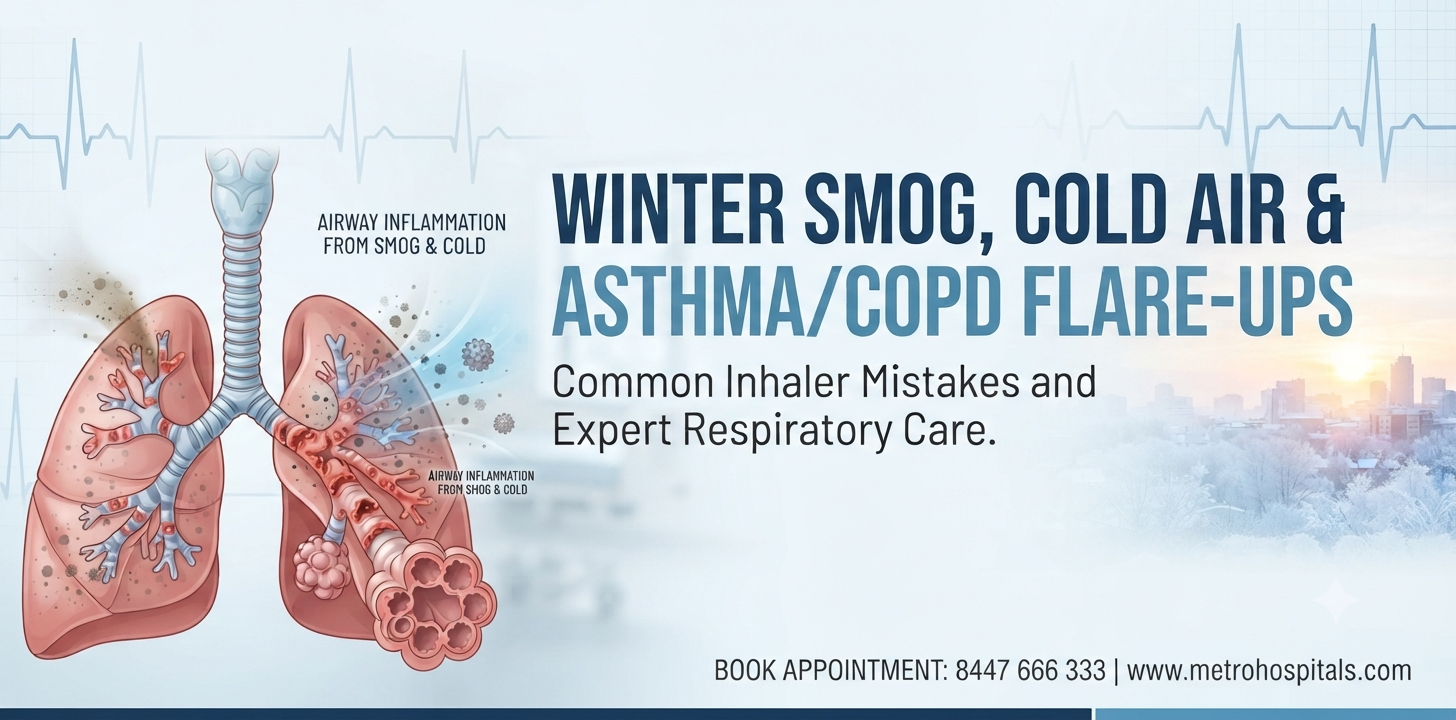
Winter Smog, Cold Air & Asthma/COPD Flare-Ups: Common Inhaler Mistakes and Expert Respiratory Care
By Dr. Deepak Talwar in Pulmonology, Respiratory & Sleep Medicine
Nov 28, 2026
Every winter across Delhi NCR and North India, falling temperatures combine with dense fog, stagnant winds, and high particulate pollution to create a challenging environment for lung health. Chest clinics and emergency departments routinely witness a sharp spike in wheezing, persistent coughing, breathlessness, and severe exacerbations among respiratory patients. For anyone wondering why asthma worse in winter pollution Delhi NCR occurs so predictably between November and February—or how to plan safe COPD care in winter—understanding how cold air and smog interact with the airways is essential.
With accurate inhaler technique, consistent preventive therapy, and timely guidance from an experienced pulmonologist in Noida Delhi, patients can significantly reduce winter flare-ups and protect long-term lung function.
Also Read: Winter Breathing Problems: Managing Respiratory Health
Why Does Winter Smog and Cold Air Trigger Asthma and COPD Flare-Ups?
People living with asthma or Chronic Obstructive Pulmonary Disease (COPD) have hypersensitive, chronically inflamed bronchial tubes. Winter introduces a dual environmental assault that irritates these delicate airways:
- Bronchospasm from Cold, Dry Air: Cold winter air holds very little moisture. When inhaled rapidly—especially through the mouth—it cools and dries the airway lining, triggering sudden smooth-muscle tightening (bronchospasm), chest tightness, and wheezing.
- Toxic Smog and Fine Particulate Matter (PM2.5 & PM10): During winter temperature inversions, vehicle exhaust, construction dust, and smoke remain trapped close to ground level. Microscopic PM2.5 particles penetrate deep into small bronchioles and alveoli, worsening airway swelling and mucus production.
- Increased Thick Mucus and Impaired Clearance: Cold temperatures slow down the tiny hair-like cilia that normally sweep dust and germs out of the lungs, allowing thick mucus to accumulate and block airflow.
- Seasonal Viral Respiratory Infections: Winter is peak season for influenza, RSV, and common cold viruses, which frequently trigger acute asthma attacks and dangerous COPD exacerbations.
Also Read: Asthma: Expert Diagnosis, Personalized Treatment & Long-Term Care in Noida
Common Inhaler Mistakes That Worsen Winter Symptoms
Even the best prescribed medication cannot protect the lungs if it is stopped prematurely or delivered incorrectly. Pulmonologists highlight several widespread inhaler errors during winter:
1. Stopping the Preventer Inhaler Mid-Treatment
One of the most harmful mistakes patients make is discontinuing their daily preventer (controller) inhaler—which typically contains a low-dose inhaled corticosteroid—as soon as breathing feels comfortable.
- Why It Is Dangerous: Preventer inhalers work gradually to calm underlying airway inflammation rather than providing instant relief. Stopping them abruptly leaves airways hyper-reactive and unprotected against winter smog and cold snaps.
- The Consequence: Patients experience sudden, severe flare-ups, increased dependence on emergency reliever inhalers, higher risk of oral steroid courses, and avoidable hospital admissions. Never stop or reduce a preventer inhaler without consulting your lung specialist.
2. Relying Only on a Reliever (Rescue) Inhaler
Using a quick-relief bronchodilator multiple times a day while ignoring underlying airway inflammation masks worsening disease. Frequent rescue inhaler use is a clear warning sign that asthma or COPD is poorly controlled and requires medical review.
3. Incorrect Spacer Usage (or Skipping the Spacer Altogether)
When using a Pressurized Metered-Dose Inhaler (pMDI) directly without a spacer, much of the medicine hits the back of the throat instead of reaching the lower lungs. Using a valved holding chamber (spacer) dramatically improves drug delivery, yet common errors reduce its effectiveness:
- Wrong Breathing Pace: Inhaling too fast triggers a whistling sound on many spacers and deposits medicine in the upper airway; breathe in slowly and deeply over 3–5 seconds, then hold your breath for 10 seconds.
- Multiple Puffs at Once: Actuating two puffs into the spacer simultaneously causes medication droplets to collide and stick to the chamber walls. Always spray one puff at a time, inhale, and wait 30–60 seconds before the second puff.
- Improper Cleaning: Washing a plastic spacer with hot water or wiping the inside dry with a cloth creates static electricity that traps medication. Wash it weekly in mild soapy lukewarm water and let it air-dry completely.
- Skipping Mouth Rinsing: Always rinse your mouth and gargle with water (and spit it out) after using a steroid preventer inhaler to prevent oral thrush and throat irritation.
Also Read: Dense Smog – A “Silent Killer”
High AQI and Morning Walks: When Is It Safe to Step Out in Winter?
Many health-conscious individuals—especially older adults with COPD or hypertension—insist on walking at 5:30 AM or 6:00 AM regardless of winter weather. During peak Delhi NCR winter pollution, early morning walks can do more harm than good.
- Why Early Mornings Are Worst: Cold ground temperatures trap pollutants near the surface before sunrise, pushing AQI levels to their daily peak alongside maximum cold-air shock.
- Best Time for Outdoor Walks: Wait until late morning or afternoon (typically between 10:30 AM and 4:00 PM) when sunlight warms the air and disperses surface smog slightly—provided the local AQI is within a safer range.
- When to Stay Indoors: When AQI enters the Very Poor or Severe category, replace outdoor walks with indoor walking, gentle stretching, or breathing exercises. If stepping outside is unavoidable, wear a well-fitted N95 mask and wrap a scarf loosely over your nose and mouth to warm incoming air.
Essential Checklist for Safe COPD Care in Winter
Effective COPD care in winter requires proactive daily management:
- Take Prescribed Inhalers and Nebulizers on Schedule: Keep rescue inhalers accessible at all times, especially when traveling or stepping into cold rooms.
- Stay Up to Date on Vaccinations: Ask your doctor about annual influenza (flu) and pneumococcal vaccines, which significantly lower winter hospitalization risks in COPD and chronic asthma patients.
- Maintain Indoor Air Quality: Avoid indoor wood/coal smoke, incense sticks, mosquito coils, and tobacco smoke. Keep rooms adequately ventilated during cleaner afternoon hours and use HEPA air purifiers if recommended.
- Stay Hydrated with Warm Fluids: Adequate hydration keeps airway mucus thin and easier to clear.
- Follow a Written Asthma/COPD Action Plan: Know your green, yellow, and red symptom zones so you can act early before breathlessness escalates.
Warning Signs That Need Immediate Medical Attention
Seek urgent medical care if you notice:
- Rapidly worsening shortness of breath at rest or while speaking short sentences
- Little or no relief after using your rescue inhaler
- Bluish discoloration of lips or fingertips, confusion, or extreme drowsiness
- High fever with thick, yellow-green, or blood-streaked phlegm
Expert Respiratory & Pulmonology Care in Noida and Delhi
Managing winter respiratory triggers requires accurate lung function testing (such as spirometry), personalized inhaler device selection, and regular follow-up. At Metro Group of Hospitals, patients across Noida, Delhi, and NCR receive comprehensive pulmonary diagnostics, asthma and COPD clinics, allergy management, and 24/7 respiratory critical care. Consulting an experienced pulmonologist in Noida Delhi ensures your winter treatment plan keeps your airways protected throughout the season.
Frequently Asked Questions (FAQs)
Q1. Why does asthma get worse in winter pollution in Delhi NCR?
Cold, dry air constricts sensitive bronchial tubes while high PM2.5 and PM10 smog particles trigger airway inflammation and mucus buildup, leading to frequent coughing and wheezing.
Q2. What happens if I stop using my preventer inhaler in winter once I feel better?
Stopping a preventer inhaler early allows underlying airway inflammation to return, leaving you vulnerable to severe asthma or COPD flare-ups triggered by cold air and pollution.
Q3. How should I use an inhaler with a spacer properly?
Shake the inhaler, insert it into the spacer, exhale fully, place the mouthpiece between your teeth with lips sealed, press one puff, inhale slowly and deeply, and hold your breath for 10 seconds before exhaling.
Q4. When is the safest time for a morning walk during high AQI in winter?
Avoid early pre-sunrise hours when cold air and smog peak; opt for late morning or afternoon sunlight when temperatures rise, or exercise indoors on severe AQI days.