Winter Cough vs. Pneumonia & Bronchitis: Warning Signs and When to See a Doctor
By Dr. Dhruv Talwar in Pulmonology, Respiratory & Sleep Medicine
Nov 28, 2026
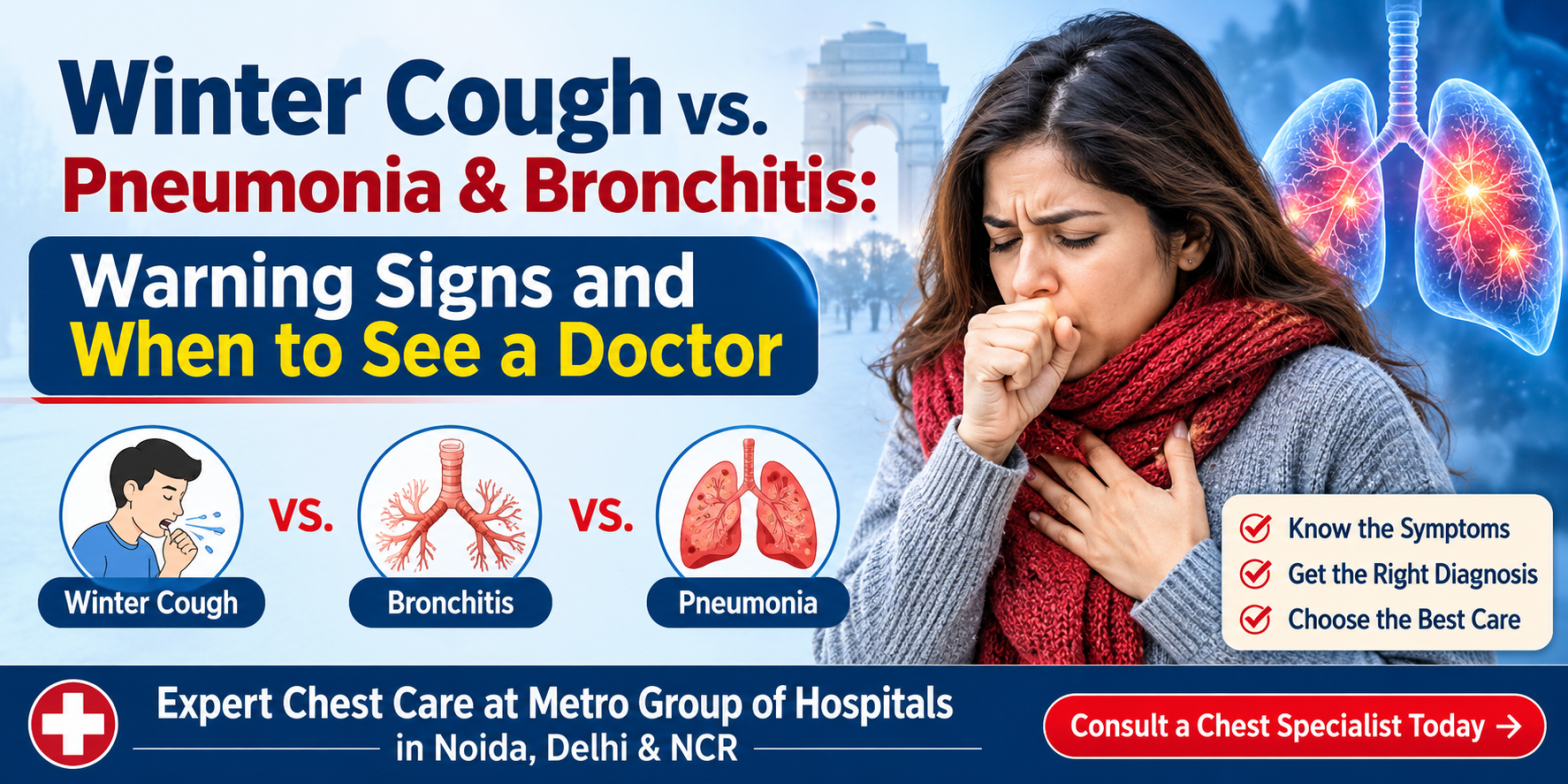
When winter arrives across Delhi NCR and North India, a lingering cough is one of the most common reasons people visit clinics and hospital outpatient departments. Cold dry air, foggy mornings, high smog levels, and seasonal viruses make it easy to dismiss a hacking or chesty cough as “just a regular winter cough.” However, what starts as mild airway irritation can sometimes be acute bronchitis or pneumonia—conditions that require timely evaluation rather than guesswork.
Knowing how to tell a routine cold-related cough apart from bronchitis or pneumonia symptoms in winter adults helps you choose safe persistent cough in winter treatment and find a qualified chest specialist near me before symptoms escalate.
Also Read: Winter Breathing Problems
Why Is It Hard to Tell a Winter Cough Apart from Bronchitis or Pneumonia?
Early-stage respiratory infections and cold-weather airway irritation share overlapping symptoms, such as coughing, throat irritation, mild fatigue, and chest discomfort. In regions like Noida and Delhi, winter particulate pollution and indoor dry heating can also irritate the respiratory tract even without a primary bacterial infection.
The key distinction lies in where inflammation occurs in the airways, how severe the symptoms become, and how long they last:
- Routine Winter Cough / Post-Nasal Drip: Typically linked to a mild viral cold, dry air, or sinus/allergic irritation. It usually starts improving within 1–2 weeks and rarely causes high fever or true breathlessness.
- Bronchitis: Involves inflammation of the bronchial tubes (the main air passages carrying air into the lungs). It commonly follows a viral cold or exposure to smoke/pollutants and often produces mucus (phlegm), chest soreness, or mild wheezing.
- Pneumonia: An infection of the air sacs (alveoli) in one or both lungs, caused by bacteria, viruses, or occasionally fungi. Because air sacs fill with fluid or pus, oxygen transfer can be affected, making pneumonia potentially serious—especially in older adults or people with chronic conditions.
Winter Cough vs. Bronchitis vs. Pneumonia: Key Differences
While only a doctor’s examination—and, when needed, a chest X-ray, pulse oximetry, or blood/sputum tests—can confirm a diagnosis, these patterns offer helpful clues:
| Feature | Routine Winter Cough / Cold | Acute Bronchitis | Pneumonia |
| Typical Onset | Gradual throat tickle, sneezing, or runny nose | Often starts 2–4 days after a cold or viral upper respiratory illness | May follow a cold/flu or begin abruptly with chills, fever, and cough |
| Cough & Mucus | Dry, tickly, or mild clear mucus | Persistent cough with clear, white, yellow, or greenish sputum | Cough with phlegm (rusty, yellow, green, or blood-tinged) or dry cough |
| Fever & Chills | Usually absent or very mild low-grade warmth | Mild fever may occur early; high fever is less common in uncomplicated cases | High fever, shaking chills, and sweats are common (though older adults may have mild/no fever) |
| Breathing & Chest Pain | Minimal; mild throat or chest muscle soreness from coughing | Chest tightness, wheezing, or burning behind the breastbone | Shortness of breath, rapid breathing, or sharp chest pain that worsens with deep breaths or coughing |
| Expected Timeline | Improves steadily within 7–14 days | Cough often lingers for 2–3 weeks even after viral triggers clear | Requires prompt medical therapy; recovery takes longer and needs follow-up |
Understanding Pneumonia Symptoms in Winter Adults
In healthy younger adults, pneumonia often presents with unmistakable signs such as high fever, chills, productive cough, and pleuritic chest pain. However, pneumonia symptoms in winter adults can look different in older individuals (65+) or those with diabetes, heart disease, COPD, or weakened immunity.
In older adults, pneumonia sometimes starts subtly—with new confusion or mental sluggishness, loss of appetite, worsening weakness, or a sudden drop in mobility—even before a high fever or heavy cough appears. Never overlook sudden behavioral or physical decline during winter respiratory illnesses.
Safe Persistent Cough in Winter Treatment: What Helps and What to Avoid
Effective persistent cough in winter treatment depends on the underlying cause rather than suppressing every cough reflex blindly:
- Stay Hydrated with Warm Fluids: Warm water, clear broths, herbal infusions, and steam inhalation help soothe irritated airways and thin thick mucus so it clears more easily.
- Keep Indoor Air Clean and Moderately Humidified: Avoid indoor smoke, incense, and second-hand tobacco smoke. If heating makes indoor air very dry, a clean humidifier or bowl of water can ease throat and airway dryness.
- Use Medications Responsibly: Over-the-counter cough syrups, decongestants, or pain relievers are not suitable for every patient or every type of cough—especially young children, older adults, or people with high blood pressure or heart issues. Antibiotics do not treat viral colds or most cases of acute bronchitis and should only be taken when prescribed by a doctor.
- Avoid Pushing Through Heavy Workouts: Rest when you have a fever or chest infection; exercising hard while ill places extra strain on your heart and lungs.
Warning Signs: When Seeing a Doctor Is Urgent or an Emergency
Schedule a timely medical visit if a cough lasts more than 2 to 3 weeks, keeps returning, or interferes with sleep. Seek immediate or emergency medical care if you notice any of these red flags:
- Difficulty breathing, shortness of breath at rest, or feeling winded during simple tasks
- Sharp or worsening chest pain, especially when breathing in or coughing
- High or persistent fever, shaking chills, or a fever that returns after seeming to improve
- Coughing up blood or pink-tinged sputum
- Bluish tint around the lips or fingernails, dizziness, fainting, or sudden confusion
Finding Reliable Chest Care in Noida and Delhi
When a winter cough lingers or chest symptoms feel concerning, searching for a chest specialist near me and getting a thorough clinical evaluation prevents unnecessary complications. At Metro Group of Hospitals, patients across Noida, Delhi, and NCR have access to experienced pulmonologists, internal medicine specialists, diagnostic imaging, oxygen and respiratory support, and 24/7 emergency care so you can get an accurate diagnosis and targeted treatment plan.
Frequently Asked Questions (FAQs)
Q1. How long is a normal winter cough supposed to last?
A routine cough from a mild viral cold or cold-air irritation typically starts improving within 1 to 2 weeks, though a mild post-viral cough can occasionally linger a bit longer without red-flag symptoms.
Q2. How can I tell bronchitis apart from pneumonia at home?
Bronchitis mainly causes airway inflammation with coughing, mucus, and sometimes wheezing or chest soreness, whereas pneumonia infects the lung air sacs and more often brings fever, chills, shortness of breath, or sharp chest pain—though a doctor’s exam and tests are needed for certainty.
Q3. What are the main pneumonia symptoms in winter adults?
Common signs include fever and chills, cough with phlegm, shortness of breath, chest pain on breathing or coughing, and fatigue, while older adults may show sudden weakness, appetite loss, or confusion.
Q4. When should I look for a chest specialist near me in Noida or Delhi for a persistent cough?
Consult a chest specialist promptly if your cough lasts over two to three weeks, causes wheezing or breathlessness, is accompanied by fever or chest pain, or occurs alongside asthma, COPD, diabetes, or heart disease.