Dust Allergies and Summer Asthma: How to Breathe Freely in Polluted Cities
By Dr. Deepak Talwar Dr. Deepak Prajapat Dr. Anirudh Saini in
May 5, 2026
Dust Allergies and Summer Asthma: How to Breathe Freely in Polluted Cities
For millions living in urban hubs like Delhi-NCR, the dream of a “clear summer sky” is often obscured by a hazy layer of smog and dust. While many associate respiratory issues with the winter chill, Summer Asthma and Dust Allergies are becoming significant health crises in polluted metropolises. The combination of rising temperatures, stagnant air, and high pollution levels creates a “perfect storm” for your lungs.
The Summer Respiratory Crisis: Why Now?
In cities with high vehicular density, the summer heat act as a catalyst for Ground-Level Ozone (O3). Unlike the protective ozone layer, ground-level ozone is a potent lung irritant that can trigger immediate chest pain, coughing, and throat irritation, particularly for those already battling asthma or COPD.
The Role of Dehydration and Dust
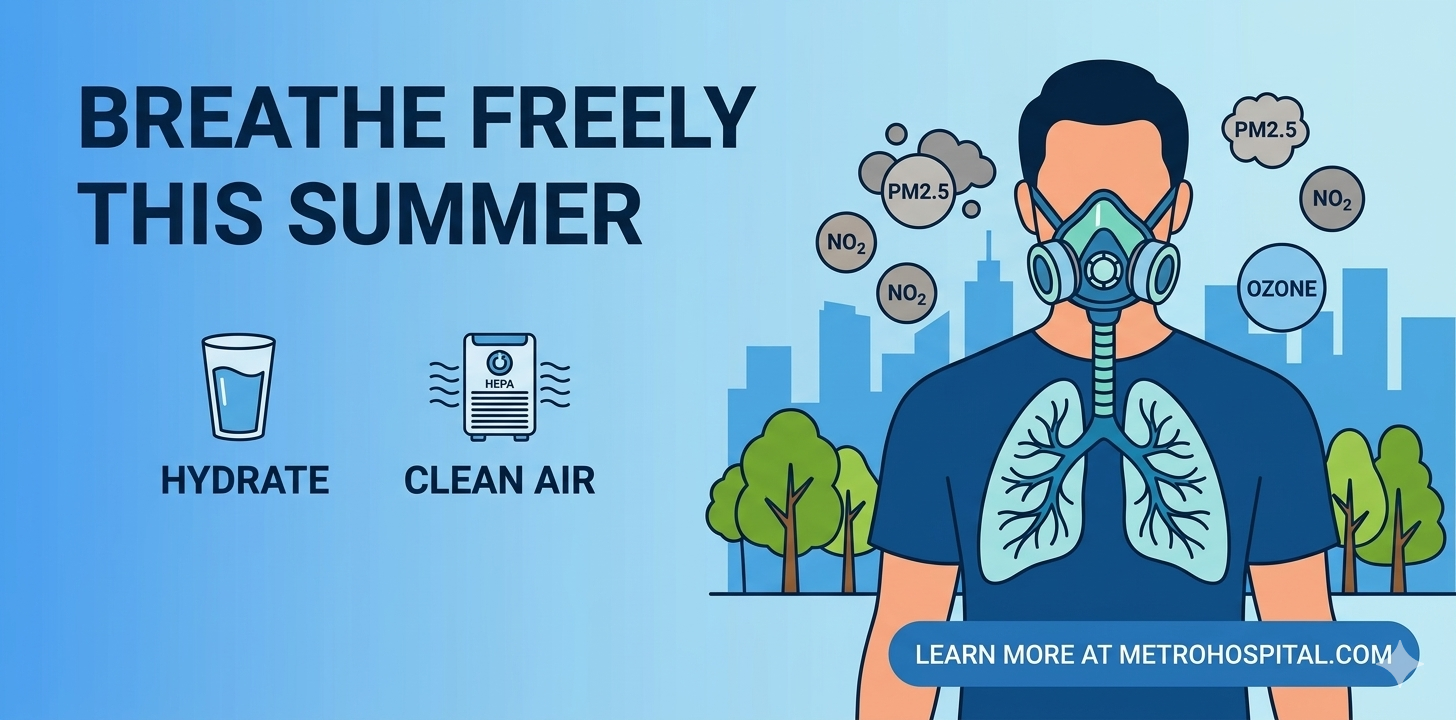
During peak summer months like May, dehydration becomes a major risk factor. When the body is dehydrated, the mucus linings in the respiratory tract become dry and thick, making it harder for the lungs to filter out dust and PM2.5 particles. This leads to increased inflammation and a noticeable “spike” in respiratory cases.
Common Triggers in Urban Environments
- Suspended Particulate Matter (PM2.5): These tiny particles bypass the nasal filter and enter the bloodstream, causing systemic inflammation.
- Thunderstorm Asthma: Summer storms can shatter pollen grains into tiny fragments that reach deep into the lungs, causing sudden, severe attacks.
- Thermal Shock: Moving from 45°C heat into a 20°C air-conditioned room causes bronchospasms in sensitive individuals.
- Construction Dust: Dry summer winds keep construction debris suspended, carrying allergens directly into your home.
Expert Tips to Protect Your Lungs
1. Monitor the Air Quality Index (AQI)
Make it a habit to check the AQI daily. If the index is above 150, sensitive individuals should limit outdoor exertion and keep windows closed.
2. Hydration: The Natural Lung Lubricant
Maintaining optimal hydration is essential for cellular defense. Drinking 3-4 liters of water helps maintain the thin layer of protective fluid in the airways, making it easier for the body to expel trapped pollutants.
3. Create a “Lung-Safe” Home
- HEPA Purifiers: Use air purifiers to capture 99.97% of dust and allergens.
- Wet Mopping: Avoid sweeping, which kicks up dust; use a damp cloth for cleaning.
4. Advanced Medical Support at Metro Hospital
For persistent symptoms, home remedies are not enough. Modern pulmonology and critical care offer advanced interventions:
- Bronchoscopy: Allows specialists to visualize the airways and diagnose underlying inflammation.
- Antioxidant Therapy: Research on the “Role of Glutathione in Sepsis” highlights how antioxidants protect the body against oxidative stress. Maintaining high antioxidant levels can support respiratory resilience against urban pollution.
Frequently Asked Questions (FAQs)
Q1. Why does my asthma get worse in the summer heat?
Heat traps pollutants closer to the ground and increases ozone levels, both of which are major asthma triggers.
Q2. Can air pollution cause new allergies in adults?
Yes. Prolonged exposure to urban toxins can sensitize the immune system, leading to “Adult-Onset Allergies” or “Urban Allergy Syndrome.”
Q3. Is it safe to exercise outdoors in a polluted city?
Only when the AQI is “Satisfactory.” On high-pollution days, heavy breathing during exercise causes you to inhale significantly more toxins.
Q4. How can I tell the difference between an allergy and a summer cold?
Allergies usually involve itchy eyes and clear nasal discharge without a fever. If symptoms persist for more than two weeks, consult a specialist.
Q5. When should I see a specialist at Metro Hospital?
If you experience chest tightness, a persistent night cough, or shortness of breath during routine tasks, it is vital to consult our Critical Care or Pulmonology specialists immediately.