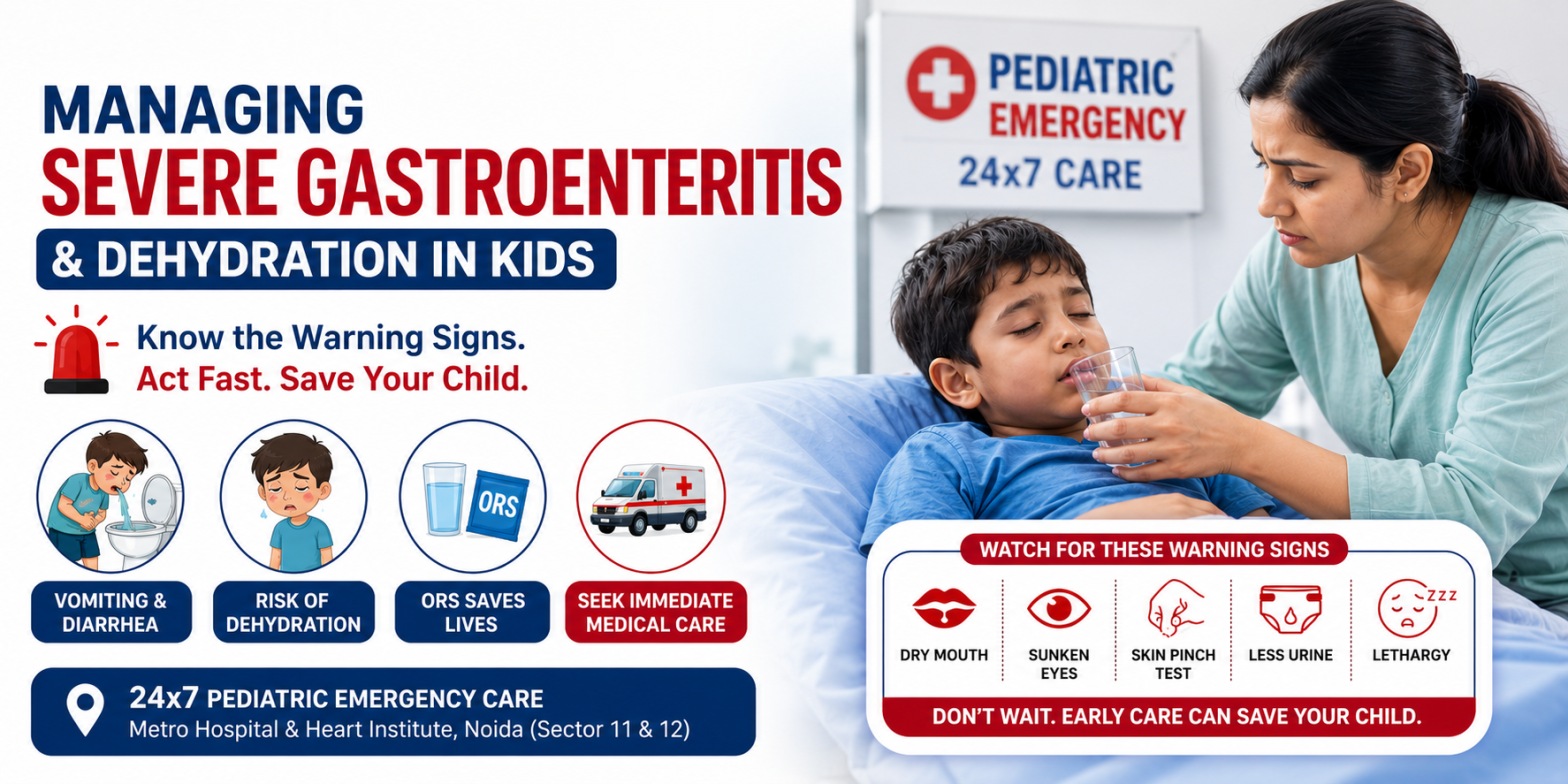
Managing Severe Gastroenteritis and Dehydration in Kids
By Dr. Ajit Saxena in Paediatrics & Neonatology
Jun 1, 2026
Managing Severe Gastroenteritis and Dehydration in Kids: When to Rush Your Child to the Hospital
As summer temperatures hit peak levels across Delhi-NCR, pediatric clinics and emergency rooms are experiencing a significant surge in admissions. While parents are naturally on high alert for heatstroke, a much more common and rapidly evolving summer threat is taking a toll on children: Severe Gastroenteritis.
Commonly referred to as “stomach flu” or acute diarrhea, gastroenteritis is an inflammation of the stomach and intestines. In the scorching heat of May and June, pathogens multiply rapidly in food and water, making children highly susceptible to infections. While a mild stomach upset can often be managed at home, severe gastroenteritis can quickly lead to acute dehydration—a condition that can turn life-threatening for infants and young children within a matter of hours.
At Metro Hospital and Heart Institute, Noida (Sector 11), our specialized Pediatrics and Neonatology team is available 24×7 to deliver prompt emergency care for children experiencing critical metabolic and fluid-related conditions. Understanding how to handle the early symptoms of stomach infections at home, identifying the warning signs of dehydration, and knowing when immediate medical attention is needed can play a crucial role in protecting your child’s health.
The Summer Core: Why Kids are Vulnerable Right Now
Gastroenteritis usually occurs due to viral, bacterial, or parasitic infections that affect the stomach and intestines During the summer season, food tends to spoil more quickly, and water sources are more vulnerable to contamination. Children catch these infections through the fecal-oral route—often by consuming contaminated juices, street food, or raw cut fruits, or simply by putting unwashed hands into their mouths after playing outdoors.
Once pathogens enter the digestive tract, they can irritate the mucosal lining, resulting in sudden vomiting and frequent episodes of watery diarrhea.
For an adult, a few episodes of diarrhea are uncomfortable but rarely dangerous. However, in children, the body responds very differently, making the situation far more delicate Children have a smaller body mass and a faster metabolism, which causes them to lose water and vital electrolytes such as sodium and potassium more rapidly. When a child is simultaneously vomiting and passing watery stools, their fluid reserves deplete at an alarming velocity.
The Gold Standard of Home Management: ORS Done Right
During the early stages of vomiting and diarrhea, the most important priority for parents is to restore the child’s lost fluids and essential electrolytes. The single most effective tool at your disposal is Oral Rehydration Salts (ORS).
- The Small Sips Rule: The biggest mistake parents make is forcing a child to drink a whole glass of ORS right after an episode of vomiting. A highly irritated stomach will immediately reject a large volume of liquid, leading to more vomiting and worse dehydration. Instead, wait 15 to 20 minutes after an episode of vomiting, and then offer the ORS solution using a spoon or a syringe—just 1 to 2 teaspoons every 5 minutes.
- Avoid the Wrong Fluids: Never give your child commercial sports drinks, highly sugary colas, packed apple juices, or plain water alone to treat severe diarrhea. High-sugar beverages pull even more water into the intestines, drastically worsening diarrhea, while plain water dilutes the body’s remaining essential salts.
The Red Flags: When to Rush Your Child to Metro Hospital Noida
As a caregiver, you must continuously evaluate your child for dehydration. Dehydration is clinically categorized as mild, moderate, or severe. While mild dehydration can be managed at home, moderate to severe dehydration requires immediate hospitalization for intravenous (IV) fluid therapy.
1. The Physical Warning Signs
Check your child regularly for the following physical symptoms:
- Dry or Sticky Mouth: A total lack of moisture on the tongue or lips.
- Absence of Tears: The child is crying, but their eyes remain completely dry.
- Sunken Eyes or Fontanelle: The eyes look unusually hollow. In infants under a year old, the soft spot on top of the head (fontanelle) will appear visibly flat or sunken.
- The Skin Pinch Test: Gently pinch the skin on your child’s abdomen. In a healthy, hydrated child, the skin snaps back instantly. If the skin stays up or takes a second to smooth out, it indicates critical fluid loss.
2. The Urine Tracker (Crucial Indicator)
Keep a strict log of when your child passes urine. If a child or infant has not passed urine in 6 to 8 hours (or has fewer than 2 to 3 wet diapers in a 24-hour period), their kidneys are trying to conserve fluid because the body is dangerously dry. This is a definitive sign to head to the nearest emergency room.
3. Behavioral and Vital Changes
- Extreme Lethargy: If your child is too weak to sit up, cannot hold their head up, is unresponsive, or is incredibly difficult to wake up from sleep.
- Persistent High Fever: A temperature exceeding 102°F ($38.9^\circ\text{C}$) accompanied by blood or mucus in the stool (dysentery).
- Inability to Retain Fluids: The child vomits absolutely everything they drink, including tiny sips of ORS, for more than 4 to 6 consecutive hours.
Advanced Pediatric Emergency Infrastructure at Metro Hospital Noida
When a child arrives at our emergency department with severe gastroenteritis, our pediatric emergency specialists act immediately:
- Rapid Intravenous (IV) Resuscitation: If a child is too weak to swallow or cannot retain oral fluids, our clinical team safely establishes intravenous access to deliver precisely calculated micro-volumes of specialized saline and glucose solutions. This bypasses the irritated stomach and rehydrates the vital organs directly.
- Continuous Electrolyte and Metabolic Monitoring: Severe dehydration can shift blood sodium and potassium levels to dangerous extremes, which can trigger seizures if left unchecked. We perform quick blood chemistry evaluations to closely monitor these imbalances and correct them in a safe, controlled manner.
- Dedicated Pediatric ICU (PICU): For critical cases involving metabolic shock or severe systemic infections, our advanced PICU provides 24/7 monitoring by expert pediatric intensivists and specialized nursing staff.
Frequently Asked Questions (FAQs)
Q1. Who is the best child specialist in Noida Sector 11 for treating severe stomach infections?
Ans. Metro Hospital and Heart Institute (located at Sector 11, Noida) features a highly trusted and state-of-the-art Pediatrics department. Backed by senior pediatricians, neonatologists, and round-the-clock emergency doctors, it is a premier referral center for pediatric emergencies in the region.
Q2. Should I give anti-diarrhea medicines to my child to stop the loose motions quickly?
Ans. No. You should never give over-the-counter anti-diarrheal medications (like loperamide) to children. These medicines stop the natural movement of the intestines, trapping the harmful bacteria or toxins inside the child’s body, which can cause severe complications like bowel swelling. Always consult a qualified pediatrician before administering any medication other than ORS.
Q3. Is pediatric emergency care and hospitalization for gastroenteritis covered under CGHS or ESIC at Metro Hospital Noida?
Ans. Yes, absolutely. Metro Hospital Noida is an empanelled healthcare facility providing completely cashless treatment options for major panels including CGHS, DGHS, ECHS, and ESIC, alongside all prominent corporate medical insurance policies. Our in-house panel help desk operates efficiently to process emergency approvals without putting a financial or administrative burden on worried parents.