Robotic Joint Replacement: Precision Excellence with Stryker MAKO
By Dr. Ashok Kr. Dhar in Orthopaedics & Joint Replacement
Apr 14, 2026
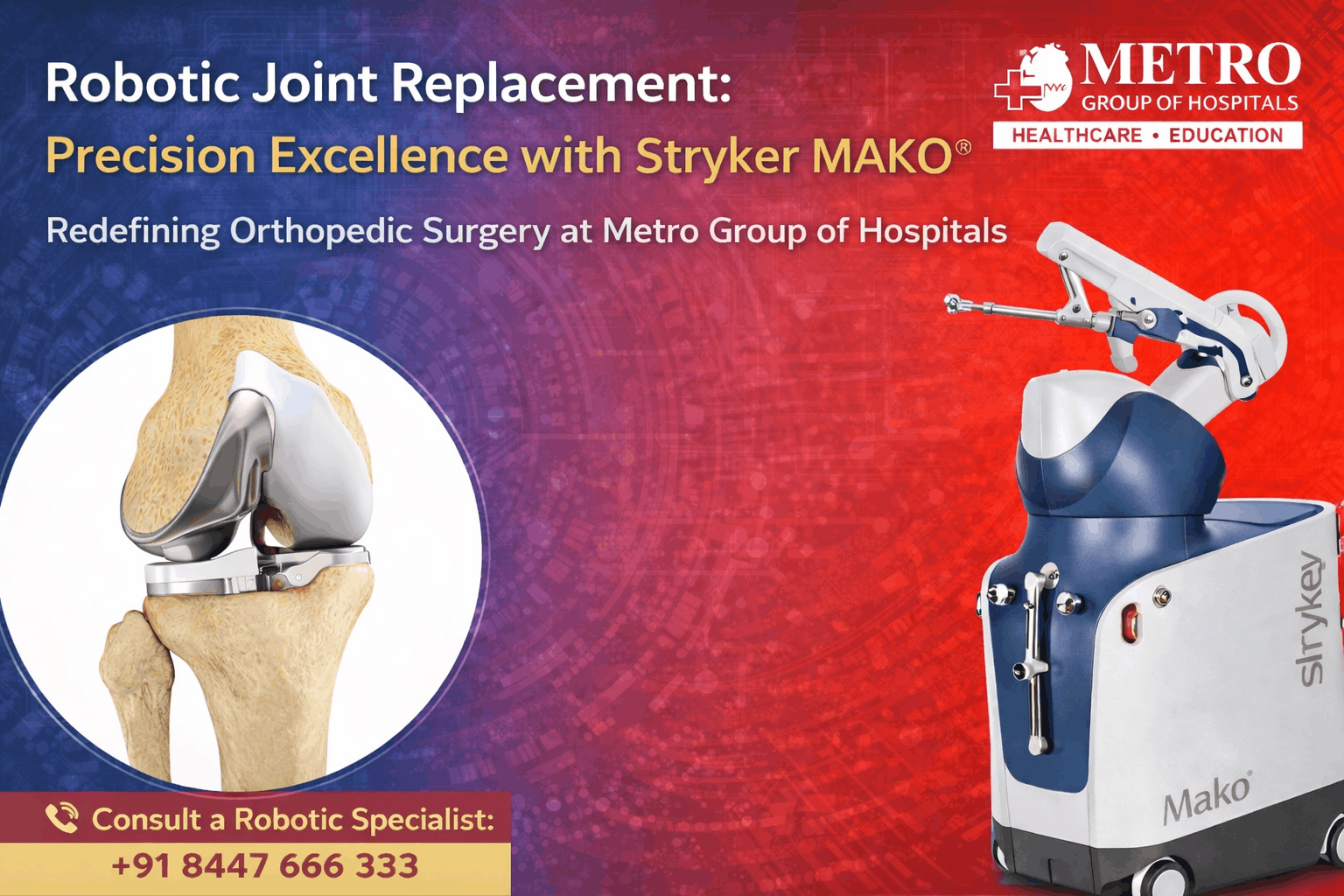
Robotic Joint Replacement: Precision Excellence with Stryker MAKO®
Redefining Orthopedic Surgery at Metro Group of Hospitals
The introduction of robotics in joint replacement is not just an upgrade; it is a revolutionary paradigm shift. At Metro Group of Hospitals, we combine the seasoned expertise of our surgeons with the sub-millimeter precision of the Stryker MAKO® Robot. This cutting-edge technology ensures that your new joint is aligned with a level of accuracy that was previously impossible, leading to a more natural feel and a faster return to the life you love.
Consult a Robotic Specialist: +91 8447 666 333
What is Robotic Joint Replacement Surgery?
Arthroplasty, or joint replacement, involves replacing a diseased joint with a high-grade prosthesis. In traditional surgery, alignment is managed manually. At Metro Hospitals, the MAKO System transforms this process:
- 3D Digital Twin: We use advanced imaging to create a 3D model of your unique bone structure.
- Haptic Guidance: The robotic arm, controlled entirely by the surgeon, provides tactile resistance. This prevents the surgeon from moving even a millimeter outside the predefined surgical plan.
- Unmatched Accuracy: The system operates with a precision of under 1 millimeter and 0.1 degrees, ensuring the implant is perfectly balanced.
The Clinical Advantages of the MAKO System
1. Enhanced Implant Longevity
The primary reason for implant failure in traditional surgery is malalignment. By ensuring optimal positioning, the MAKO robot reduces premature wear and tear, significantly extending the lifespan of your new joint.
2. Rapid Recovery & Minimal Pain
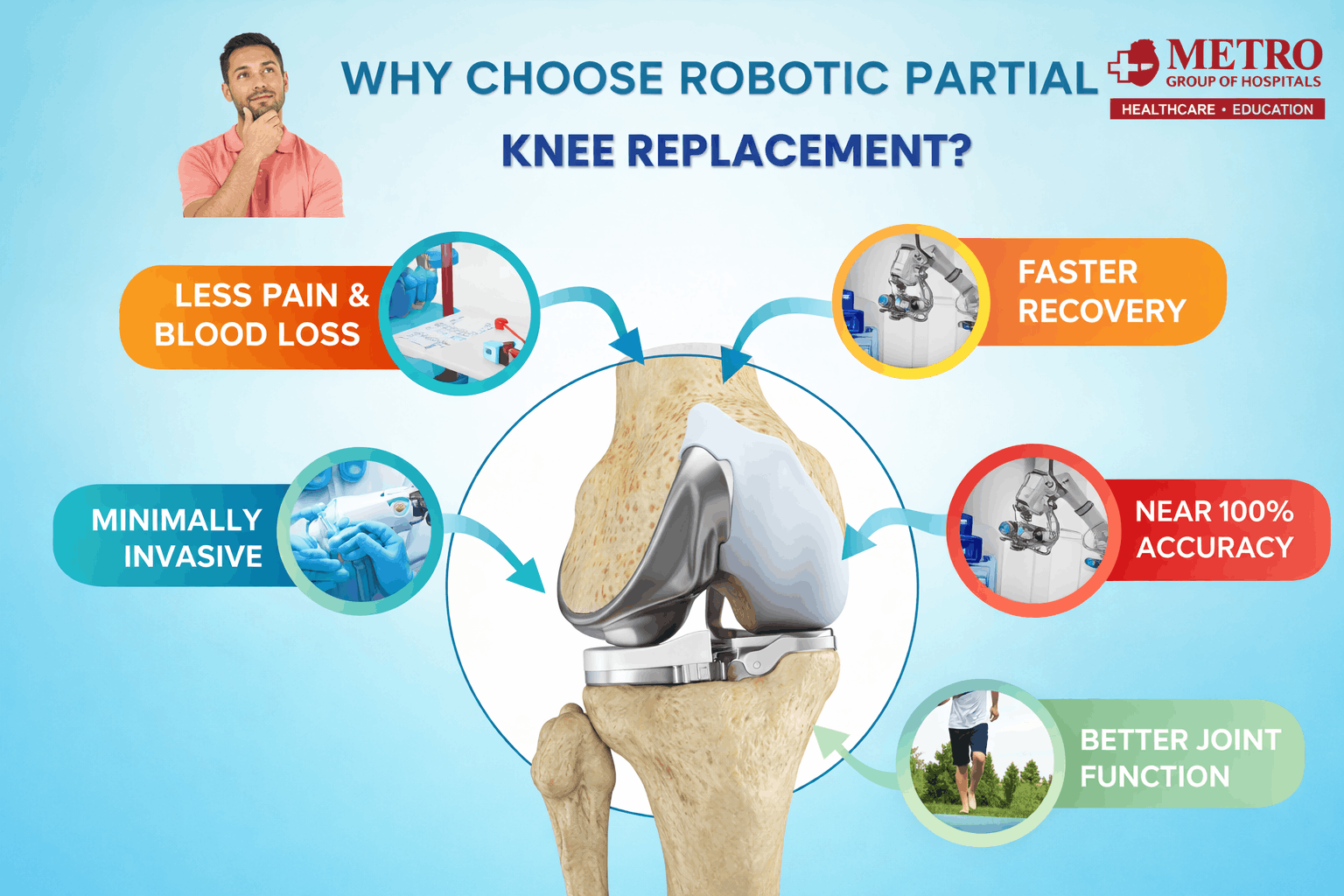
The robotic approach is minimally invasive. Because the system protects soft tissue and requires less “release” of ligaments, patients experience significantly less post-operative discomfort and swelling, enabling a much faster return to normalcy.
3. Superior Intra-operative Safety
The MAKO robot features a built-in “safety zone.” If the surgical tool nears a critical nerve, artery, or healthy soft tissue, the robot provides haptic feedback to stop the movement, ensuring a higher level of safety than manual instrumentation.
4. Ideal for Elderly Patients
For our older patients, the MAKO system minimizes surgical trauma. By avoiding conventional tools that pass through the bone canal, we significantly reduce the risk of medical complications like fat embolisms, making the procedure safer for those with underlying health concerns.
Procedures Powered by MAKO SmartRobotics™
| Procedure | How MAKO Enhances It |
| Total Hip Replacement | Optimizes bone preparation and cup orientation for maximum stability and leg-length balance. |
| Total Knee Replacement | Provides real-time data to ensure precise bone cuts and perfect ligament tensioning. |
| Partial Knee Replacement | Targets only the damaged compartment, preserving your healthy bone and natural ligaments. |
Comparison: Traditional vs. Robotic Surgery
- Traditional: Relies on manual cutting guides and the surgeon’s “eye.” While effective, it has a higher margin for slight alignment variations.
- Robotic: Uses a customized 3D plan and robotic-arm assistance. It offers unparalleled consistency, ensuring the surgical plan is executed perfectly every single time.
Common Myth: “The robot performs the surgery independently.”
The Reality: The surgeon is always in total control. The robot acts as a high-precision GPS and stabilization tool, enhancing the surgeon’s skill rather than replacing it.
FAQs
1. Is robotic joint replacement only for complex cases?
No. While it is excellent for complex deformities, the MAKO system is beneficial for almost all patients. Its precision ensures a better outcome for standard replacements as well.
2. Does the Stryker MAKO Robot perform the surgery on its own?
Absolutely not. Your surgeon guides the robotic arm at all times. The robot simply provides a “protective corridor” and visual data to ensure the surgeon stays perfectly on track with the pre-approved 3D plan.
3. Are recovery times significantly shorter?
Yes. Because the robot allows for smaller incisions and preserves more healthy tissue, most Metro Hospital patients are mobile within 24 hours and return to their daily routines weeks earlier than with traditional methods.
4. Where can I find a MAKO robotic surgeon?
Metro Group of Hospitals features a board of certified robotic orthopedic surgeons. You can book a priority consultation at our Noida, Delhi, or Faridabad facilities.