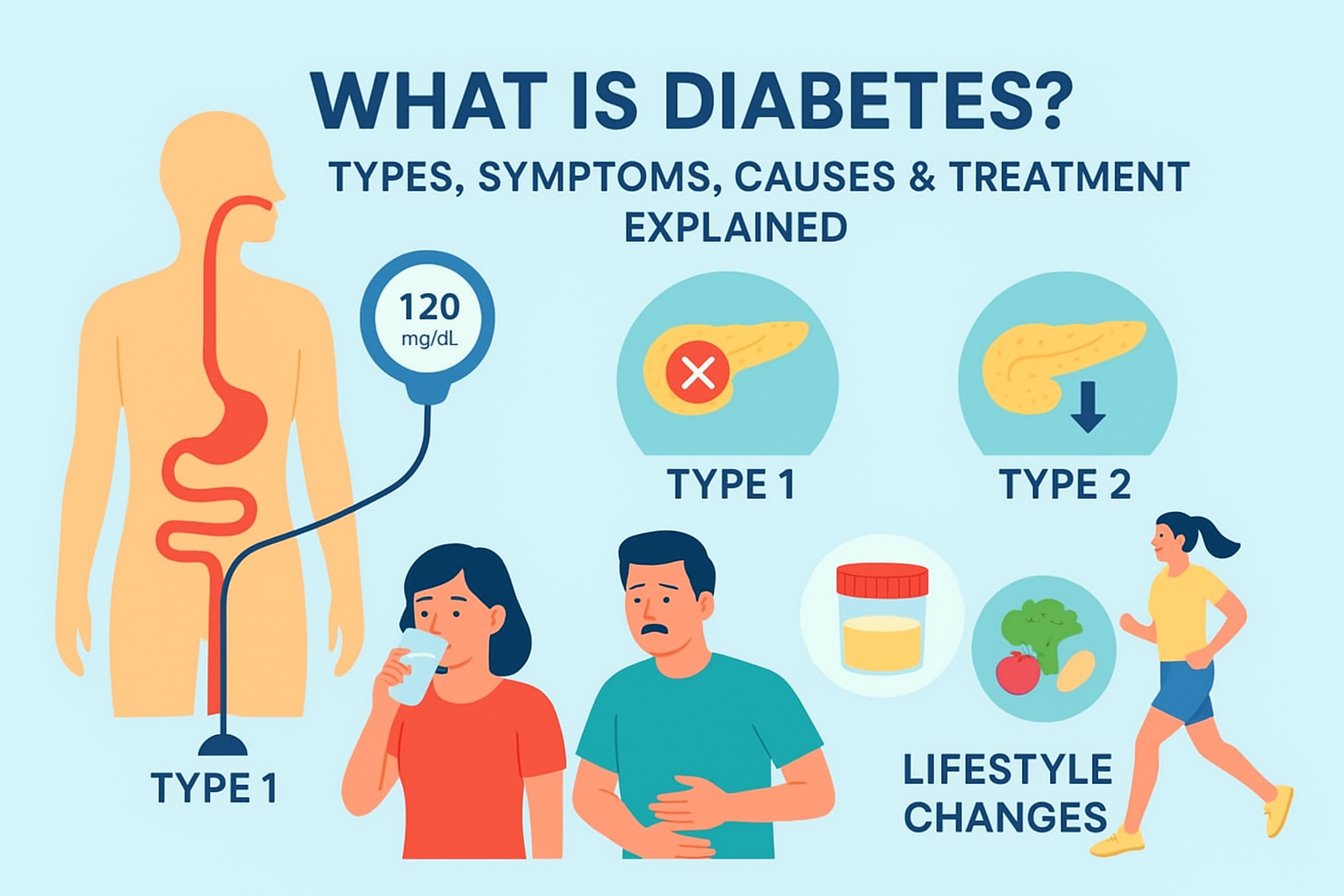
What Is Diabetes? Types, Symptoms, Causes & Treatment Explained
By Dr. Amit Kr Pandey in Internal Medicine
Nov 7, 2025
What Is Diabetes? Types, Symptoms, Causes & Treatment Explained
Let’s talk about something many of us hear about — diabetes. It’s one of those terms that can feel intimidating, but when you break it down it becomes far more manageable. In simple terms, diabetes means your body has trouble managing sugar (glucose) in your blood. Over time if left unchecked, this can affect your health in various ways. The good news? With the right know-how and lifestyle tweaks, you can live well. Here’s everything you need to know — from types and symptoms to causes and treatment — explained in a friendly, reader-friendly way.
What Is Diabetes?
When you eat, your body turns food into glucose, which travels in your blood to cells that need it for energy. The hormone insulin helps move glucose from the blood into the cells. If your body either isn’t making enough insulin, or can’t use it properly, glucose builds up in your blood instead of entering your cells. That is essentially what diabetes is.
High blood sugar over time can damage organs, blood vessels and nerves, which is why it’s important to know what’s going on.
Types of Diabetes
Here are the main types you’ll hear about — each with its own story.
Type 1 Diabetes
This form happens when your immune system attacks the insulin-making cells in your pancreas. That means your body can’t produce enough (or any) insulin. Usually shows up in younger people, but it can occur at any age.
Because insulin is missing, it requires insulin therapy (injections or pump) for life.
Type 2 Diabetes
This one is much more common. Here, your body still produces insulin, but the cells become resistant to it (or the pancreas eventually makes less). Often linked to lifestyle factors like being overweight, lack of exercise, poor diet — but genetics also play a role.
It develops gradually and sometimes silently, so many people don’t even realise until they’re screened.
Gestational Diabetes
This happens during pregnancy when hormonal changes make insulin work less effectively. While it may go away after childbirth, it raises the risk of type 2 diabetes later in life for both mother and child.
It’s less common than types 1 and 2, but still important.
Other / Prediabetes
There’s also a stage called prediabetes (blood sugar higher than normal but not yet diabetes) and other rarer types (genetic, induced by drugs, etc
Recognising this early gives you a chance to change direction.
Symptoms of Diabetes
What should you watch out for? Here are common signs:
- Feeling very thirsty, drinking more than usual.
- Peeing more often, including waking at night to go.
- Feeling tired, weak, losing weight without trying.
- Blurry vision, slow-healing wounds, more infections.
- For type 1: symptoms often come on quickly. For type 2: may be subtle and build up over time.
If you notice any of these, especially if you have risk factors, it’s a good idea to check in with a doctor.
Causes & Risk Factors
So, what leads to diabetes? It depends on the type.
For Type 1
- Your immune system destroys insulin-producing cells in the pancreas.
- Genetics and possibly environmental triggers (like viruses) may be involved.
- Unfortunately, type 1 cannot currently be prevented.
For Type 2
- Insulin resistance: your cells don’t respond well to insulin.
- Risk factors include being overweight (especially around the belly), inactive lifestyle, poor diet, family history, age.
- Even things like sleep problems and stress are now seen as contributing factors.
For Gestational Diabetes
- Hormonal changes in pregnancy make insulin less effective.
- Being overweight, older maternal age, family history of diabetes increase risk.
Treatment & Management
Great news: Diabetes is manageable. While type 1 isn’t currently curable, you can live a full life with it. Type 2, with early action, can often be well-controlled — sometimes even reversed in certain cases with major lifestyle changes.
Lifestyle First
- Eat a balanced diet: plenty of vegetables, whole-grains, lean proteins; limit processed foods and sugary drinks.
- Move more: aim for moderate exercise most days of the week. It helps insulin work better.
- Maintain a healthy weight. Even modest weight loss helps.
- Other habits: Sleep well, manage stress, avoid smoking — they all impact blood sugar control.
Medical Treatment
- For type 1: Insulin injections or an insulin pump are essential. Also regular blood-glucose monitoring.
- For type 2: If lifestyle isn’t enough, there are many medications: oral tablets, newer injectables, eventually insulin if needed.
- For gestational: Diet and exercise are first line; if needed, insulin or other treatments under doctor’s care.
Monitoring & Follow Up
Regular check-ups, keeping blood sugar in target range, checking for complications (eyes, kidneys, nerves) — all important for long-term health.
Why Early Detection Matters
Because the earlier you catch things and act, the better you can avoid serious complications. High blood sugar over time can harm your heart, eyes, kidneys and nerves.
So quick recognition + good habits = big difference.
Conclusion
Diabetes might sound scary, but the story doesn’t end there. Understanding what it is, recognising the different types, knowing the symptoms, understanding the causes and taking action — lifestyle changes + medical support — are all within your control. Whether you’re living with diabetes, at risk of it or want to help someone you care about — you now have a clear map for what to do. Keep in mind: check in with a healthcare professional for diagnosis and personalised care.
FAQs
Q1: Can diabetes be cured?
A: For type 1, there’s no cure yet — insulin is necessary. For type 2, significant lifestyle changes can sometimes lead to remission, but you still need ongoing monitoring.
Q2: What’s the main difference between type 1 and type 2?
A: Type 1 = your body doesn’t make insulin (autoimmune). Type 2 = your body makes insulin but can’t use it effectively (resistance) + eventually less production.
Q3: Can children get diabetes?
A: Yes. Type 1 is common in children but type 2 is increasingly seen in younger age groups as well, especially where obesity and inactivity are factors.
Q4: How can I reduce my risk of getting type 2 diabetes?
A: Keep a healthy weight, eat well, stay active, avoid tobacco, get regular checks especially if you have family history or other risk factors.