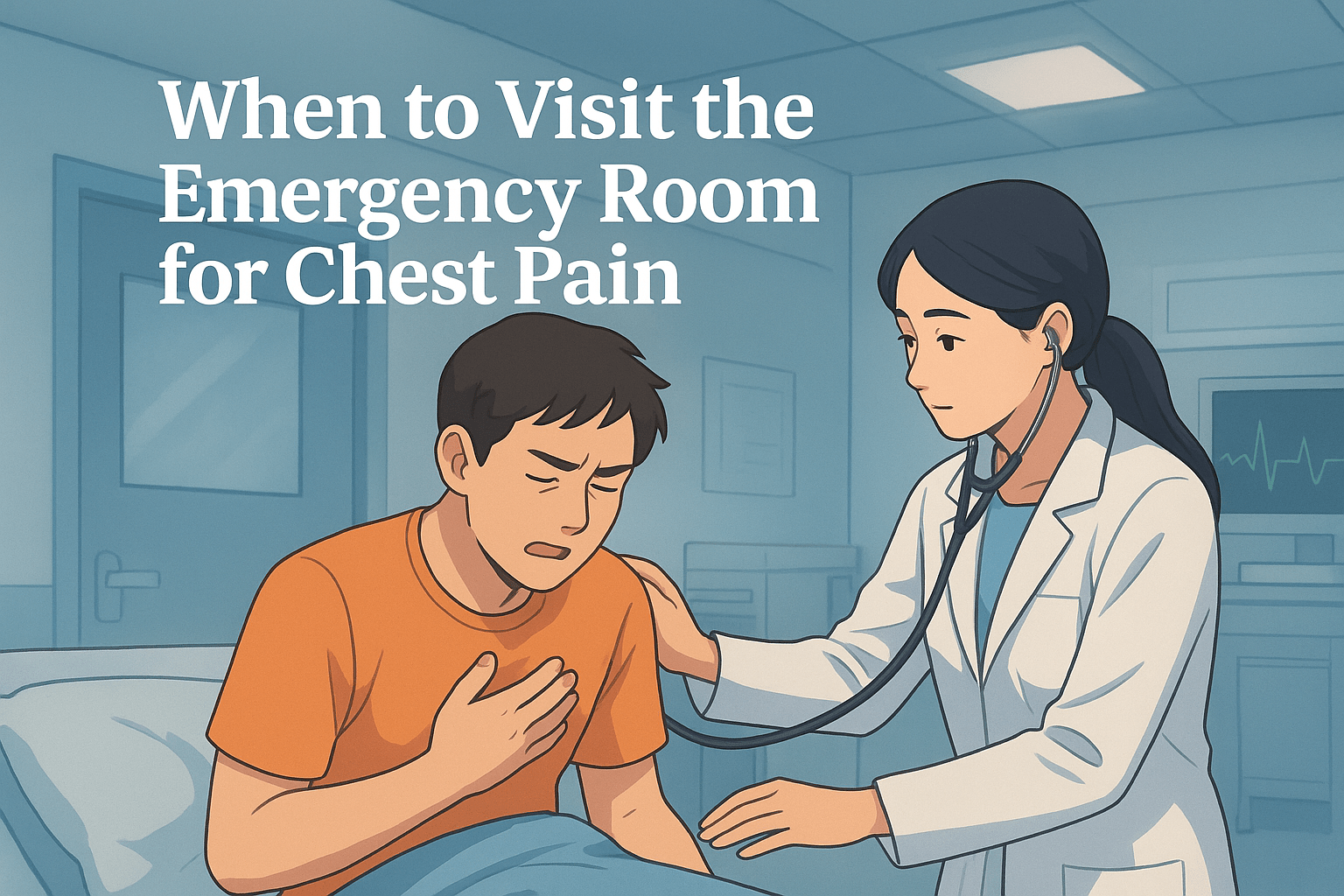
When to Visit the Emergency Room for Chest Pain: A Complete Guide
By Dr. Prashant Tarakant Upasani in Interventional Cardiology
Nov 29, 2025
When to Visit the Emergency Room for Chest Pain: A Complete Guide
Chest pain is one of the most common reasons people rush to the emergency room — and for good reason. While not all chest pain signals a heart attack, any delay in treatment can be life-threatening if the pain turns out to be cardiac in nature. Many patients often wait, hoping the discomfort will go away on its own. Unfortunately, that wait can lead to irreversible heart damage.
This guide explains exactly when to visit the emergency room for chest pain, what symptoms you must never ignore, and how doctors diagnose the cause of chest discomfort.
Understanding Chest Pain: Why It Should Never Be Ignored
Chest pain can originate from several organs in the chest, including the heart, lungs, esophagus, or chest muscles. Sometimes it may even come from nerves or the upper abdomen. The pain can feel like:
- Tightness
- Pressure
- Burning
- Stabbing
- Dull ache
- Discomfort that comes and goes
Because the causes vary widely — from acidity to heart attack — the safest approach is to assume it may be cardiac until proven otherwise.
When Chest Pain Is an Emergency: Warning Signs You Must Not Ignore
If you experience any of the following, go to the Emergency Room immediately. These are classic signs of a cardiac emergency.
1. Heavy, Pressure-like Chest Pain
A heart attack usually feels like:
- A heavy weight on the chest
- Squeezing or tightness
- Pain that lasts more than 5 minutes
This is the most critical warning sign and should never be ignored.
2. Pain Radiating to Other Areas
Cardiac pain does not always stay in the chest. It may spread to:
- Left arm
- Shoulder
- Jaw
- Neck
- Back
Radiating pain indicates the heart may not be receiving enough blood supply.
3. Shortness of Breath
If you cannot catch your breath, feel breathless while resting, or suddenly lose the ability to breathe properly, it may indicate:
- Heart attack
- Pulmonary embolism (blood clot in the lungs)
- Heart failure
Immediate treatment is crucial.
4. Sweating, Nausea, or Vomiting
A heart attack often causes:
- Cold sweats
- Sudden nausea
- Unexplained vomiting
These symptoms alongside chest pain usually point toward a cardiac cause.
5. Chest Pain Triggered by Physical Activity
If chest pain begins when you are:
- Walking
- Climbing stairs
- Exercising
and eases with rest, this could be angina, a sign of narrowed heart arteries. It requires urgent evaluation.
6. Sudden Severe, Tearing Pain
A very intense, sharp pain that feels like the chest is tearing apart may indicate:
- Aortic dissection, a medical emergency with high mortality
- Pulmonary embolism
Get immediate help.
7. Chest Pain After COVID, Viral Infection, or Fever
Post-infection chest pain may be due to:
- Myocarditis (inflammation of the heart muscle)
- Pericarditis (inflammation of the lining around the heart)
Both conditions need emergency assessment.
8. High-Risk Individuals Should Never Delay
People with the following conditions should visit the ER even if the chest pain is mild:
- Diabetes
- High blood pressure
- High cholesterol
- Smoking history
- Obesity
- Previous heart attack
- Previous angioplasty or bypass surgery
- Family history of early heart disease
These groups may experience “silent” or mild symptoms during a heart attack.
When Chest Pain May Not Be an Emergency
Not all chest pain requires an ER visit. Sometimes the cause is less dangerous, such as:
1. Acid Reflux or Gastritis
Burning pain after eating, bloating, and belching.
2. Muscle Strain
Pain that worsens with movement, deep breathing, or touching the area.
3. Anxiety or Panic Attacks
Sharp, temporary, fast-onset chest discomfort with fear or hyperventilation.
4. Costochondritis
Inflammation of joints between the ribs.
However:
If you are unsure — always go to the ER. Chest pain should never be self-diagnosed.
What to Expect in the Emergency Room
Doctors will quickly assess your condition using:
1. ECG (Electrocardiogram)
Detects heart attack or rhythm problems within minutes.
2. Troponin Blood Test
Measures cardiac enzymes that rise when heart muscle is damaged.
3. Chest X-ray
Checks lungs, ribs, and heart enlargement.
4. CT Scan or Echocardiography
Performed if aortic dissection, pulmonary embolism, or heart failure is suspected.
5. Oxygen Saturation & Vitals Monitoring
To stabilise breathing and heart rate.
These tests help identify life-threatening issues early and start treatment immediately.
What Happens If You Delay Going to the ER?
Waiting too long can cause:
- Permanent heart muscle damage
- Reduced heart function
- Heart failure
- Arrhythmia (irregular heartbeat)
- Sudden cardiac death
In case of a heart attack, every minute of delay increases the risk of mortality.
Preventing Chest Pain: Tips for Heart Health
- Maintain healthy blood pressure and cholesterol
- Avoid smoking and alcohol abuse
- Exercise regularly
- Manage stress and sleep well
- Eat a heart-friendly diet
- Get regular cardiac check-ups if you are high-risk
Chest pain is not something you can afford to ignore. Whether the cause is minor or serious, only a medical professional can make that distinction. If you experience chest discomfort, especially with symptoms like sweating, breathlessness, jaw/arm pain, or dizziness — go to the Emergency Room immediately.
FAQs
1. When should I visit Metro Hospital Noida for chest pain?
If you experience chest heaviness, pressure, tightness, breathlessness, sweating, nausea, or pain radiating to the arm or jaw, visit the Emergency Room at Metro Hospital, Noida immediately. These can be early signs of a heart attack.
2. Is Metro Hospital Noida equipped to handle emergency chest pain or heart attacks?
Yes. Metro Hospital Noida has a 24×7 Emergency Department, in-house cardiologists, a fully equipped Cath Lab, and rapid ECG/troponin testing to diagnose and treat heart attacks quickly.
3. What are the warning signs of chest pain that require immediate attention in Delhi NCR?
Persistent chest pain, difficulty breathing, sweating, dizziness, or jaw/arm pain should prompt an immediate visit to an emergency hospital like Metro Hospital (Noida/Delhi NCR).
4. How quickly does Metro Hospital Noida respond to heart attack cases?
Metro Hospital aims for a door-to-balloon time under 90 minutes, ensuring faster angioplasty and better heart muscle survival during emergencies.
5. Should I visit Metro Hospital or call an ambulance in Noida if my chest pain is severe?
If chest pain is intense, call the Metro Hospital Noida ambulance or the 108 emergency service immediately. Do not drive yourself.
6. Does Metro Hospital provide advanced testing for chest pain?
Yes. Metro Hospital performs:
- ECG
- Troponin test
- Chest X-ray
- Echocardiography
- CT scan (if needed)
All available 24×7 for chest pain evaluation.
7. Can I come to Metro Hospital Noida for chest pain caused by acidity or anxiety?
Yes. Even if the cause is acidity, gas, stress, or muscle strain, Metro Hospital’s ER will evaluate and rule out serious cardiac conditions for safety.
8. Is chest pain after COVID or viral infections treated at Metro Hospital Noida?
Absolutely. Metro Hospital treats post-COVID chest pain, myocarditis, and pericarditis—conditions that require timely diagnosis by a cardiac specialist.
9. Should senior citizens in Noida visit Metro Hospital for mild chest discomfort?
Yes. Elderly patients with diabetes, BP, cholesterol issues, or previous heart problems should visit Metro Hospital Emergency even for mild symptoms.
10. Where can I get 24×7 emergency chest pain treatment in Delhi NCR?
Metro Hospital in Noida, Delhi NCR offers 24×7 emergency care, cardiology services, and advanced heart attack management.