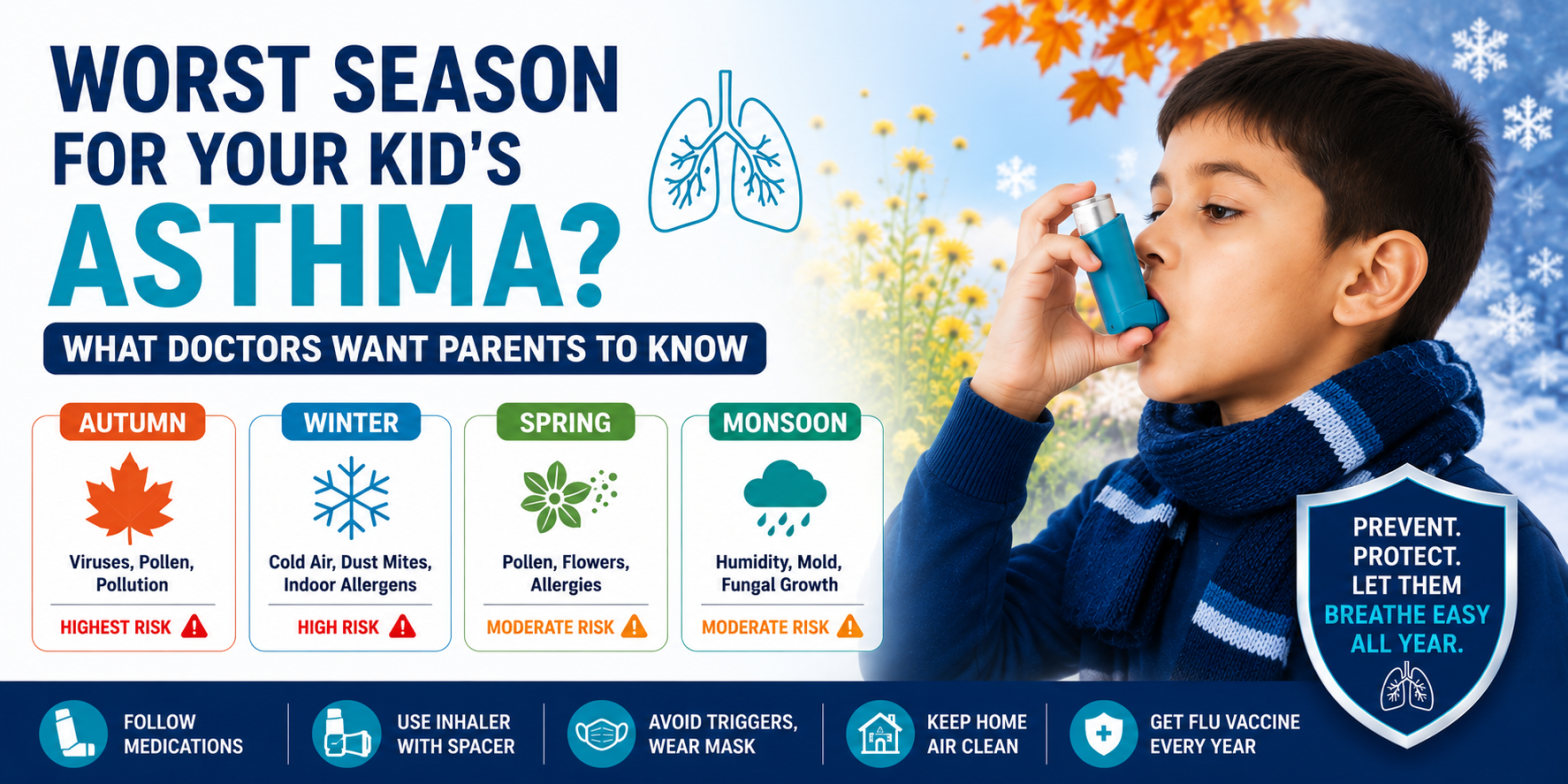
Worst Season for Your Kid’s Asthma?
By Dr. Deepak Prajapat in Pulmonology, Respiratory & Sleep Medicine
Jul 24, 2026
Worst Season for Your Kid’s Asthma? Read What Doctors Want Parents to Know
Why Seasonal Changes Trigger Pediatric Asthma
For parents of a child living with asthma, every seasonal transition brings a quiet sense of apprehension. While asthma is a chronic, year-round respiratory condition, most parents observe a sharp spike in emergency visits, nocturnal coughing, and wheezing during specific months of the year.
If you have ever asked yourself which season is the absolute worst for your child’s asthma, the clinical answer is clear: late autumn through early winter, followed closely by spring.
Understanding how seasonal environmental triggers interact with hyper-reactive pediatric airways is the critical first step toward preventing severe asthma attacks. At Metro Group of Hospitals, our pediatric pulmonology specialists emphasize that seasonal asthma exacerbations are largely manageable—and often preventable—with early clinical intervention, strict medication compliance, and proactive environmental controls.
Fall / Autumn: The Highest-Risk Season for Pediatric Asthma
Epidemiologists and paediatricians frequently refer to September and October as the “September Asthma Peak.” Globally and across India, late autumn represents the single most dangerous period for childhood asthma control.
Autumn / Early Winter Surge
├── September – October: Classroom return → Rapid spread of Rhinovirus
├── Late October – November: Agricultural burning, festive smoke, falling temperatures
└── Post-Monsoon Mold & Mites: Indoor dampness & high humidity
Key Autumn Triggers:
- The School Return & Viral Outbreaks:
When children return to school after holidays, viral transmission surges. The human rhinovirus (the common cold) is responsible for up to 80% of childhood asthma flare-ups. A mild cold in a healthy child can cause severe bronchial airway narrowing in an asthmatic child.
- Post-Monsoon Mold Spores & Ragweed Pollen:
Dampness left behind by monsoon rains creates an ideal environment for indoor and outdoor mold spores to multiply. Concurrently, weed pollen peaks in early autumn.
- Smog Inversion & Temperature Drops:
As atmospheric temperatures cool in late October and November, stagnant cold air traps particulate matter ( and
), crop smoke, and urban pollution close to ground level. Inhaling these toxic particles directly ignites mucosal inflammation in hyper-reactive young lungs.
Winter: Cold Air and Indoor Allergen Overload
While autumn brings sharp, sudden spikes in emergency admissions, winter poses a sustained daily challenge for pediatric asthma management.
Why Winter Air Worsens Respiratory Symptoms:
- Cold, Dry Air as a Direct Bronchoconstrictor: Cold air holds significantly less moisture. When a child breathes in cold, dry winter air, it rapidly dehydrates the airway mucosa, causing sudden smooth muscle spasms (bronchospasm).
- Concentrated Indoor Allergens: Families keep doors and windows closed to keep out the cold, trapping indoor pollutants. Asthmatic children spend more time breathing in:
- House Dust Mites: Concentrated in heavy woolens, quilts, blankets, and carpets.
- Pet Dander: Unventilated indoor air increases pet allergen exposure.
- Heating Fumes: Unvented heaters or biomass heating release nitrogen dioxide (
), a potent lung irritant.
Spring: The Floral & Tree Pollen Surge
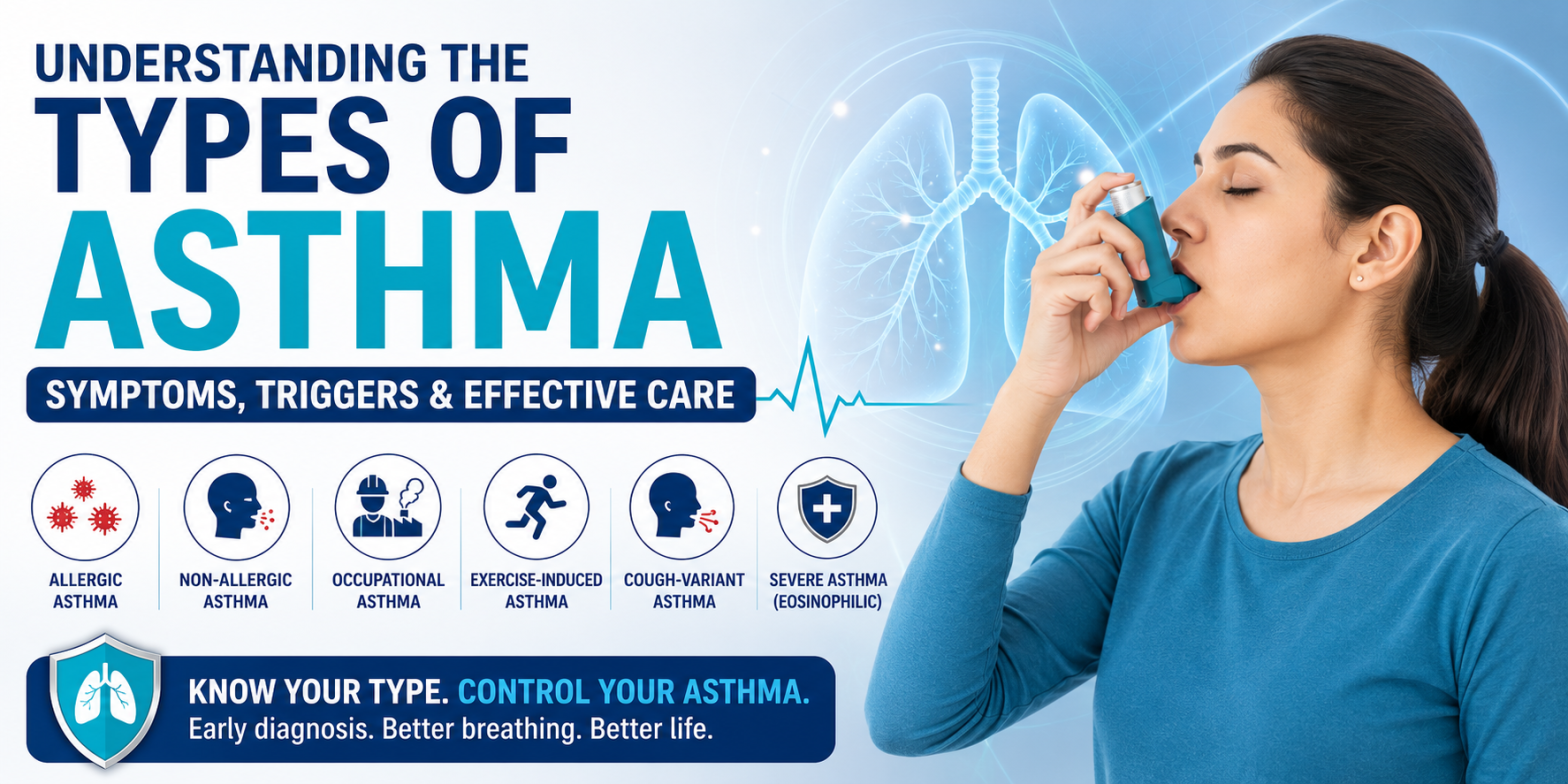
Spring (February to April) is the classic season for allergic diseases. For children diagnosed with allergic (atopic) asthma, tree and grass pollens trigger an IgE-mediated immune cascades.
When an allergic child inhales microscopic pollen grains, their immune system mistakenly releases histamines and leukotrienes. This biochemical reaction causes immediate bronchial wall swelling, fluid retention, and thick mucus production.
Seasonal Risk Assessment Matrix
To help parents anticipate seasonal hazards, our pediatric care team has mapped out this quick comparative guide:
| Season | Primary Environmental Triggers | Dominant Symptoms | Clinical Risk Level |
| Autumn (Sept–Nov) | Rhinovirus, Ragweed pollen, Crop smoke, | Severe acute attacks, nocturnal cough | Highest (Emergency Risk) |
| Winter (Dec–Jan) | Cold dry air, Dust mites, Closed indoor spaces | Persistent wheezing, chest tightness | High (Sustained Symptoms) |
| Spring (Feb–Apr) | Tree and grass pollen, Floral spores | Sneezing, runny eyes, exertion wheeze | Moderate (Allergic Peak) |
| Monsoon (Jul–Aug) | Dampness, High humidity, Fungal mold | Heavy labored breathing, lethargy | Moderate (Mold Peak) |
Red Flag Symptoms: When to Seek Immediate Emergency Care
Children often experience difficulty verbalizing airway distress. Parents must learn to spot physical signs of respiratory distress:
🚨 Emergency Warning Signs in Children:
- Retractions: The skin pulling in tightly between the ribs, under the breastbone, or at the base of the neck during inhalation.
- Nasal Flaring: Nostrils widening significantly with every breath.
- Abdominal Breathing: The stomach moving rapidly in and out instead of normal chest expansion.
- Speech Interruption: Inability to speak a full sentence without stopping to catch breath.
- Cyanosis: A bluish or grayish discoloration around the lips, tongue, or nail beds.
Doctor-Recommended Preventive Action Plan
Our pediatric pulmonology experts recommend this 5-step strategy to keep your child’s lungs protected throughout seasonal shifts:
1. Never Discontinue Controller Medications
The most common mistake parents make is stopping daily preventive (controller) inhalers when the child appears healthy during low-risk months. Controller medications keep underlying airway inflammation low. Always consult your pediatrician before altering dosages.
2. Always Use a Metered-Dose Inhaler with a Spacer
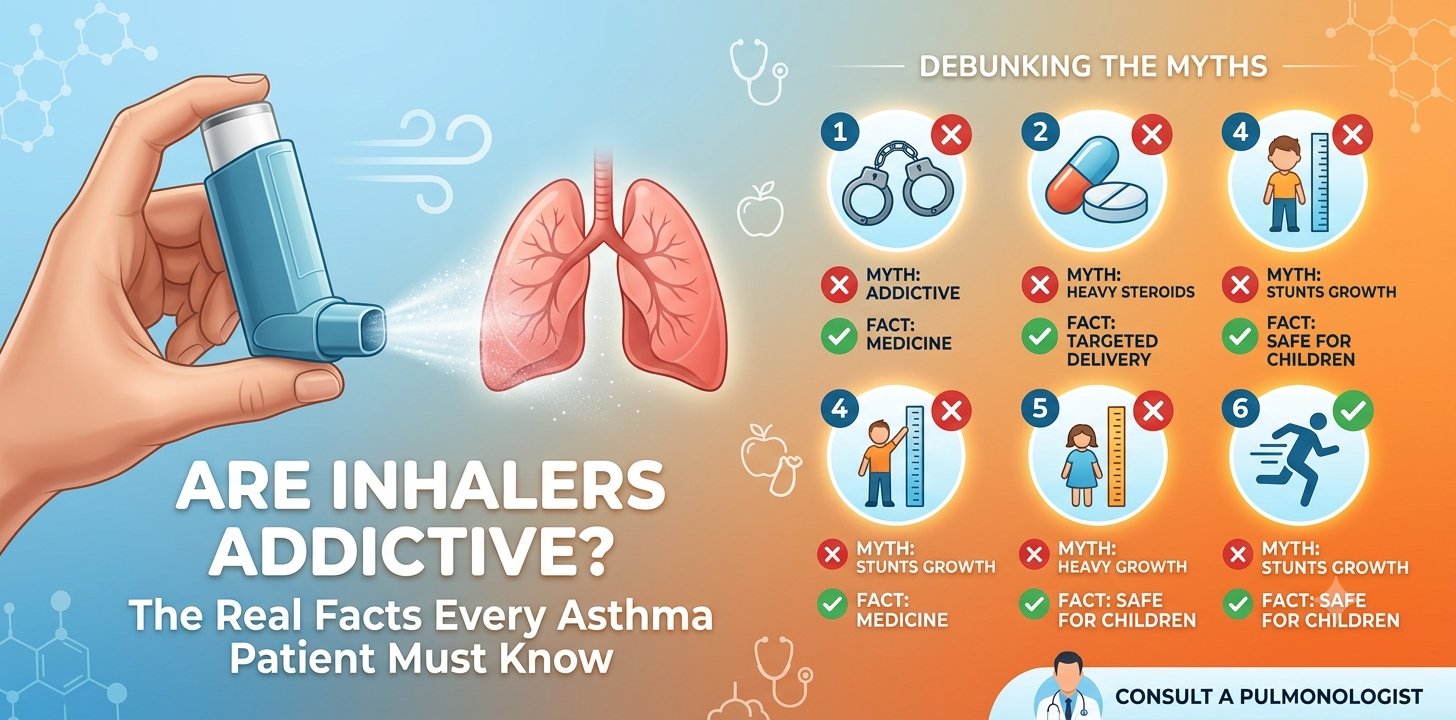
Inhaled therapy delivers medication directly to bronchial tissues with virtually no systemic side effects. Children should always use a spacer device (with a face mask for children under 5 years) to ensure the aerosol reaches deep into lung tissues rather than settling in the throat.
3. Practice Environmental Masking & Purification
During high-pollution or high-pollen days:
- Ensure your child wears a well-fitted N95 or particulate mask outdoors.
- Keep home windows closed during peak morning pollution hours (5:00 AM – 10:00 AM).
- Place a HEPA-filter air purifier in your child’s bedroom.
4. Wash Heavy Winter Bedding in Hot Water
Before using winter blankets, quilts, or heavy jackets stored in closets, wash them in hot water () and dry them in direct sunlight to eliminate dust mites and accumulated storage mold.
5. Administer the Annual Influenza Vaccine
Because viral infections are the single largest trigger for critical asthma hospitalizations, the annual flu vaccine is strongly recommended for all asthmatic children over 6 months of age.
Frequently Asked Questions (FAQs)
Q1. Which season is clinically considered the worst for childhood asthma?
Answer: Late autumn through early winter (September to November) is clinically considered the worst period for pediatric asthma. This peak is driven by a combination of back-to-school viral infections (rhinovirus), post-monsoon mold spores, weed pollen, and severe smog/particulate pollution.
Q2. Why does cold weather trigger sudden asthma attacks in children?
Answer: Cold, dry winter air acts as a direct physical stimulus that causes bronchoconstriction. Breathing in cold air rapidly dehydrates the moist lining of the airways, triggering sudden muscle spasms and airway narrowing.
Q3. What are the signs that my child needs emergency medical attention for asthma?
Answer: Seek immediate emergency medical care if your child exhibits chest/neck retractions (skin pulling inward around ribs), severe abdominal breathing, nasal flaring, inability to speak complete sentences without pausing, or a bluish tint around the lips and nails.
Q4. Should I stop my child’s daily inhaler if they haven’t had symptoms for a few weeks?
Answer: No. Daily preventive (controller) inhalers maintain low baseline inflammation in the lungs. Stopping them prematurely leaves the airways unprotected when sudden seasonal triggers occur. Any adjustment in dosage should only be done under a doctor’s guidance.
Q5. Can a child with asthma safely participate in sports and physical activities?
Answer: Yes. With an up-to-date Asthma Action Plan and consistent controller medication use, children with asthma can safely participate in all physical activities and sports. Exercise strengthens respiratory muscles and improves overall lung capacity.
Conclusion
While seasonal shifts bring increased risks, pediatric asthma is a fully manageable condition. Equipped with a personalized Asthma Action Plan, proper spacer technique, and preventive strategies, your child can lead an active, healthy life in every season.
If your child experiences persistent seasonal coughing, wheezing at night, or reduced stamina during play, schedule a comprehensive respiratory evaluation with our pediatric experts at Metro Group of Hospitals.