Causes of Dizziness: Why Do We Experience Lightheadedness and What Health Conditions Does It Indicate?
By Dr. Puja Kushwah in Neurosciences Neurology
Aug 20, 2026
Causes of Dizziness: Why Do We Experience Lightheadedness and What Health Conditions Does It Indicate?
Dizziness is one of the most common physical complaints evaluated in clinical practice worldwide. While many individuals dismiss occasional dizzy spells as mere exhaustion, dehydration, or a missed meal, recurring episodes often serve as an early warning signal from the human body. Understanding the clear distinction between general lightheadedness and true vertigo—along with their underlying systemic triggers—is essential for accurate diagnosis and timely clinical intervention.
Understanding the Difference: Dizziness, Vertigo, and Presyncope
Medical professionals categorize dizzy sensations into distinct clinical profiles to pinpoint the precise cause:
- Vertigo: The false perception that your surrounding environment is spinning, tilting, or swaying while you remain completely still.
- Presyncope: A sensation of imminent faintness, lightheadedness, or impending loss of consciousness, often accompanied by sudden weakness, cold sweat, or tunnel vision.
- Disequilibrium: A feeling of unsteadiness, loss of physical balance, or spatial disorientation while walking, without a spinning sensation in the head.
Primary Medical Conditions That Cause Dizziness
Dizziness is a symptom rather than an isolated illness. Comprehensive medical evaluations trace persistent episodes to inner ear dysfunctions, cardiovascular impairments, and metabolic imbalances.
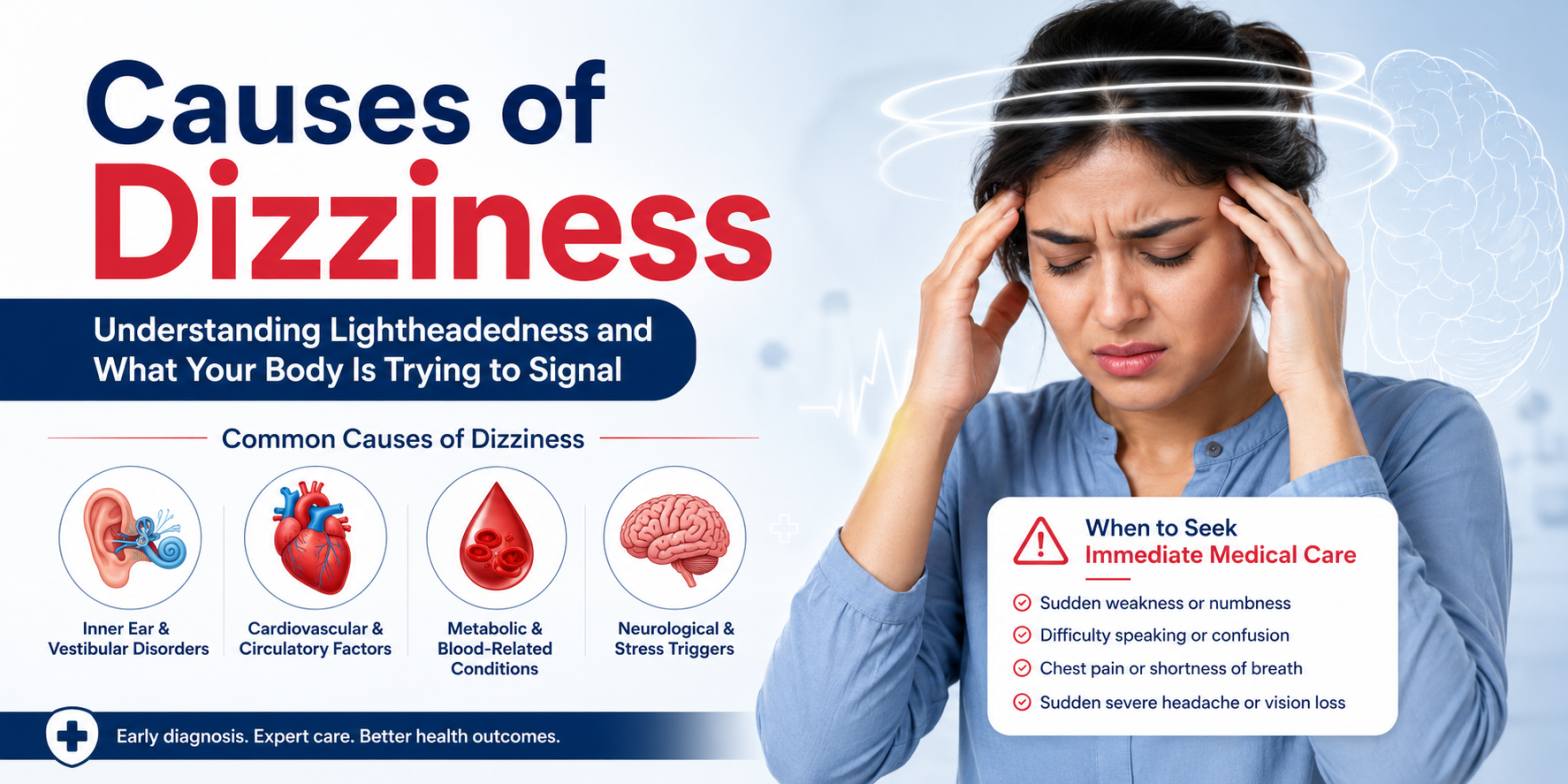
1. Inner Ear and Vestibular Disorders
The inner ear houses the vestibular system, which manages body balance and spatial orientation. Disruptions in these neural signals send conflicting messages to the brain.
- Benign Paroxysmal Positional Vertigo (BPPV): Occurs when tiny calcium carbonate crystals (otoconia) become dislodged and float into the semicircular canals, triggering brief, intense spinning sensations with head movement.
- Meniere’s Disease: Caused by abnormal fluid buildup within the inner ear chambers, leading to unpredictable vertigo attacks, fluctuating hearing loss, and ringing in the ear (tinnitus).
- Labyrinthitis and Vestibular Neuritis: Viral or bacterial infections causing acute inflammation of the inner ear or balance nerve, resulting in sudden, prolonged vertigo and unsteadiness.
2. Cardiovascular and Circulatory Factors
When blood supply to the brain drops even momentarily, lightheadedness follows instantly.
- Orthostatic Hypotension: A rapid drop in blood pressure when transitioning quickly from a sitting or lying position to standing upright.
- Heart Arrhythmias: Irregular heartbeats reduce the heart’s pumping efficiency, leading to temporary oxygen deprivation in brain tissue.
- Atherosclerosis: Hardened or narrowed arteries restrict optimal vascular flow through the carotid system to the brain.
3. Metabolic and Blood-Related Conditions
- Anemia: A deficiency in healthy red blood cells or hemoglobin impairs oxygen delivery across vital organs, causing persistent fatigue, pale skin, and lightheadedness.
- Hypoglycemia: Sudden drops in blood glucose levels—frequently seen in diabetic management—deprive brain cells of primary energy, causing tremors, confusion, sweating, and dizziness.
- Dehydration and Electrolyte Loss: Inadequate fluid volume lowers overall blood pressure, impairing proper cerebral perfusion.
4. Neurological and Stress Triggers
- Vestibular Migraine: A neurological variant where intense dizziness occurs alongside light sensitivity, visual auras, and throbbing headaches.
- Anxiety and Panic Attacks: Hyperventilation (rapid breathing) alters carbon dioxide levels in the bloodstream, triggering acute feelings of unsteadiness and faintness.
Comparative Guide to Primary Causes
| Health Category | Core Underlying Condition | Key Accompanying Symptoms | Recommended Specialist |
| Vestibular (Ear) | BPPV / Meniere’s Disease | Room spinning, nausea, ear fullness, tinnitus | ENT Specialist |
| Cardiovascular | Orthostatic Hypotension / Arrhythmia | Faintness upon standing, chest flutter, sudden weakness | Cardiologist / Internal Medicine |
| Metabolic | Hypoglycemia / Anemia | Cold sweat, pale skin, extreme fatigue, shaking | Physician / Endocrinologist |
| Neurological | Vestibular Migraine / TIA | Throbbing headache, aura, sudden numbness, imbalance | Neurologist |
When Dizziness Becomes an Emergency: Critical Red Flag Symptoms
While mild dizziness due to heat or fatigue often resolves with rest, certain warning signs require immediate emergency medical assessment. Seek urgent care if dizziness is accompanied by:
- Sudden numbness or weakness in the face, arm, or leg (especially on one side)
- Difficulty speaking, slurred speech, or confusion
- Chest pain, shortness of breath, or irregular heartbeat
- Sudden severe headache, high fever, or neck stiffness
- Fainting (syncope) or sudden loss of vision
Preventive Steps and First-Aid Management
If you experience a sudden onset of unsteadiness:
- Sit or Lie Down Immediately: Prevent accidental falls or injuries by lowering your center of gravity.
- Hydrate Steadily: Sip water or an electrolyte solution if heat exposure or fluid loss is suspected.
- Avoid Sudden Movements: Rise slowly from sitting or lying positions to give your vascular system time to adapt.
- Check Blood Sugar: Consume a quick-acting carbohydrate (like fruit juice or glucose) if you suspect a hypoglycemic drop.
Proper diagnosis through blood panels, vestibular evaluations, or cardiovascular monitoring is key to resolving dizziness effectively. Consulting healthcare specialists ensures that underlying health triggers are managed early for long-term health and stability.
Frequently Asked Questions (FAQs)
Q1: What is the most common cause of sudden dizziness?
The most common cause of sudden, position-triggered dizziness is Benign Paroxysmal Positional Vertigo (BPPV), caused by displaced calcium crystals inside the inner ear. Dehydration and sudden drops in blood pressure upon standing are also primary causes.
Q2: Can blood pressure issues cause severe lightheadedness?
Yes. Both low blood pressure (hypotension) and sudden postural shifts (orthostatic hypotension) reduce blood flow to the brain, causing momentary lightheadedness or faintness.
Q3: How do I know if my dizziness is related to an inner ear problem or heart disease?
Inner ear issues usually cause a spinning feeling (vertigo), loss of balance, or ringing in the ears. Heart-related dizziness often feels like faintness, weakness, or lightheadedness without room spinning, sometimes accompanied by chest fluttering or shortness of breath.
Q4: Which specialist should I consult for persistent dizzy spells?
You should start with a General Physician or Internal Medicine specialist for initial screening. Depending on your primary symptoms, they may refer you to an ENT specialist (for inner ear issues), a Cardiologist (for blood pressure or heart concerns), or a Neurologist.
Q5: When does dizziness indicate a neurological emergency like a stroke?
Dizziness accompanied by sudden facial drooping, weakness on one side of the body, slurred speech, double vision, or loss of coordination requires immediate emergency medical attention, as these are classic signs of a stroke or TIA.
Proper diagnosis through blood panels, vestibular evaluations, or cardiovascular monitoring is key to resolving dizziness effectively. Consulting healthcare specialists ensures that underlying health triggers are managed early for long-term health and stability.