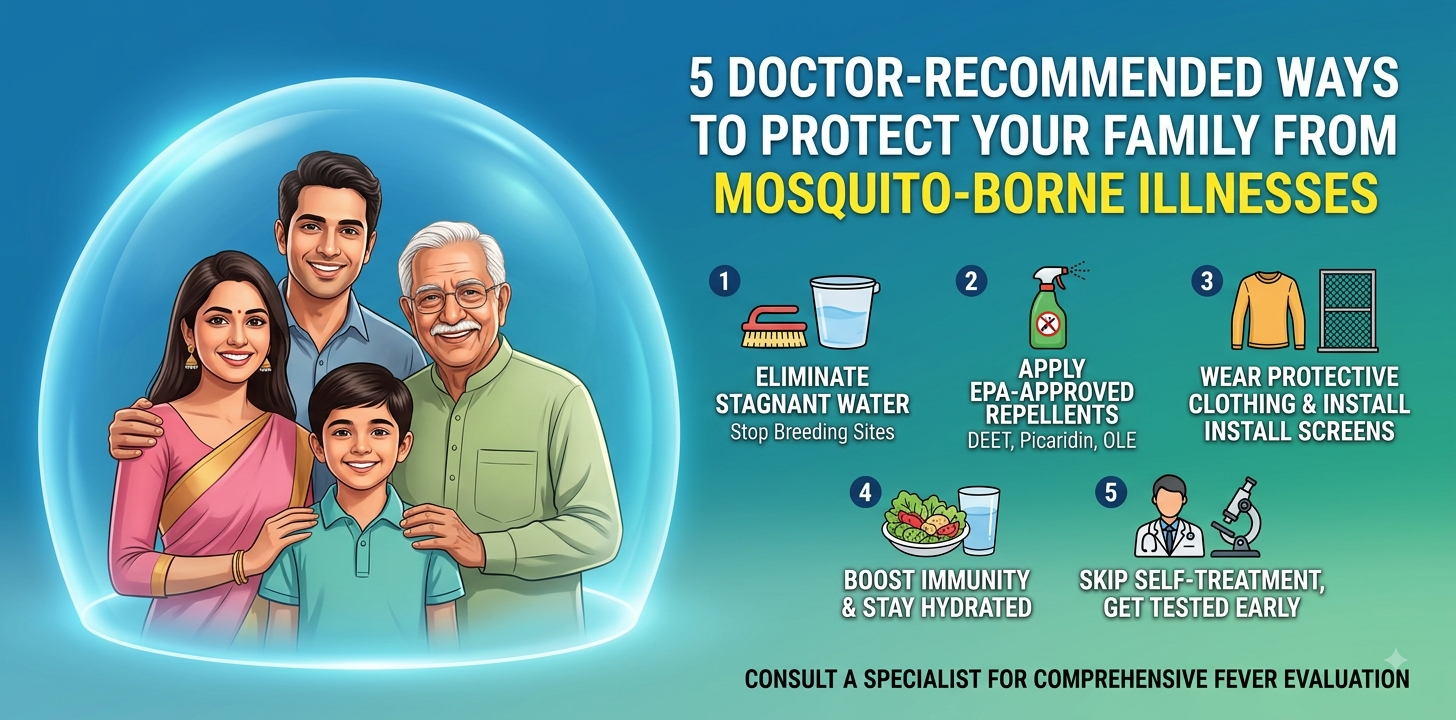
5 Doctor-Recommended Ways to Protect Your Family from Mosquito-Borne Illnesses
By Dr. Saibal Chakravorty in Internal Medicine
Aug 13, 2026
5 Doctor-Recommended Ways to Protect Your Family from Mosquito-Borne Illnesses
With the arrival of the monsoon season and post-rain humidity, healthcare facilities across North India report a noticeable surge in vector-borne diseases. Infections like Dengue, Chikungunya, Malaria, and Zika pose recurring seasonal risks to families, especially young children and elderly household members.
Mosquitoes are more than a seasonal nuisance—they act as carriers for blood-borne viral and parasitic pathogens. While public health authorities take measures such as fogging and vector control in residential neighborhoods, effective prevention begins right inside and around your home.
Internal medicine experts share five evidence-based, practical strategies to safeguard your family from mosquito-borne illnesses this season.
1. Eliminate Indoor and Outdoor Stagnant Water (Vector Breeding Control)
The most effective way to protect your household is to break the mosquito life cycle. Different mosquito species breed in distinct aquatic environments:
- Aedes aegypti (The Dengue & Chikungunya Carrier): These daytime attackers don’t breed in dirty drains; instead, they actively hunt for fresh, undisturbed water hiding right inside and around your home to multiply. They commonly lay eggs in domestic containers, plant saucers, uncovered drums, and discarded tires.
- Anopheles (Malaria vector): Prefer clean, slow-moving or standing water, often active during dusk and dawn.
Actionable Home Audit Steps:
- Empty and Scrub Containers: Change the water in flower vases, pet bowls, and air cooler trays every 3 to 4 days. Scrubbing the inner surfaces is essential, as Aedes eggs adhere tightly to container walls and can survive drying for months.
- Inspect Hidden Corners: Check balcony drain pipes, roof gutters, unused pots, and air conditioner runoff buckets for collected water.
- Cover Water Storage: Ensure all overhead tanks and underground sumps are fitted with tight, unbroken lids.
2. Apply Safe, EPA-Approved Insect Repellents Correctly
Insect repellents create a chemical shield that interferes with a mosquito’s sensory mechanisms, preventing them from detecting human scent, heat, and sweat.
Choosing the Right Active Ingredients:
- DEET (Diethyltoluamide): Formulations containing 10% to 30% DEET offer long-lasting protection against daytime and nighttime biters.
- Picaridin (KBR 3023): An effective, odorless alternative to DEET that is less irritating to sensitive skin.
- Oil of Lemon Eucalyptus (OLE) / PMD: A plant-based option suitable for adults and older children.
Best Practices for Application:
- Apply to Exposed Skin and Clothing: Spray or rub repellent on exposed skin areas, but avoid applying under clothing.
- Pediatric Safety Rules: Never apply chemical repellents directly to the hands, eyes, or mouth of young infants. For children under 2 years of age, rely primarily on physical barriers like mosquito netting over strollers and cribs.
- Sunscreen First, Repellent Second: If you are spending time outdoors, apply sunscreen first, let it absorb for 15 to 20 minutes, and then apply insect repellent.
3. Block Mosquitoes with Protective Clothing and Window Screens
Creating a physical separation between your family and mosquitoes is a simple, non-toxic line of defense.
- Wear Protective Clothing: When stepping outdoors during high-risk hours (early morning and late afternoon), wear loose-fitting, light-colored, long-sleeved shirts and full-length trousers. Wearing light-colored clothes helps keep you cool and makes you far less visible to mosquitoes, which are naturally drawn to darker shades.
- Install Window & Door Mesh: Keep doors and windows fitted with fine-wire or nylon mesh screens to maintain ventilation while keeping insects outside.
- Utilize Bed Nets: For infants, pregnant women, or elderly family members who sleep during the daytime, insecticide-treated bed nets (ITNs) offer reliable physical protection.
Strengthen Immunity and Catch Early Warning Signs Fast
While preventive measures reduce bite exposures, maintaining strong baseline health helps the body mount an effective defense against viral infections.
- Nutritional Support: Focus on a balanced diet rich in Vitamin C, zinc, antioxidants, and adequate dietary protein to support immune function. Include fresh citrus fruits, leafy greens, nuts, seeds, and clear broths.
- Hydration Protocol: Dehydration accelerates complications in mosquito-borne viral illnesses (especially Dengue, where plasma leakage is a core risk). Ensure every family member drinks 2.5 to 3 liters of fluids daily, including water, ORS, coconut water, and home-cooked soups.
Early Symptoms to Monitor:
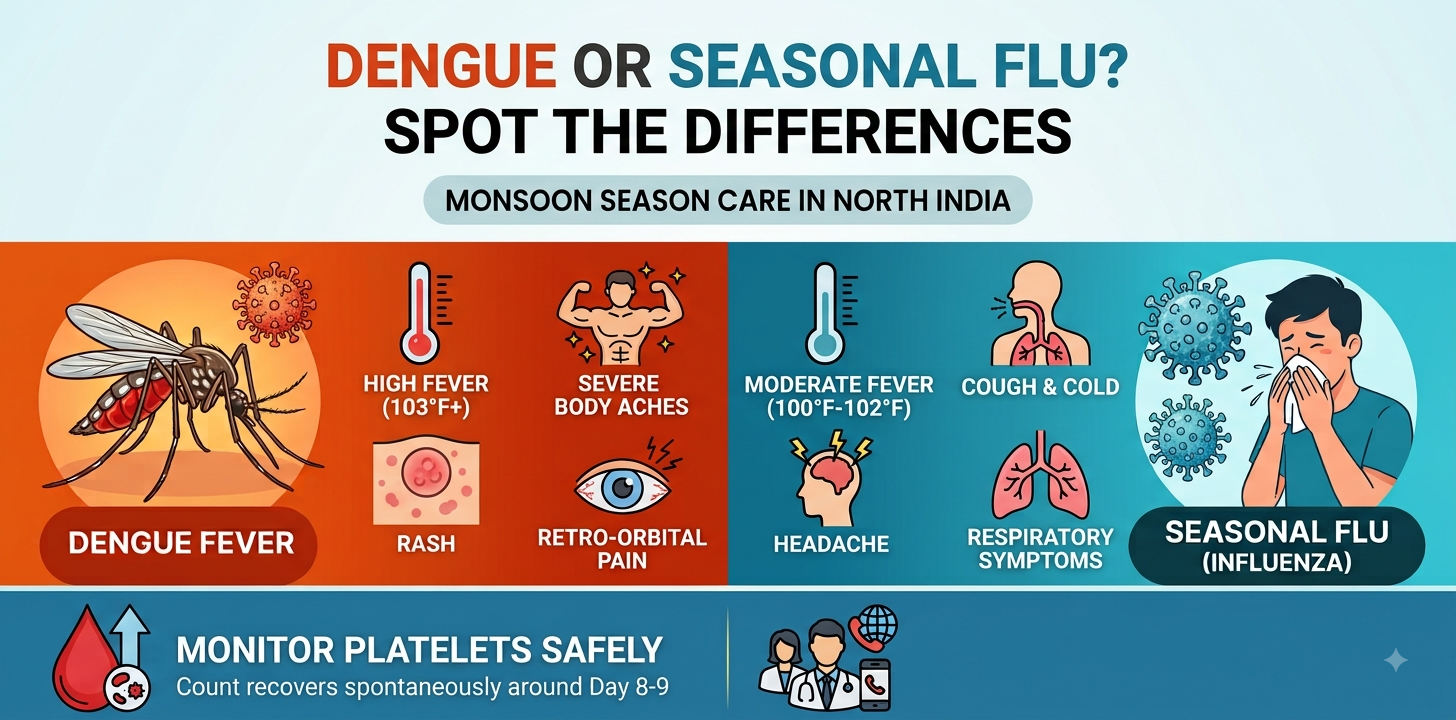
Do not ignore sudden fever spikes during the rainy season. Common early signs across Dengue, Malaria, and Chikungunya include:
- Sudden high body temperature (102°F–104°F).
- Intense headaches accompanied by retro-orbital pain (a deep pain felt directly behind the eyes).
- Intense joint stiffness or body pain (breakbone aches).
- Unexplained skin rashes, nausea, or vomiting.
5. Skip Self-Treatment and Get Tested Early
One of the most dangerous mistakes families make during monsoon fever season is self-medicating with over-the-counter pain relievers.
- Avoid Non-Steroidal Anti-Inflammatory Drugs (NSAIDs): Never administer Aspirin, Ibuprofen, Combiflam, or Diclofenac for fever or body aches if Dengue is suspected. NSAIDs thin the blood and significantly raise the risk of internal gastrointestinal bleeding and severe platelet complications.
- Use Safe Fever Control: Paracetamol (taken as directed by a healthcare provider) is the safest medication to manage fever and pain while awaiting clinical diagnosis.
- Get Tested Early: If a family member develops fever, schedule a consultation with an internal medicine doctor. Early blood tests—such as a Complete Blood Count (CBC), Dengue NS1 Antigen Test, or Malaria Smear/Rapid Test within the first 48 to 72 hours—ensure accurate identification and timely clinical care.
Summary
Protecting your family from mosquito-borne illnesses does not require complex routines; it requires consistency. By systematically eliminating breeding spots in your living space, utilizing safe repellents, wearing protective clothing, staying hydrated, and consulting a physician at the first sign of fever, you can keep your loved ones healthy throughout the monsoon and post-monsoon season.
Frequently Asked Questions (FAQs)
Q1. What is the peak biting time for Dengue and Chikungunya mosquitoes?
Answer: The Aedes mosquito, which transmits Dengue and Chikungunya, is most active during daylight hours, especially during early morning (2 to 3 hours after sunrise) and late afternoon before sunset.
Q2. Are natural remedies like neem oil or eucalyptus effective mosquito repellents?
Answer: Pure essential oils offer short-term protection (often lasting less than 20 to 30 minutes) compared to EPA-registered repellents containing DEET, Picaridin, or Oil of Lemon Eucalyptus (OLE), which provide reliable coverage for 4 to 8 hours.
Q3. When should a fever patient be admitted to the hospital for Dengue?
Answer: Hospital admission is recommended if the patient displays “red flag” symptoms: persistent vomiting, severe abdominal pain, bleeding from gums/nose, extreme lethargy, or if blood tests show a rapid drop in platelet count below 20,000–30,000/µL alongside plasma leakage.
Q4. Where can I find specialized treatment for fever and Dengue near me in Noida / Delhi-NCR?
Answer: You can consult experienced general physicians and internal medicine specialists at Metro Group of Hospitals (Noida, Delhi, Faridabad, and regional centers) for comprehensive fever evaluation, CBC monitoring, and critical care.