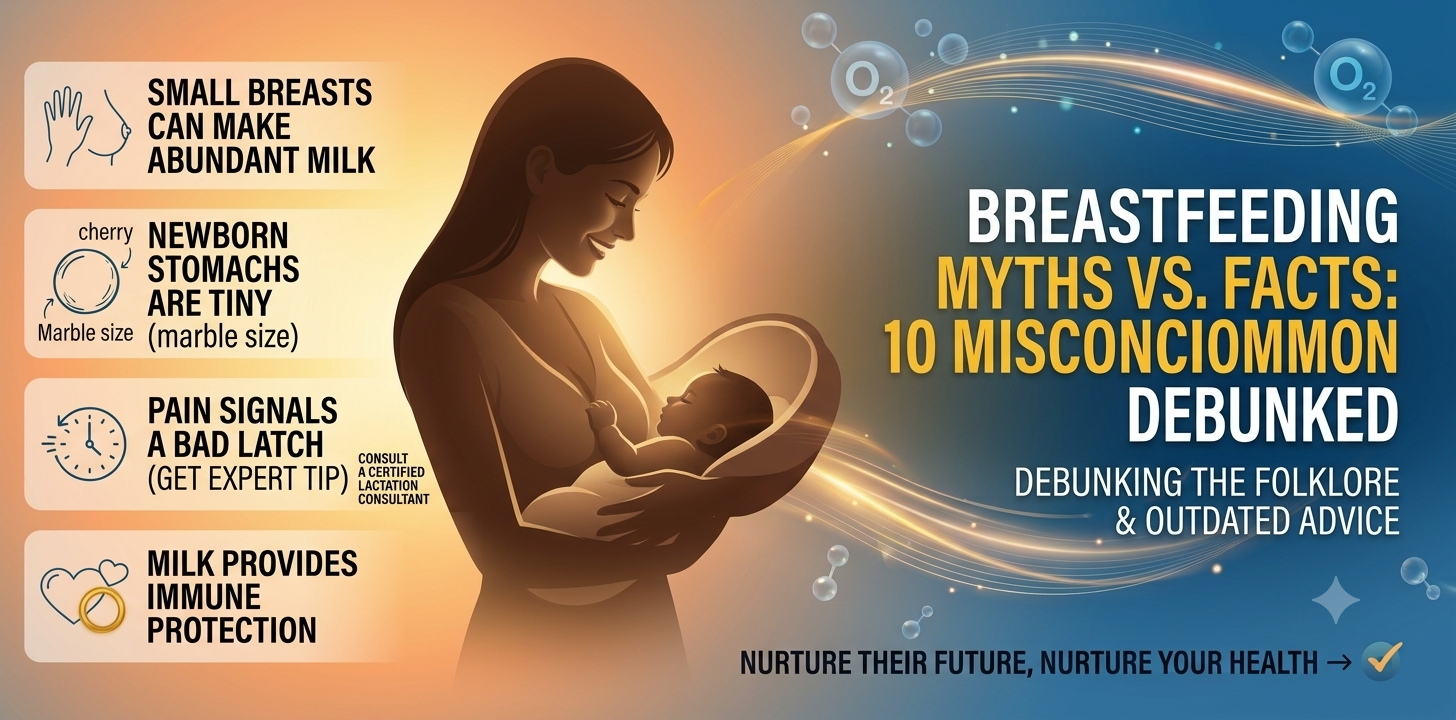
Breastfeeding Myths vs. Facts: 10 Common Misconceptions Debunked
By Dr. Anju Suryapani in Obstetrics & Gynaecology
Aug 3, 2026
Breastfeeding Myths vs. Facts: 10 Common Misconceptions Debunked
Breastfeeding is one of the most natural ways to nourish a newborn, yet it is surrounded by an overwhelming amount of unsolicited advice, outdated folklore, and persistent myths. For new and expectant mothers, separating evidence-based medical facts from well-meaning family myths can be confusing and stressful.
To help you navigate your nursing journey with confidence, we have compiled and debunked 10 of the most common breastfeeding myths using up-to-date guidance from pediatricians, lactation experts, and global health authorities.
Myth 1: Breastfeeding Is Always Natural and Painless
- The Myth: Because breastfeeding is natural, it should instantly come easily and never hurt.
- The Fact: Breastfeeding is a learned skill for both mother and child. While mild nipple tenderness or sensitivity is normal during the first week as your body adjusts, sharp, persistent, or intense pain is not normal. Pain usually indicates an improper latch, poor positioning, or issues like tongue-tie.
Expert Tip: If feeding causes continuous pain or leads to cracked nipples, consult a certified lactation consultant to correct the baby’s latch early on.
Myth 2: You Won’t Produce Enough Milk in the First Few Days
- The Myth: Clear or yellowish early milk isn’t enough, so babies need formula right after birth until “real milk” comes in.
- The Fact: In the first 2 to 4 days post-birth, breasts produce colostrum—a thick, nutrient-dense fluid often called “liquid gold.” A newborn baby’s stomach on Day 1 is only the size of a marble or cherry (holding 5 to 7 ml). Colostrum provides the exact volume, concentrated calories, and protective antibodies your baby needs before mature milk comes in.
Myth 3: Small Breasts Produce Less Milk Than Large Breasts
- The Myth: Breast size dictates your capacity to produce a healthy milk supply.
- The Fact: Breast size is primarily determined by fatty tissue, not the glandular tissue responsible for milk production. Women with smaller breasts have just as much functioning glandular tissue and can produce a abundant milk supply. Milk production relies on supply and demand—the more frequently and effectively a baby feeds, the more milk your body makes.
Myth 4: You Must Eat a Strict Diet and Avoid Spicy Foods
- The Myth: Nursing mothers must adhere to a bland diet and strictly avoid spices, citrus, or gas-producing vegetables like cabbage and lentils.
- The Fact: You do not need a restrictive diet while nursing. Breast milk is created from nutrients drawn from your bloodstream, not directly from undigested food in your stomach. While strong flavors may subtly change the taste of your milk (which actually helps expand your baby’s palate for solid foods later), very few babies react negatively to specific spices. Eat a balanced, nutritious diet that keeps you energized.
Myth 5: You Cannot Breastfeed If You Get Sick
- The Myth: A mother must stop nursing if she catches a cold, flu, fever, or stomach bug to avoid infecting her baby.
- The Fact: In almost all common illnesses, it is safe—and highly beneficial—to continue breastfeeding. When you fall ill, your immune system immediately generates targeted antibodies against that specific pathogen. These antibodies pass directly through your milk, giving your baby active protection against the sickness. Always practice good hand hygiene and consult your doctor regarding medication safety.
Myth 6: Breastfeeding Prevents You from Getting Pregnant
- The Myth: Nursing acts as a 100% effective, foolproof method of birth control.
The Fact: While the Lactational Amenorrhea Method (LAM) can temporarily delay fertility, it is only effective under very specific conditions:
- Your baby is under 6 months old.
- Your menstrual period has not returned.
- You are exclusively breastfeeding on demand (day and night) without long gaps or formula supplementation.
Once feeding intervals widen or solids are introduced, ovulation can resume before your first postpartum period.
Myth 7: You Should Wash Your Nipples Before Every Feed
- The Myth: Nipples must be sanitized or washed with soap before nursing to protect the baby from germs.
- The Fact: Washing your nipples before feeds is unnecessary and harmful. The tiny bumps on your areola (Montgomery glands) secrete natural oils that moisturize the skin and produce a subtle scent that guides your baby to the breast. Washing with soap strips away these beneficial oils, leading to dry, cracked skin. Normal daily showering with plain water is all that is required.
Myth 8: Formula-Fed Babies Sleep Better Than Breastfed Babies
- The Myth: Giving a baby formula at night helps them sleep through the night earlier because it keeps them full longer.
- The Fact: Formula takes slightly longer to digest than breast milk, but infant sleep patterns are driven by neurological development, not just fullness Newborns naturally wake up every few hours to feed—a biological design that keeps their blood sugar stable and significantly lowers the risk of SIDS. Adding formula or cereal to a bottle does not guarantee longer sleep cycles and can cause digestive discomfort.
Myth 9: You Must Stop Breastfeeding When Your Baby Gets Teeth
- The Myth: Once teeth emerge, nursing becomes unsafe or too painful.
- The Fact: Babies cannot bite while actively drinking milk because their tongue covers their bottom gums and teeth to create a seal. Biting typically occurs at the beginning or end of a feed when the baby is distracted or full. If your baby bites, gently unlatch them and re-establish proper positioning.
Myth 10: Pumping Reveals Exactly How Much Milk You Make
- The Myth: If you only pump 1 or 2 ounces, it means your body isn’t making enough milk for your baby.
- The Fact: A breast pump is a machine; it is never as efficient at extracting milk as a healthy, properly latched baby. Low pump yields often reflect pump flange sizing, stress, or your body’s response to the machine—not your actual milk capacity. The true indicators of a healthy supply are your baby’s weight gain and daily wet/dirty diapers.
Quick Reference Table: Myths vs. Facts
| Topic | Common Myth ❌ | Medical Fact ✔️ |
| Pain | Breastfeeding should never hurt at all | Pain signals a bad latch or positioning issue |
| First Milk | Colostrum is not enough for a newborn | Colostrum is perfect for a baby’s tiny stomach |
| Diet | You must avoid spicy and gaseous foods | You can eat a normal, balanced diet |
| Sickness | Stop nursing if you have a cold or fever | Milk carries antibodies that protect the baby |
| Supply | Small breasts mean low milk volume | Supply depends on demand, not breast size |
Frequently Asked Questions (FAQs)
Q1. How do I know if my baby is latched correctly?
A good latch feels comfortable and pain-free. Your baby’s mouth should cover a large portion of the lower areola (not just the tip of the nipple), their lips should flange outward like fish lips, and their chin should rest firmly against your breast.
Q2. When does mature milk usually come in?
Transition milk typically comes in between Day 2 and Day 5 post-birth. Your breasts may feel fuller, firmer, and warmer as milk production increases.
Q3. Can stress affect milk supply?
High stress levels can briefly inhibit the oxytocin release required for your milk to “let down” (flow). While stress doesn’t instantly stop milk production, practicing relaxation techniques and staying hydrated helps maintain smooth milk flow.