Dengue vs. Seasonal Flu: Key Differences and How to Manage Platelet Counts Safely
By Dr. Saibal Chakravorty in Internal Medicine
Aug 12, 2026
Dengue vs. Seasonal Flu: Key Differences and How to Manage Platelet Counts Safely
With the onset of the monsoon season, healthcare facilities across Delhi-NCR, Noida, and surrounding regions witness a sharp surge in fever cases. During this period, a common query patients present in our outpatient departments (OPD) is: “Is my fever a routine seasonal flu, or could it be dengue?”
While both conditions begin with high temperatures and bodily discomfort, distinguishing between them early is critical for effective clinical management. Panic surrounding falling platelet counts often leads patients to attempt unverified home remedies or demand unnecessary hospital admissions.
Here is a comprehensive clinical guide on differentiating Dengue from Seasonal Flu, recognizing warning signs, and managing platelet counts safely.
1. Key Differences: Dengue Fever vs. Seasonal Flu
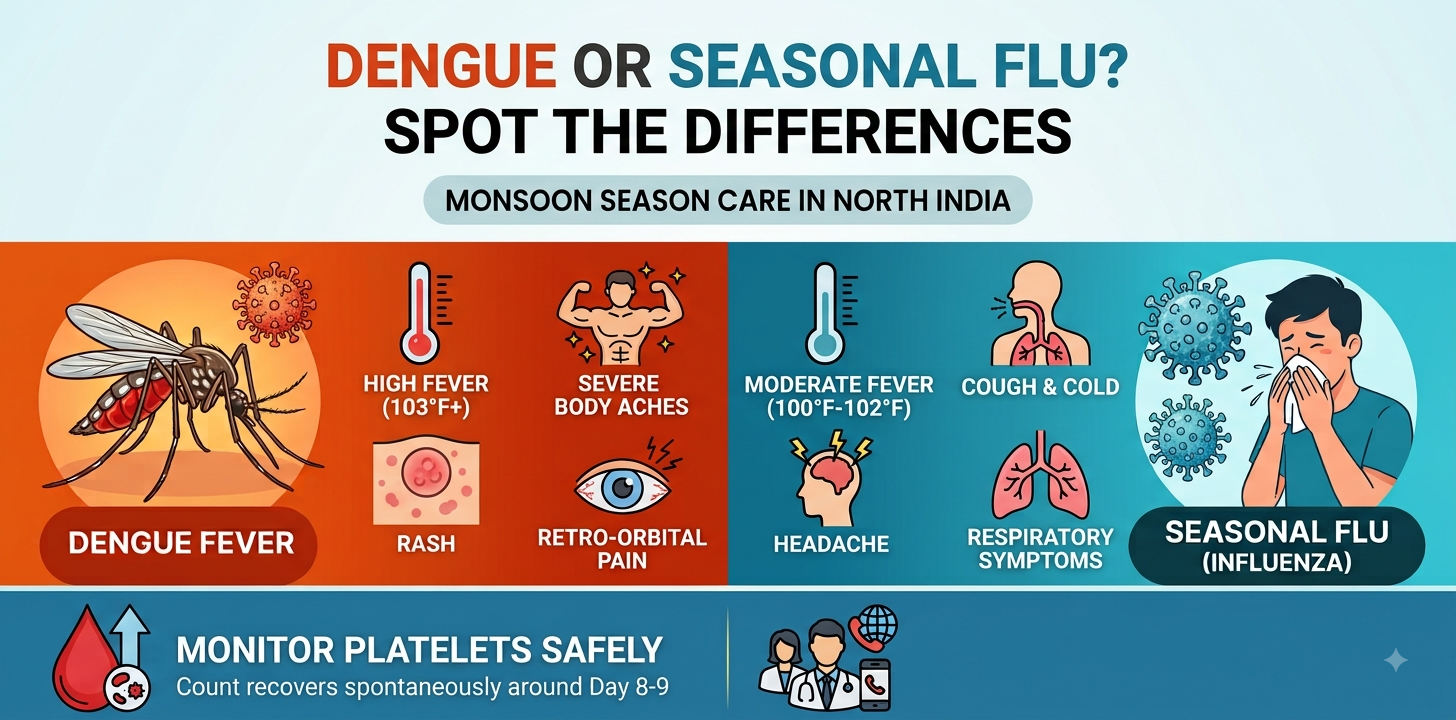
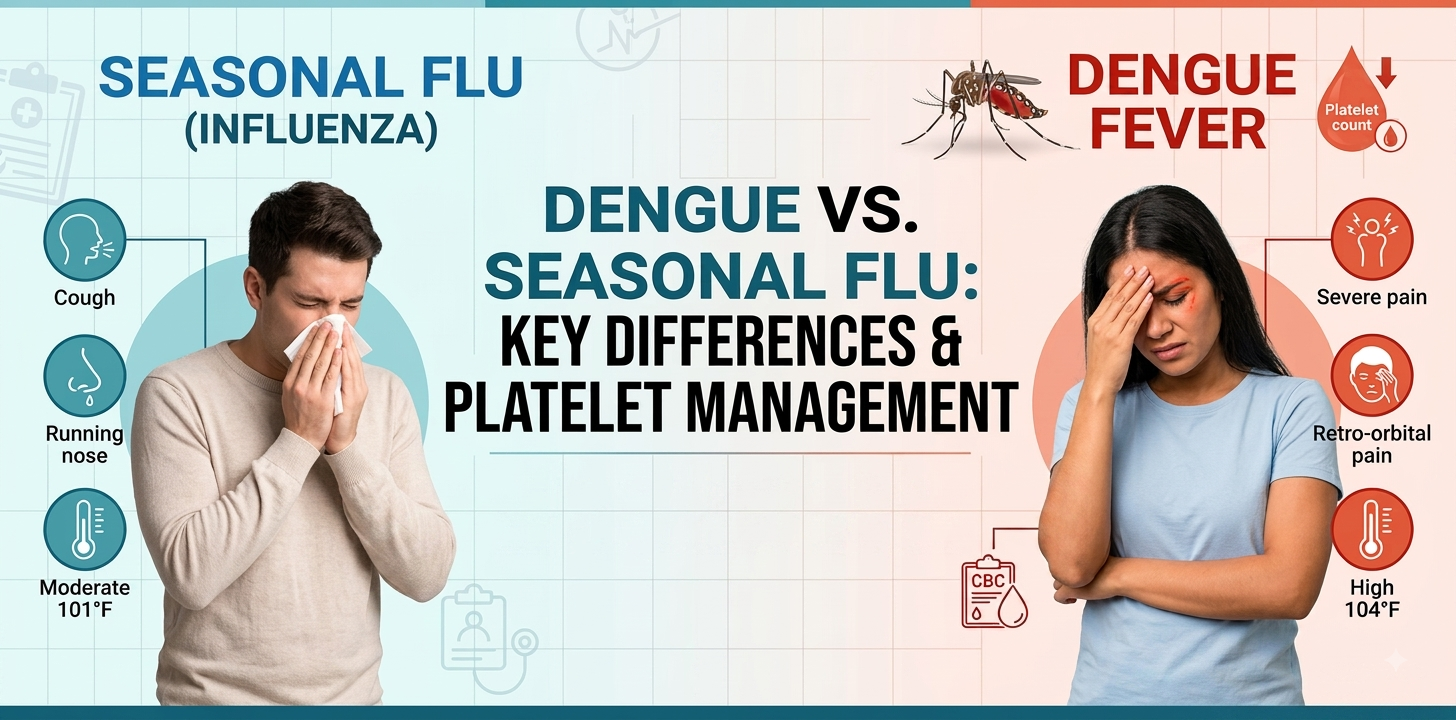
Although both illnesses present with an acute onset of fever, their underlying clinical profiles, symptom progression, and potential complications differ significantly:
| Clinical Feature | Seasonal Flu (Influenza) | Dengue Fever |
| Fever Pattern | Moderate to high (100°F – 102°F), gradual onset. | Sudden, high-grade fever (103°F – 105°F). |
| Body Ache | Mild to moderate generalized muscle aches. | Severe, excruciating joint and muscle pain (“Breakbone Fever”). |
| Eye Discomfort | Watery eyes or mild burning sensation. | Distinct retro-orbital pain (pain behind the eyes). |
| Skin Symptoms | Rashes are extremely rare. | Fine maculopapular rash appearing 2–5 days after fever onset. |
| Respiratory Signs | Cough, sore throat, runny nose, and congestion. | Upper respiratory symptoms are typically absent. |
| Platelet Count | Remains largely within normal range. | Tends to drop, typically between Day 3 and Day 7. |
2. Red Flag Symptoms: When to Seek Immediate Emergency Care
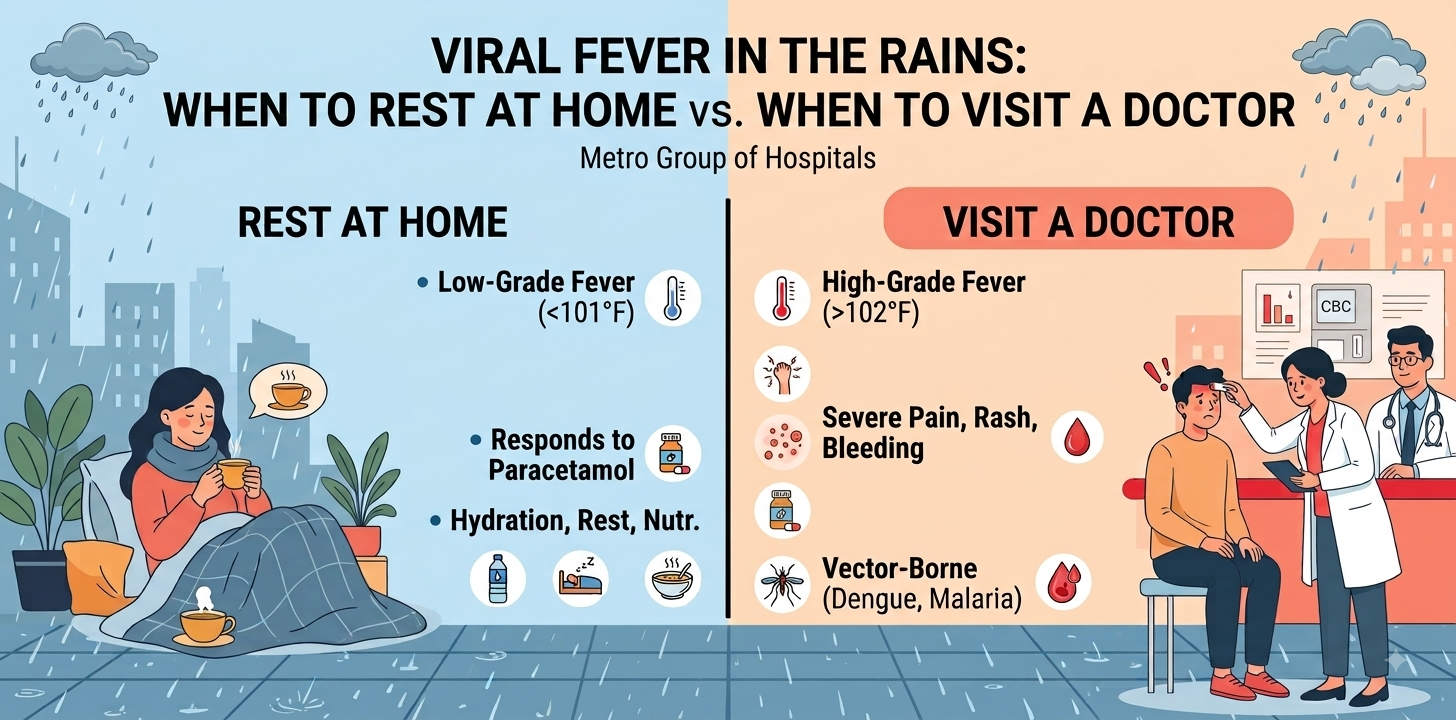
Most mild dengue cases can be managed at home with supportive care under medical supervision. However, approximately 5% to 10% of cases may progress to Severe Dengue or Dengue Hemorrhagic Fever.
If any of the following warning signs appear—especially as the fever begins to subside (between Day 3 and Day 6)—visit the nearest Emergency Room immediately:
- Severe, persistent abdominal pain or tenderness.
- Persistent vomiting (at least 3 episodes within 24 hours).
- Mucosal bleeding (bleeding from the nose or gums, or blood in stool/vomit).
- Extreme fatigue, restlessness, or confusion.
- Cold, clammy skin or a sudden drop in body temperature.
3. Managing Platelet Counts Safely: Clinical Facts vs. Myths
A healthy individual’s normal platelet count ranges between 150,000 and 450,000 per microliter of blood. A drop in platelets during dengue often triggers severe anxiety among patients and families.
Medical Guidelines for Platelet Management:
- Avoid Unnecessary Panic: A temporary decline in platelets is a natural physiological response to the dengue virus. Platelet counts typically hit their lowest point between Day 3 and Day 7 and begin to recover spontaneously by Day 8 or 9.
- When is a Platelet Transfusion Necessary?
According to international clinical protocols, a low platelet count alone (e.g., 30,000 or 40,000) does not warrant a blood or platelet transfusion. Transfusions are generally reserved for patients with active, severe bleeding or when counts fall below 10,000 to 20,000/µL.
- Prioritize Hydration Over Supplements:
The primary risk in severe dengue is Plasma Leakage leading to shock, not just low platelets. Maintaining oral hydration is the single most effective intervention. Patients should consume 3 to 4 liters of fluids daily, including Oral Rehydration Solutions (ORS), fresh coconut water, clear soups, and buttermilk.
- Exercise Caution with Home Remedies:
While raw papaya leaf extracts or herbal remedies are widely discussed, consuming concentrated, unstandardized extracts can cause severe stomach upset, acidity, and liver distress. These should never replace prescribed medical monitoring.
- Strictly Avoid NSAIDs / Painkillers:
Never take Aspirin, Ibuprofen, or Naproxen for fever or body pain during suspected dengue. These non-steroidal anti-inflammatory drugs act as blood thinners and significantly elevate the risk of internal hemorrhage. Only Paracetamol should be taken as prescribed by a physician.
4. Diagnostic Testing: Getting the Right Test at the Right Time
Early diagnosis ensures proper monitoring. Recommended diagnostic protocols include:
- Days 1 to 3 of Fever: Dengue NS1 Antigen Test alongside a Complete Blood Count (CBC) to establish baseline hematocrit and platelet levels.
- Day 5 Onward: Dengue IgM / IgG Antibody Test.
- For Suspected Influenza: Respiratory panel or Flu RT-PCR if upper respiratory symptoms dominate.
5. Frequently Asked Questions (FAQs)
Q1. How long does it take to fully recover from Dengue?
Answer: The acute phase lasts 7 to 10 days. However, post-viral fatigue and mild muscle weakness may persist for 2 to 3 weeks following recovery.
Q2. Is Dengue contagious from person to person?
Answer: No. Dengue cannot spread directly through physical contact, coughing, or touch. It is transmitted exclusively through the bite of an infected Aedes aegypti mosquito, which predominantly bites during daylight hours.
Q3. What is the ideal diet for a dengue patient?
Answer: Focus on light, easily digestible, and nutrient-dense foods such as dalia, khichdi, fresh citrus fruits (pomegranates, kiwis, oranges), and boiled vegetables. Avoid oily, spicy, or fried foods that stress the digestive system.
A Message From Our Medical Experts
Monsoon-related viral fevers and dengue are fully manageable when detected early and monitored correctly. Protect yourself and your family by eliminating standing water around your home, using mosquito repellents, and wearing full-sleeved clothing.
If you or a family member develop a high-grade fever, avoid self-medication. Consult the internal medicine specialists at Metro Group of Hospitals for accurate diagnosis, timely CBC testing, and expert care.
For expert consultation and emergency fever care, visit your nearest Metro Hospital branch or schedule an appointment online at www.metrohospitals.com.