Gallbladder Stones: Understanding Symptoms and Modern Surgical Treatment in Rewari
By Dr. Neeraj Kumar in General Surgery GI Surgery
Jan 5, 2026
Gallbladder stones, medically known as Cholelithiasis, are one of the most common digestive health issues in Northern India, particularly in the Rewari, Mahendragarh, and Jhajjar districts. While some stones remain “silent,” others can cause excruciating pain and lead to life-threatening complications if not treated timely.
At Metro Hospital & Heart Institute, Rewari, Dr. Neeraj Kumar (Consultant – General & GI Surgery) utilizes advanced medical technology to deliver lasting relief from gallbladder problems.. This guide will help you understand the symptoms, risks, and the modern “gold standard” of treatment.
What are Gallbladder Stones?
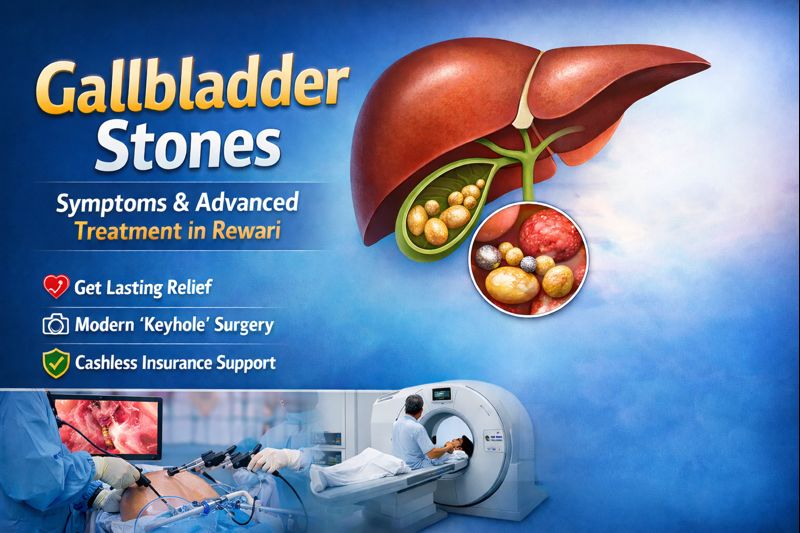
The gallbladder is a small, pear-shaped organ situated under the liver on the right side of the abdomen. Its primary job is to store bile, a fluid produced by the liver that helps digest fats. Gallstones form when the bile contains too much cholesterol or bilirubin, which hardens into stone-like deposits. They can range in size from tiny, like a grain of sand, to as large as a golf ball.
Recognizing the Symptoms: Is it Gas or Stones?
Many patients in Rewari initially mistake gallbladder pain for “acidity” or “gas.” However, gallbladder pain is distinct. You should consult Dr. Neeraj Kumar if you experience:
- Sudden, Intense Pain: Often felt in the upper right portion of the abdomen or the center of the belly, just below the breastbone.
- Back Pain: Pain radiating between the shoulder blades or into the right shoulder.
- Nausea and Vomiting: Especially after consuming a heavy, oily, or fatty meal.
- Digestive Issues: Persistent bloating, indigestion, or “belching.”
- Jaundice: Yellowing of the skin and eyes (this indicates a stone has blocked the bile duct and requires emergency care).
Why You Shouldn’t Ignore Gallstones
Some people believe that if the pain stops, the problem is gone. This is a dangerous misconception. Untreated gallstones can lead to:
- Cholecystitis: Inflammation and infection of the gallbladder.
- Pancreatitis: A very serious condition where a stone blocks the pancreatic duct, causing inflammation of the pancreas.
- Gallbladder Rupture: Which can lead to a severe internal infection (Peritonitis).
Modern Treatment: Laparoscopic Cholecystectomy
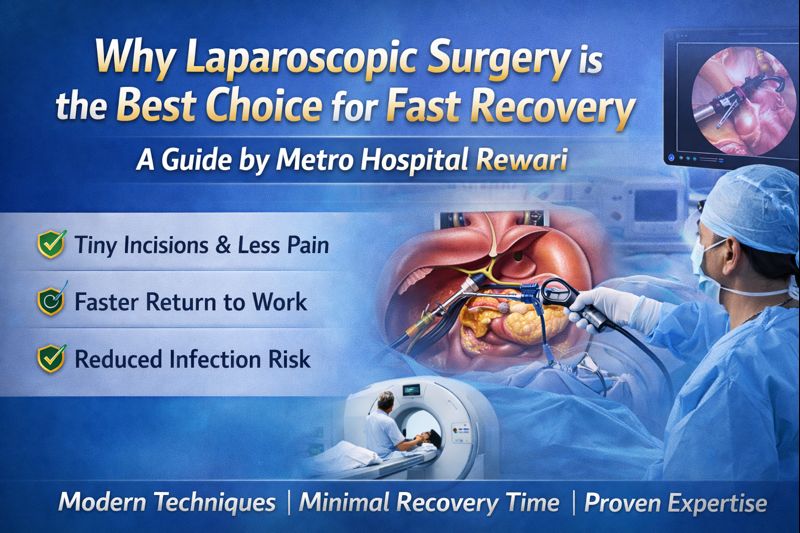
The days of large abdominal incisions for stone removal are over. At Metro Hospital Rewari, we offer Laparoscopic Cholecystectomy (minimally invasive ‘keyhole’ surgery) for gallbladder removal.
Why Medicine Doesn’t Work for Stones
Many patients ask if stones can be dissolved with medicine or “crushed” like kidney stones. In the case of the gallbladder, medicines are rarely effective because the stones often return, and the gallbladder itself is usually diseased. Therefore, the surgical removal of the gallbladder is the only permanent cure.
The Procedure at Metro Hospital:
Dr. Neeraj Kumar makes 3-4 tiny incisions (5-10mm) in the abdomen. A camera is inserted to visualize the organ, and the gallbladder—along with the stones—is carefully removed.
Advantages of Laparoscopy for Rewari Patients:
- No Long Bed Rest: Patients can usually walk within 6-8 hours.
- Minimal Scarring: Ideal for young patients concerned about cosmetic appearance.
- Cost-Effective: Shorter hospital stays mean lower overall expenses compared to open surgery in big cities.
Life After Gallbladder Removal
A common myth is that you cannot digest food without a gallbladder. In reality, the liver continues to produce bile; it simply flows directly into the small intestine instead of being stored. Most patients lead a completely normal life after a short recovery period of 3-5 days.
Why Choose Dr. Neeraj Kumar at Metro Hospital Rewari?
When searching for the best gallbladder surgeon in Rewari, Metro Hospital offers distinct advantages:
- Surgical Excellence: Dr. Neeraj Kumar is an expert in GI surgery with a high success rate in complex cases.
- Advanced Imaging: With our in-house Ultrasound and CT scan facilities, we ensure precise and accurate diagnosis before surgery.
- Sterile Environment: Our modular OTs minimize the risk of post-surgical infections.
Insurance & TPA: Enjoy hassle-free, cashless treatment with all leading insurance providers, making premium healthcare simple and accessible for every patient.
Conclusion: Take Action Today
If you are experiencing recurring abdominal pain, don’t wait for an emergency. Early diagnosis and a planned laparoscopic procedure are much safer than emergency surgery for a ruptured gallbladder.
Consult Dr. Neeraj Kumar at Metro Hospital & Heart Institute, Rewari, for a professional and expert evaluation.
Frequently Asked Questions (FAQs)
Q1. Can I live a normal life without a gallbladder?
Ans: Yes. The gallbladder is not an essential organ. After removal, your liver still produces bile to digest food. Most patients don’t notice any difference in their digestion after a few weeks.
Q2. What is the gallbladder surgery cost in Rewari?
Ans: Laparoscopic surgery at Metro Hospital is very affordable compared to Gurugram or Delhi. The exact cost depends on the patient’s condition and room category. We also provide full support for TPA and Insurance claims.
Q3. How long is the recovery after “Doorbin” surgery?
Ans: Most patients go home within 24–48 hours and can resume light daily activities within 3 to 5 days.
Q4. Does diet affect gallstones?
Ans: Yes, a diet high in fat and low in fiber increases the risk. Maintaining a healthy weight and eating a balanced diet can help prevent stones, but once stones have formed, surgery is usually required.