Glaucoma (Kala Motia): The Silent Thief of Sight – Is Your Vision Safe?
By Dr. Nisha Yadav in Eye Care
Dec 26, 2025
Glaucoma, commonly known as “Kala Motia” in India, is a group of eye conditions that damage the optic nerve, the vital link between your eye and brain.1 It is often called the “silent thief of sight” because it typically has no symptoms until significant, permanent vision loss has occurred. For the residents of Rewari and Southern Haryana, early detection at a specialized facility like Metro Multispeciality Hospital is the only way to prevent total blindness.
Why Glaucoma is More Dangerous Than Cataracts
While a Cataract (Safed Motia) can be cured through surgery to restore vision, the damage caused by Glaucoma (Kala Motia) is irreversible.3 Once the optic nerve fibers are destroyed due to high fluid pressure inside the eye, they cannot be regrown. This makes regular eye screenings at Metro Hospital Rewari a necessity, especially for those over the age of 40.
The Different Faces of Glaucoma (Kala Motia)
1. Open-Angle Glaucoma (The Most Common Type)
This version progresses very slowly. The “drainage angle” of the eye remains open, but the fluid doesn’t flow out fast enough, causing pressure to build up.4 Patients often don’t realize anything is wrong until their peripheral (side) vision begins to fade.5
2. Angle-Closure Glaucoma (The Medical Emergency)
This occurs when the iris comes too close to the eye’s drainage angle. If the angle gets blocked completely, eye pressure rises suddenly.6 This is a medical emergency. If you experience sudden eye pain, nausea, and blurred vision, visit the Emergency Wing of Metro Hospital, Rewari immediately.
3. Normal-Tension Glaucoma
Surprisingly, some people develop optic nerve damage even when their eye pressure is in the “normal” range.7 This is why a simple pressure test isn’t enough; you need a comprehensive exam by an eye specialist in Rewari.
Are You at Risk?
At Metro Multispeciality Hospital, we recommend specialized screenings for individuals who meet any of the following criteria:
- Age: Being over 40 years old.
- Genetics: A family history of Glaucoma (Kala Motia).
- Medical Conditions: Having Diabetes, Hypertension (High BP), or heart disease.
- High Myopia: Being severely nearsighted.8
- Steroid Use: Long-term use of steroid eye drops or medications.9
Advanced Glaucoma Diagnosis at Metro Hospital, Rewari
We have brought Delhi-level diagnostic technology to Rewari so that patients don’t have to travel long distances for specialized tests. Our diagnostic protocol includes:
- Tonometry: Measuring the internal pressure of your eye accurately.10
- Pachymetry: Measuring corneal thickness, which is crucial for evaluating pressure readings.11
- Visual Field Test (Perimetry): Mapping your complete field of vision to check for “blind spots” you might not notice yet.12
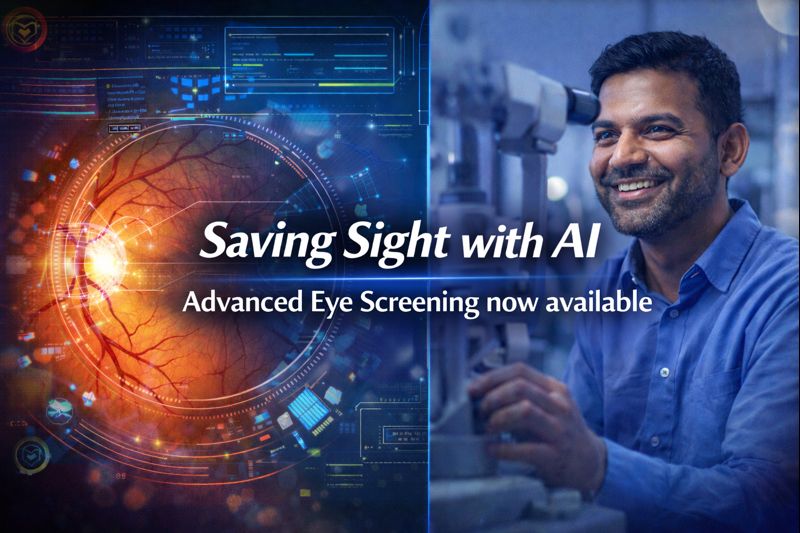
- OCT Scan (Optical Coherence Tomography): A high-tech “CT scan” for the eye that looks at the thickness of the optic nerve layers.13 This is where AI-driven diagnostics (as discussed in our previous article) play a huge role in catching Glaucoma years in advance.
Treatment Options: Managing Kala Motia
While we cannot reverse the damage, we can effectively stop the progression. The goal of treatment at Metro Hospital Rewari is to lower the intraocular pressure (IOP).
| Treatment Type | How it Works |
| Medicated Eye Drops | The most common first step. These treatments work by reducing fluid formation or improving its drainage. |
| Laser Therapy (SLT) | A simple outpatient procedure that helps open up the drainage canals. |
| Micro-Incision Surgery | If drops and lasers don’t work, our surgeons perform a Trabeculectomy to create a new drainage path for the fluid. |
Why Choose Metro Multispeciality Hospital, Rewari for Eye Care?
- Integrated Hospital Care: Glaucoma is often linked to diabetes and heart issues.14 Being a multispeciality hospital, we provide a 360-degree approach where your Pulmonologist (like Dr. B.L. Goyal), Cardiologist, and Eye Specialist can work together for your safety.
- Modern Operation Theaters: Equipped with the latest surgical microscopes for precision eye surgery.15
- Local Convenience: Located at Azad Chowk, Rewari, we save you the time and stress of traveling to Gurugram or Delhi for repeat follow-ups.
FAQ
Q1: What is the difference between Safed Motia and Kala Motia?
Answer: Safed Motia (Cataract) is the clouding of the eye’s lens and is reversible with surgery.16 Kala Motia (Glaucoma) is nerve damage due to pressure and causes permanent vision loss if not managed early.17
Q2: Can I prevent Glaucoma?
Answer: You cannot prevent the onset if you are genetically predisposed, but you can prevent blindness through early detection. Regular checkups at Metro Hospital Rewari are the best prevention.
Q3: Does Glaucoma cause headaches?
Answer: In “Acute Angle-Closure Glaucoma,” yes—it causes severe eye pain and headaches.18 However, the most common type (Open-Angle) is completely painless until it’s too late.19
Conclusion: Don’t Let the “Silent Thief” Steal Your Vision
The tragedy of Glaucoma is that it doesn’t give you a warning. By the time you “see” the problem, your sight is already half gone. If it’s been more than a year since your last complete eye check-up, now is the right time to get one.
Schedule your Glaucoma Screening at Metro Multispeciality Hospital, Rewari today.
Contact Details:
- Phone: 9992 999 203
- Address: 3327, Anand Nagar, Near Jain School, Azad Chowk, Circular Road, Rewari
- Website: metrohospitals.com