Why Laparoscopic Surgery is the Best Choice for Fast Recovery: A Guide by Metro Hospital Rewari
By Dr. Neeraj Kumar in General Surgery GI Surgery
Jan 5, 2026
In the past, the word “surgery” often brought to mind images of long hospital stays, large painful scars, and months of bed rest. However, medical science has evolved. Today, Laparoscopic Surgery, popularly known as “Keyhole Surgery” or “Doorbin wali surgery,” has become the gold standard for abdominal and gynecological procedures.
At Metro Hospital & Heart Institute, Rewari, we focus on advanced, patient-centric surgical approaches designed to ensure faster recovery and a smooth return to everyday life. In this article, we will explore why laparoscopy is the superior choice for modern patients.
What is Laparoscopic Surgery?
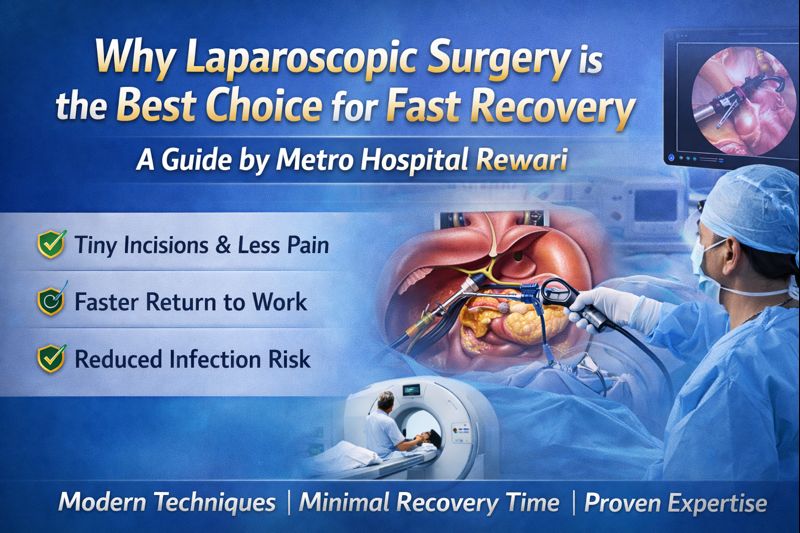
Laparoscopic surgery is a minimally invasive surgical technique. Unlike traditional “open” surgery, where a surgeon makes a large incision (often 5 to 10 inches long), a laparoscopic surgeon makes several tiny incisions, usually no larger than a buttonhole (5–10 mm).
Through these small openings, the surgeon inserts a Laparoscope—a thin tube with a high-intensity light and a high-resolution camera at the tip. The camera transmits images to a video monitor in the operation theater, allowing the surgeon to see inside the body with incredible detail and perform the surgery using specialized instruments.
Why It Leads to Faster Recovery
The primary reason patients recover faster after laparoscopy is minimal tissue trauma. Here is a detailed breakdown of the factors that speed up the healing process:
1. Reduced Internal and External Trauma
In open surgery, the surgeon must cut through layers of skin, fat, and muscle to reach the internal organs. This places considerable surgical stress on the body. In laparoscopy, the muscles are not cut; they are merely dilated or moved aside. Because there is less damage to the body’s structural integrity, the healing process begins almost immediately.
2. Minimal Blood Loss
The high-definition camera used by Dr. Neeraj Kumar provides a magnified view of blood vessels. This allows for extreme precision, ensuring that blood loss is kept to an absolute minimum. Less blood loss means the patient’s body doesn’t have to work as hard to replenish fluids and cells post-surgery.
3. Significantly Less Post-Operative Pain
Pain is the biggest hurdle in recovery. Large incisions in open surgery are painful every time a patient breathes, moves, or coughs. Since laparoscopic incisions are tiny, the pain is minimal. When patients are in less pain, they require fewer narcotic painkillers, which often have side effects like drowsiness or constipation that delay recovery.
Key Benefits for Patients in Rewari, Bawal, Dharuhera & Nearby Areas
At Metro Hospital Rewari, we see many patients from the industrial hubs of Bawal and Dharuhera, as well as farming communities in Mahendragarh and Kosli. For these hardworking individuals, time is money.
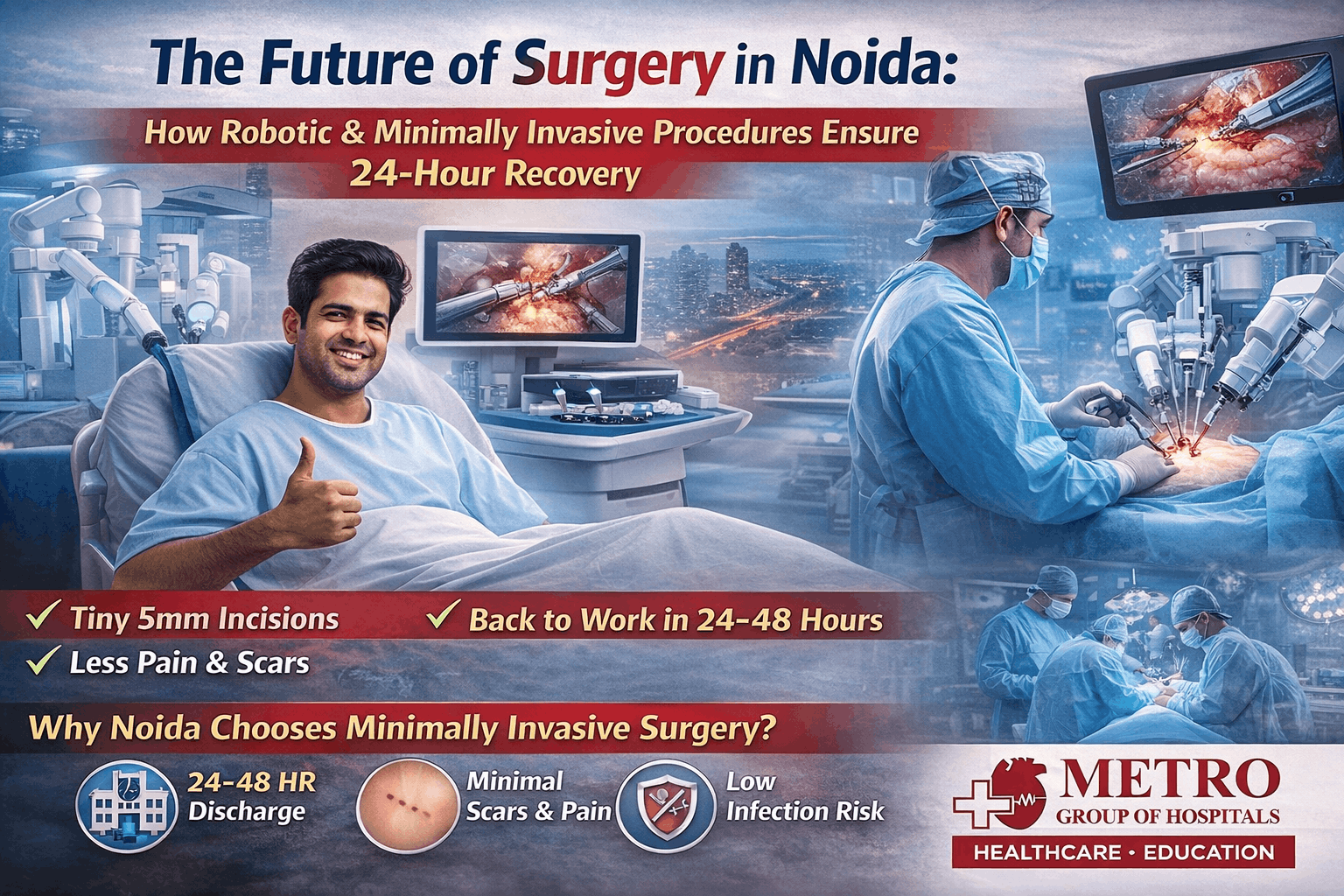
- Shorter Hospital Stay: Most laparoscopic patients at Metro Hospital are discharged within 24–48 hours.
- Quick Return to Work: While open surgery might require 6–8 weeks of rest, laparoscopic patients can often return to light work within 7–10 days.
- Lower Risk of Wound Infection: Small incisions are much easier to keep clean and have a significantly lower risk of catching hospital-acquired infections.
- Prevention of Incisional Hernia: Large scars from open surgery are weak spots where a hernia can develop later. Laparoscopic incisions are so small that the risk of a future hernia is nearly zero.
Common Laparoscopic Procedures at Metro Hospital Rewari
Dr. Neeraj Kumar utilizes advanced laparoscopic technology for a wide range of conditions:
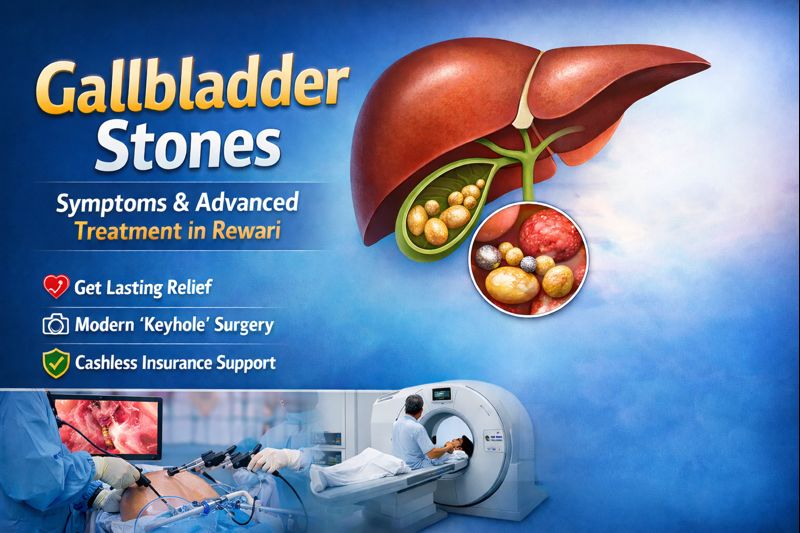
- Gallbladder Stone Removal (Cholecystectomy): The most common laparoscopic procedure.
- Appendix Removal (Appendectomy): Ideal for emergency cases to ensure a quick return home.
- Hernia Repair: Using high-quality mesh to reinforce the abdominal wall.
- Diagnostic Laparoscopy: To find the cause of unexplained abdominal pain.
The Metro Hospital Advantage: Technology Meets Expertise
Choosing the right hospital for your surgery is an important decision, and Metro Hospital & Heart Institute, Rewari, is trusted by patients for several compelling reasons.
Expert Surgeon: Dr. Neeraj Kumar brings years of specialized experience in GI and General Surgery, ensuring precision in every movement.
- Advanced Modular OTs: Our operation theaters are equipped with HEPA filters and the latest laparoscopic towers to ensure the highest safety standards.
- Comprehensive Post-Op Care: Our physiotherapy and nutrition teams work with surgical patients to ensure their diet and movement patterns support a fast recovery.
Conclusion: Choosing the Modern Way to Heal
If you or a loved one has been advised to undergo surgery for stones, hernia, or appendicitis, don’t let the fear of a long recovery hold you back. Laparoscopic surgery offers a safer, faster, and less painful path to health.
Consult Dr. Neeraj Kumar at Metro Hospital Rewari today to see if you are a candidate for minimally invasive surgery.
Frequently Asked Questions (FAQs)
Q1. Will I have a scar after laparoscopic surgery?
Ans: The scars are extremely small (5-10mm) and usually fade within a few months, becoming almost invisible.
Q2. Is laparoscopy more expensive than open surgery?
Ans: While the equipment cost is higher, the overall cost is often lower because you spend fewer days in the hospital and require fewer medicines.
Q3. Can all surgeries be done laparoscopically?
Ans: Most abdominal surgeries can be, but the final decision is made by Dr. Neeraj Kumar after evaluating the patient’s specific condition and medical history.
Q4. When can I start walking after the surgery?
Ans: At Metro Hospital Rewari, we encourage patients to start walking within 6 to 12 hours after a laparoscopic procedure to prevent blood clots and speed up digestion.