Why Young Adults Under 40 Need Urgent Cardiac Screening
By Dr. Richa Agrawal in Cardiology Interventional Cardiology
Feb 28, 2026
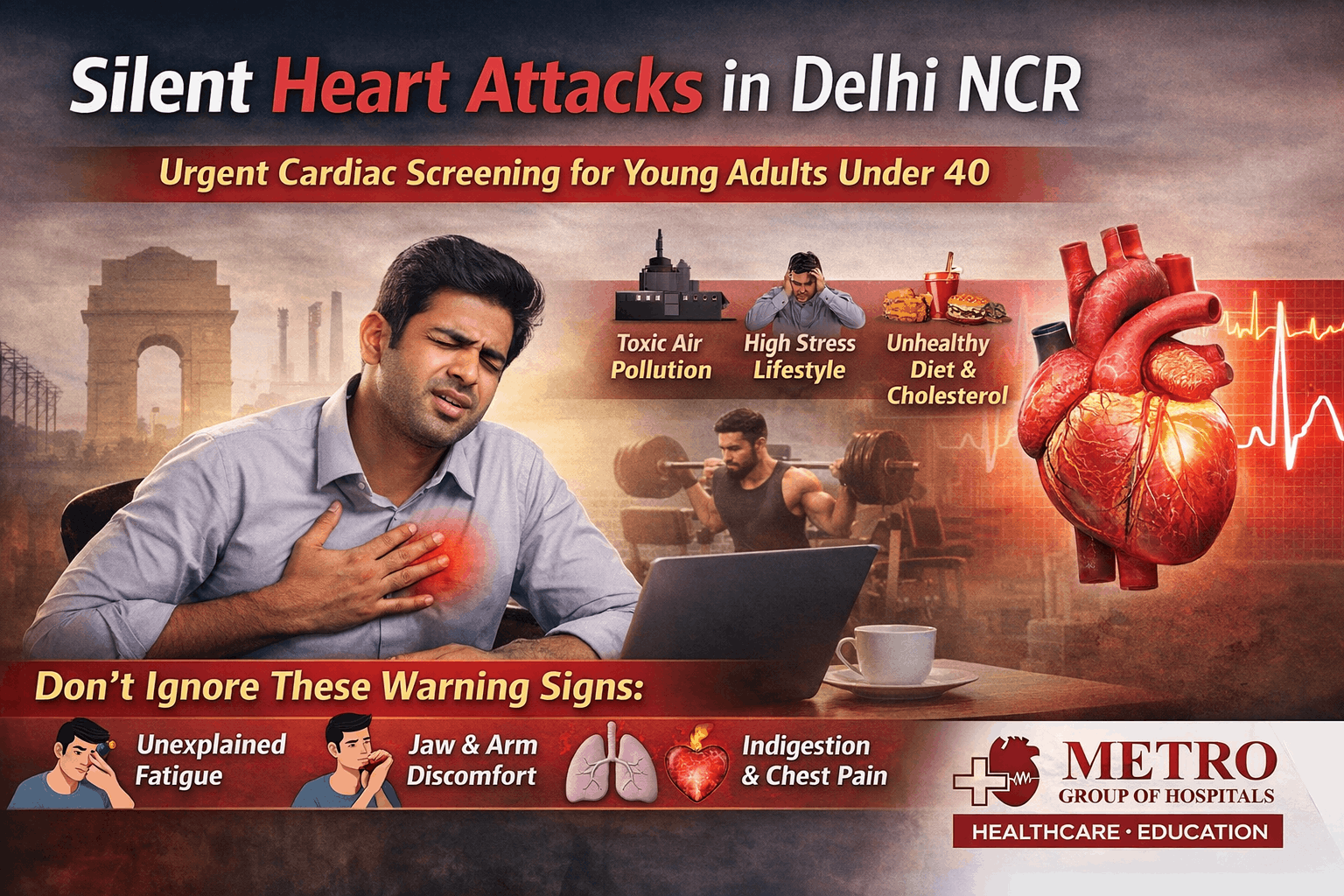
Silent Heart Attacks in Delhi NCR: Why Young Adults Under 40 Need Urgent Cardiac Screening
In the bustling landscape of Delhi NCR and Noida, a silent epidemic is unfolding. What was once considered a “lifestyle disease” for those in their 60s is now striking the youth in their 20s and 30s. From corporate boardrooms in Noida Sector 62 to high-intensity gyms in South Delhi, the news of sudden cardiac arrests is becoming alarmingly frequent.
At Metro Hospital, Noida, our cardiology experts are seeing a 25% rise in cardiac cases among young professionals. This article explores the “why” behind this trend and how you can protect yourself before it’s too late.
The Delhi NCR Paradox: Sedentary Work vs. High-Intensity Workouts
The lifestyle in Noida and Delhi is unique. Most young adults spend 9-10 hours in a sedentary posture, coupled with high stress and poor air quality. To compensate, many jump into “extreme fitness” or “heavy weightlifting” without understanding their underlying cardiovascular health.
When a high-stress body meets sudden high-intensity physical exertion, it can lead to plaque rupture or arrhythmias, leading to what we commonly hear as a “sudden collapse.”
Critical Cardiovascular Risk Factors Specific to the Delhi NCR and Noida Demographic
1. The ‘Toxic’ Air Factor
Pollution in Delhi NCR isn’t just a respiratory issue; it’s a cardiac one. Particulate Matter (PM 2.5) enters the bloodstream, causing inflammation of the blood vessels (Vasculitis), which significantly increases the risk of blood clots.
2. Chronic Stress & ‘Broken Heart’ Syndrome
The competitive corporate culture in Noida’s IT hubs leads to chronic cortisol elevation. This “stress hormone” keeps the blood pressure high, damaging the artery walls over time.
3. Silent Dyslipidemia
A large section of the Delhi NCR population suffers from high triglycerides and low HDL (good cholesterol) due to excessive consumption of processed foods and late-night deliveries, often termed as “Metabolic Syndrome.”
The Danger of ‘Silent’ Symptoms: Don’t Ignore These
Most young heart attack victims in Delhi claim they “felt nothing” before the event. However, the body often gives subtle signals that we mistake for common issues:
- Persistent Indigestion: Often confused with “NCR street food acidity,” this could be a sign of an inferior wall MI.
- Unexplained Fatigue: Feeling exhausted even after a full night’s sleep.
- Breathlessness During Light Walks: Difficulty breathing while climbing just two floors of a Noida metro station.
- Jaw or Left Arm Discomfort: Slight tingling that comes and goes.
How Metro Hospital Noida is Leading Cardiac Care
Metro Hospital, Noida (Sector 11), has been a pioneer in cardiology for decades. For young adults, we recommend a “Preventive Cardiac Roadmap”:
Step 1: Advanced Lipid Profile & HbA1c
Standard blood tests often miss the “small dense LDL” particles. We focus on comprehensive markers that tell the real story of your arteries.
Step 2: The ‘Stress’ Evaluation (TMT & Echo)
A Treadmill Test (TMT) and 2D Echocardiogram are essential for anyone starting a gym routine or over the age of 30 in a high-stress job.
Step 3: Calcium Scoring (CT Heart)
For those with a family history of heart disease, a non-invasive CT Calcium score can detect plaque buildup long before it causes a blockage.
Preventive Tips: The ’30-30-30′ Rule for NCR Youth
- 30 Minutes of Zone 2 Exercise: Instead of high-intensity sprints, focus on brisk walking or light jogging where you can still hold a conversation.
- Strategic Sodium & Sugar Reduction: A 30% cut in intake is a non-negotiable step to reverse high blood pressure and pre-diabetes in the Delhi NCR population.
- 30-Year Screening: If you are 30 or older, get your first Baseline Cardiac Profile done at a trusted center like Metro Hospital.
Knowledge is the Best Prevention
A heart attack at 35 is not just a medical event; it’s a life-altering crisis for a young family. In a city like Noida, where life moves at a lightning pace, taking an hour for a cardiac screening is the smartest investment you can make.
Frequently Asked Questions (FAQs)
Q1. Why are young, seemingly fit individuals in Noida suffering from sudden cardiac arrests?
Many young professionals in Delhi NCR suffer from a condition called ‘Thin-Outside-Fat-Inside’ (TOFI). Despite looking fit, they may have internal inflammation due to chronic stress, pollution, and poor sleep cycles. When someone starts high-intensity workouts without a prior cardiac screening, this underlying inflammation can lead to ‘Plaque Rupture,’ triggering a sudden cardiac arrest.
Q2. Is there a direct link between Delhi NCR’s air pollution and heart disease?
Yes, absolutely. Long-term exposure to high PM 2.5 levels, common in Noida and Delhi, causes systemic inflammation. This leads to the narrowing of blood vessels (vasoconstriction) and increases the likelihood of blood clots. Research suggests that living in highly polluted zones can increase the risk of hypertension and heart attacks by up to 20%.
Q3. What are the subtle ‘Red Flag’ symptoms of a heart condition?
You should never ignore symptoms like:
- Unusual Heaviness: A feeling of pressure in the chest during physical activity.
- Atypical Pain: Pain in the jaw, neck, or left arm that comes and goes.
- Persistent Dyspepsia: Severe acidity or indigestion that doesn’t resolve with antacids.
- Shortness of Breath: Getting tired easily while climbing stairs or walking short distances.
Q4. Which cardiac screening tests are essential for Noida residents over the age of 30?
According to experts at Metro Hospital Noida, an annual preventive heart checkup should include:
- Lipid Profile: To check cholesterol and triglyceride levels.
- HbA1c: To monitor long-term blood sugar levels.
- ECG & TMT (Stress Test): To evaluate the heart’s electrical activity and its response to physical stress.
- 2D Echocardiogram: To assess the structural health and pumping capacity of the heart.
Q5. How does the corporate lifestyle in Noida affect cardiovascular health?
Chronic work stress triggers the release of adrenaline and cortisol, which keep the heart rate and blood pressure elevated for prolonged periods. Over time, this damages the arterial lining. For professionals in Noida’s IT and corporate hubs, integrating stress management techniques like Yoga or meditation is as vital as physical exercise.
By
Dr. Richa Agrawal
Sr. Consultant – Interventional Cardiology
Metro Hospital & Heart Institute, Sector 12, Noida.