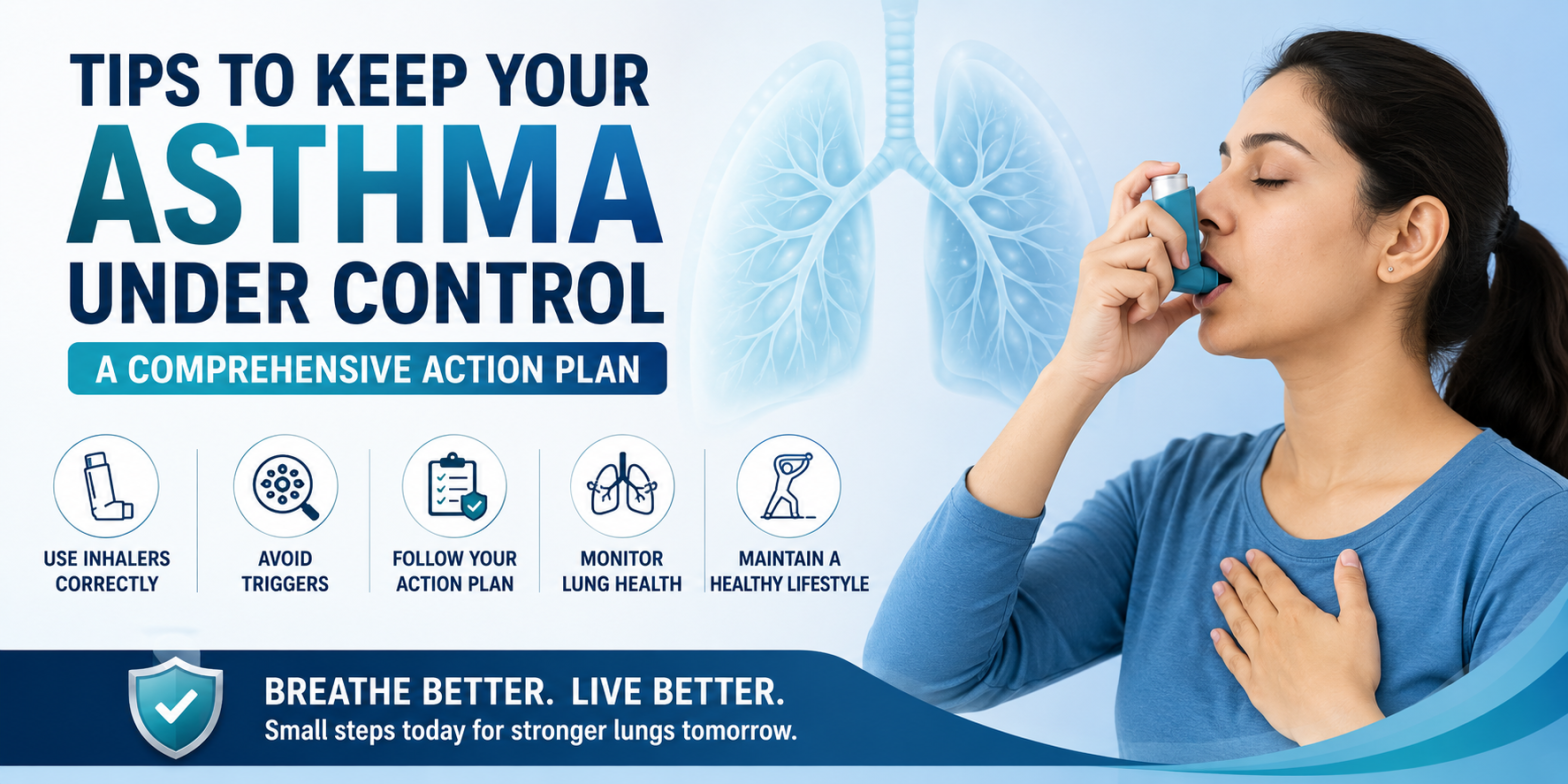
Tips to Keep Your Asthma Under Control: A Comprehensive Action Plan
By Dr. Deepak Prajapat in Pulmonology, Respiratory & Sleep Medicine
Jul 22, 2026
Tips to Keep Your Asthma Under Control: A Comprehensive Action Plan
Living with asthma often feels like navigating an unpredictable environment. A sudden shift in weather, exposure to dust, or a seasonal viral infection can unexpectedly trigger bronchial inflammation, leading to chest tightness, wheezing, and shortness of breath.
With the right treatment and lifestyle management, asthma does not have to limit your daily life. With an evidence-based management strategy, precise medication adherence, and proactive trigger avoidance, you can maintain optimal lung function and live an active, unrestricted life.
Below is a clinical yet practical guide on how to keep your asthma firmly under control.
1. Master Your Medication & Inhaler Technique
The single most critical factor in long-term asthma stability is using the right medication at the right time.
- Differentiate Preventers from Relievers:
- Daily Controller/Preventer Inhalers (ICS + LABA/LAMA): These suppress underlying airway inflammation and must be taken daily as prescribed, even when you feel completely healthy.
- Rescue/Reliever Inhalers (SABA): These quickly relax the tight muscles around your airways during an acute flare-up but do not cure the underlying chronic inflammation.
- Perfect Your Inhaler Technique: Nearly 70% of asthma patients use their inhalers incorrectly, causing the medication to deposit in the mouth or throat rather than deep in the lungs. Always ask your pulmonologist or chest specialist to review your inhalation technique. Using a spacer device can significantly improve drug delivery to the small airways.
2. Identify and Neutralize Your Personal Asthma Triggers
Asthma flare-ups do not happen without a cause; they are direct physical reactions to specific environmental or physiological triggers.
| Trigger Category | Common Everyday Examples | Proactive Control Strategy |
| Environmental Pollutants | High PM2.5/PM10, smog, vehicle exhaust | Wear an N95 mask outdoors on high AQI days; use indoor air purifiers with HEPA filters. |
| Indoor Allergens | Dust mites, pet dander, mold spores | Wash bed linens weekly in hot water; eliminate carpet moisture and damp corners. |
| Biological Infections | Influenza, RSV, common cold | Get an annual flu vaccine and pneumococcal vaccination as advised by your doctor. |
| Occupational Hazards | Chemical vapors, wood dust, strong perfumes | Ensure proper ventilation or wear protective industrial masks in workplace settings. |
3. Create a Personal Asthma Action Plan (AAP)
A written Asthma Action Plan is a customized roadmap developed jointly by you and your doctor. It categorizes your asthma control into three distinct zones based on symptoms and peak flow readings:
- Green Zone (Doing Well):
- Symptoms: No coughing, wheezing, or shortness of breath. Sleeping well through the night without breathing discomfort.
- Action: Asthma is well-controlled. Continue taking your daily preventive/controller inhalers as prescribed.
- Yellow Zone (Caution):
- Symptoms: Mild flare-ups, persistent coughing, chest tightness, or waking up at night due to breathing difficulty.
- Action: Airways are narrowing. Step up your quick-relief (rescue) medication according to your doctor’s specific instructions.
- Red Zone (Medical Emergency):
- Symptoms: Severe breathlessness, difficulty speaking in full sentences, or poor response to rescue inhalers.
- Action: This is a critical medical emergency. Take your emergency rescue medication immediately and seek urgent emergency medical care.
4. Track Your Lung Health with Peak Flow Monitoring
Symptoms can be deceptive. Airway narrowing often begins hours or days before you consciously feel short of breath.
Using a portable Peak Expiratory Flow Meter (PEFM) allows you to measure how fast you can push air out of your lungs. Tracking your “personal best” peak flow value every morning provides an early warning system, allowing you to adjust medication before a full-blown asthma attack occurs.
5. Safeguard Your Lungs Against Regional Air Pollution
For residents in industrial belts and major urban metropolitan areas (such as Delhi-NCR, Noida, and surrounding Northern India regions), airborne particulate matter ( and
) is a severe primary asthma trigger.
- Track Daily AQI: Check local Air Quality Index levels before planning outdoor activities, exercise, or morning walks.
- Avoid Peak Smog Hours: Avoid outdoor exertion during early morning and late evening hours when cold air traps ground-level pollutants.
- Exercise Indoors: On hazardous AQI days, switch to indoor workouts, yoga, or light stretching in an air-filtered room.
6. Maintain Healthy Indoor Air Quality
Since most people spend up to 90% of their time indoors, maintaining a clean home environment directly impacts airway stability:
- Eliminate Indoor Smoke: Ensure strict prohibition of indoor tobacco smoking, incense sticks (agarbatti), and unvented biomass cooking fuels.
- Manage Humidity: Keep indoor humidity levels below 50% to prevent the growth of mold spores and dust mite colonies.
- Regular Deep Cleaning: Damp-mop floors and vacuum furniture using a vacuum cleaner equipped with a HEPA filter to avoid kicking up dry dust particles.
7. Adopt an Anti-Inflammatory Lifestyle
While medical therapy forms the backbone of asthma care, daily lifestyle choices strengthen overall respiratory resilience.
- Maintain a Healthy Weight: Excess abdominal weight increases pressure on the diaphragm, reduces lung volume, and makes asthma harder to control.
- Eat Antioxidant-Rich Foods: Incorporate fresh fruits, leafy green vegetables, nuts, and seeds rich in Vitamins C, D, and E into your diet to combat systemic oxidative stress.
- Exercise Safely: Exercise-Induced Bronchoconstriction (EIB) is common. Warm up thoroughly before physical activity, carry your rescue inhaler, and consult your physician about pre-exercise preventive dosing.
Frequently Asked Questions (FAQs)
Q1. Can asthma be permanently cured?
Ans: Asthma is a chronic inflammatory condition, meaning it cannot be cured permanently. However, with consistent controller inhaler therapy and lifestyle management, symptoms can be controlled so effectively that you can live a completely normal, active life without restrictions.
Q2. Are inhalers habit-forming or dangerous for long-term use?
Ans: No. Inhalers are non-addictive. Inhaled medications deliver micro-gram doses directly into the lungs with minimal systemic absorption, making them far safer and more effective than oral steroid tablets or syrup formulations.
Q3. When should I see a Pulmonologist immediately?
Ans: You should seek immediate expert medical care if you need your rescue inhaler more than twice a week, wake up at night due to coughing or breathlessness, or experience a sudden drop in your peak flow readings.
Take Charge of Your Respiratory Health
Uncontrolled asthma should never compromise your quality of life or limit your daily aspirations. If you experience frequent wheezing, chest tightness, or exercise discomfort, consult the Department of Pulmonology & Respiratory Medicine at Metro Hospital for a comprehensive lung function evaluation (Spirometry/DLCO) and a personalized Asthma Action Plan.