Understanding Appendicitis: When to Seek Emergency Surgery in Rewari
By Dr. Neeraj Kumar in General Surgery GI Surgery
Jan 5, 2026
Abdominal pain is common, but when that pain becomes sharp, shifts to the lower right side, and makes it hard to walk, it is no longer a simple stomach ache. It could be Appendicitis—a medical emergency that requires immediate attention.
At Metro Hospital & Heart Institute, Rewari, we know that prompt action is vital when treating appendicitis. Under the expert surgical care of Dr. Neeraj Kumar, our 24/7 emergency department is equipped to diagnose and treat appendicitis before it leads to life-threatening complications.
What is Appendicitis?
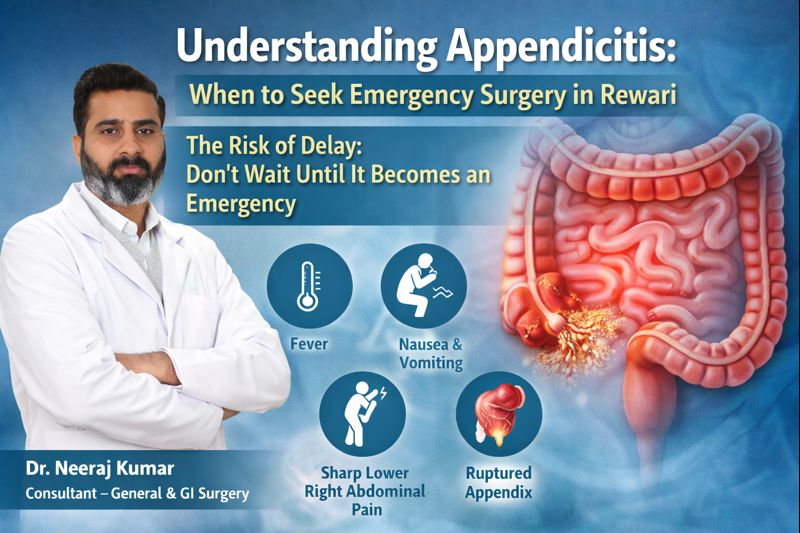
The appendix is a small, finger-shaped pouch attached to the large intestine in the lower right side of your abdomen. Appendicitis occurs when the appendix becomes blocked—often by stool, a foreign body, or infection. This blockage leads to inflammation, swelling, and the buildup of pus.
If not surgically removed, the pressure can cause the appendix to rupture (burst), spreading infection throughout the entire abdominal cavity (a condition called Peritonitis).
Recognizing the Symptoms: The “Warning Signs”
Appendicitis symptoms often follow a specific pattern. Recognizing this pattern can save lives:
- The Shift of Pain: Usually, the pain begins around the belly button (navel) and then moves to the lower right abdomen.
- Increased Intensity: The pain becomes much sharper and more severe over a period of 12 to 24 hours.
- Pain while Moving: Coughing, walking, or making sudden movements makes the pain significantly worse.
- Low-grade Fever: You may develop a fever that worsens as the condition progresses.
- Digestive Distress: Loss of appetite, nausea, vomiting, and inability to pass gas are common signs.
Important Note: If the pain suddenly disappears, it might mean the appendix has ruptured. This is a medical emergency, as the infection will now spread quickly. Seek immediate help at Metro Hospital Rewari.
Diagnosis: How We Identify Appendicitis
Because appendicitis symptoms can mimic other issues like kidney stones or pelvic infections, an accurate diagnosis is vital. At Metro Hospital, we use:
- Physical Examination: Checking the abdomen for tenderness on release and muscle stiffness.
- Blood Tests: To check for a high white blood cell count (a sign of infection).
- Advanced Imaging: Our in-house Ultrasound and CT Scan facilities provide a clear view of the appendix to confirm inflammation.
Emergency Treatment: Laparoscopic Appendectomy
The standard and most effective treatment for appendicitis is the surgical removal of the appendix, known as an Appendectomy.
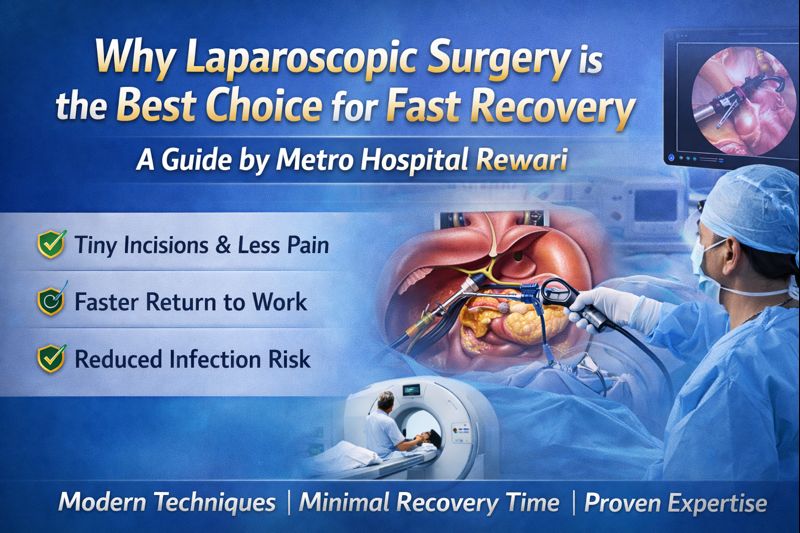
At Metro Hospital Rewari, Dr. Neeraj Kumar specializes in Laparoscopic Appendectomy. Instead of a large scar in the lower abdomen, this modern approach involves:
- Three Tiny Incisions: Small ports are used to remove the appendix.
- Reduced Risk of Infection: Especially important if the appendix has already started leaking.
- Faster Discharge: Patients are often back home within 24 to 36 hours.
- Less Post-Op Pain: Minimally invasive techniques ensure the patient can walk comfortably by the next morning.
The Risk of Delay: Don’t Wait Until It Becomes an Emergency
Many people in the Rewari and Bawal region try “home remedies” or painkilling injections for abdominal pain. In the case of appendicitis, this is dangerous. A ruptured appendix can lead to:
- Peritonitis: A life-threatening infection of the abdominal lining.
- Abscess: A painful pocket of pus that requires complex drainage and a longer hospital stay.
Seeking help from a specialist like Dr. Neeraj Kumar at the first sign of persistent lower right abdominal pain is the best way to ensure a simple, safe recovery.
Why Metro Hospital Rewari for Emergency Surgery?
- 24/7 Availability: Our surgical team and modular operation theaters are ready for emergency cases 24 hours a day, 7 days a week.
- Expertise of Dr. Neeraj Kumar: A highly skilled GI surgeon with years of experience in emergency abdominal surgeries.
- ICU Support: In cases of ruptured appendix or elderly patients with co-morbidities, our ICU provides world-class monitoring.
- Proximity: Conveniently located for residents of Rewari, Dharuhera, and Bawal, saving precious travel time during emergencies.
Conclusion: Act Fast, Heal Fast
Appendicitis is not a condition that can be managed with medicine alone. Surgery is a safe and permanent cure. If you or a family member experiences sharp, localized abdominal pain, trust the experts at Metro Hospital Rewari for a quick diagnosis and advanced laparoscopic care.
Frequently Asked Questions (FAQs)
Q1. Can appendicitis be cured with antibiotics?
Ans: While some very mild cases are occasionally managed with antibiotics, surgery (Appendectomy) remains the only definitive and safest treatment to prevent the risk of rupture.
Q2. How long is the recovery after appendix surgery?
Ans: With Laparoscopic surgery at Metro Hospital, most patients return to normal activities within 1 week. Avoid lifting heavy objects for the next 3–4 weeks.
Q3. What is the cost of appendix surgery in Rewari?
Ans: Metro Hospital Rewari offers competitive and transparent pricing. We also provide cashless facilities for all major TPAs and Insurance companies.
Q4. Is the appendix a necessary organ? Ans:
No. Removing the appendix does not affect your digestion or your long-term health.