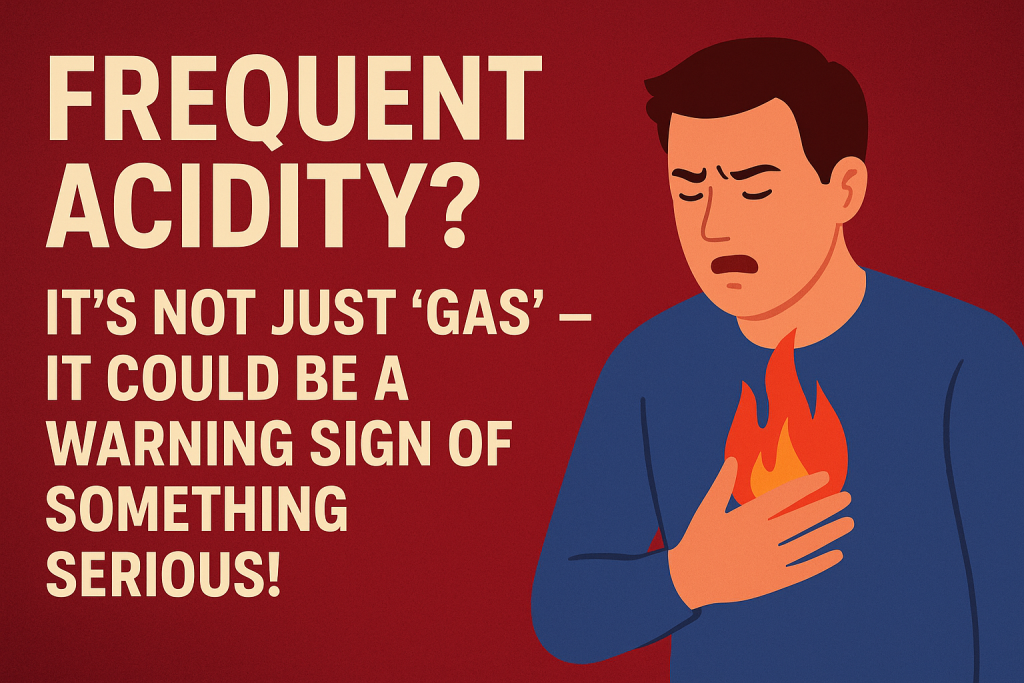
Frequent Acidity? It’s Not Just ‘Gas’ – It Could Be a Warning Sign of Something Serious!
By Dr. Harsh Kapoor in Gastroenterology
Aug 16, 2025
That burning sensation in your chest after a meal, the sour taste in your mouth in the morning, or that bloated, heavy feeling — we often dismiss these symptoms as just “gas” or a minor digestive upset. But medical experts warn that frequent acidity is not something you should ignore. In fact, it may be your body’s way of signaling an underlying condition like Acid Reflux or Gastroesophageal Reflux Disease (GERD) — which, if left untreated, can lead to serious health complications.
Acidity – More Than Just a Digestive Issue
Acidity arises when stomach acids travel in reverse, moving up into the esophagus — the passage that carries food from the mouth to the stomach. Normally, a muscular ring known as the lower esophageal sphincter (LES) functions like a one-way gate: it opens to let food enter the stomach and closes immediately afterward to prevent acid from rising. When this valve weakens, gets damaged, or relaxes at an inappropriate time, stomach acid can travel upward, irritating the esophageal lining and triggering the familiar burning discomfort called heartburn.
While mild acidity from time to time — often after overeating or enjoying spicy, oily dishes — is common and usually harmless, repeated episodes are a cause for concern. If these symptoms appear more than twice a week, it could be a sign of Gastroesophageal Reflux Disease (GERD), a chronic condition that not only affects daily comfort but can also lead to long-term complications. Getting timely medical guidance is crucial to avoid further damage and manage the condition effectively.
Dr. Harsh Kapoor, Chairman – Metro Institute of Gastroenterology, Hepatology at Metro Hospital Noida, explains:
“Many patients ignore acidity thinking it’s just a temporary issue. But when it becomes frequent, it can damage the esophagus, cause ulcers, and in some cases, increase the risk of esophageal cancer. The earlier we detect and treat it, the better the outcome.”
Early Signs You Shouldn’t Ignore
Persistent acidity often develops slowly, starting with mild discomfort. Recognizing the signs early can help you take preventive action. Look out for:
- Frequent Heartburn – A burning pain or discomfort in the chest, often after eating.
- Sour or Bitter Taste – Especially in the morning or when lying down.
- Persistent Cough or Hoarseness – Acid can irritate your throat and vocal cords.
- Difficulty Swallowing – Repeated acid reflux can inflame or constrict the esophagus, making swallowing harder.
- Bloating and Burping – Excess gas may indicate poor digestion or acid imbalance.
- Nausea After Meals – Experiencing nausea following meals may be an early warning sign of an underlying issue.
Common Causes of Acidity
Acidity doesn’t happen without a reason. Some of the most common triggers include:
- Spicy, oily, and heavy meals – These increase acid production.
- Eating too close to bedtime – Lying down soon after eating makes reflux more likely.
- Alcohol & caffeine – These may weaken the LES, allowing acid from the stomach to move upward into the esophagus.
- Smoking – Nicotine weakens the esophageal valve.
- Obesity – Extra abdominal pressure pushes acid upward.
- Stress – High stress levels can worsen digestion & acid reflux.
- Eating too quickly – Swallowing food too fast increases the risk of reflux.
Why Ignoring Acidity is Dangerous
When acidity is left untreated, it can cause lasting damage to the digestive system. Some serious complications include:
- Esophagitis – Inflammation of the esophagus lining.
- Esophageal Ulcers – Painful sores caused by acid erosion.
- Esophageal Stricture – A condition where the esophagus becomes narrowed, leading to difficulty in swallowing.
- Barrett’s Esophagus – A disorder in which the normal lining of the esophagus changes, raising the risk of developing esophageal cancer.
How to Prevent Acidity – Expert Tips
Lifestyle and dietary changes can go a long way in reducing acidity and preventing GERD. Here’s what experts recommend:
- Eat Smaller, Frequent Meals – Prevents pressure build-up in the stomach.
- Avoid Trigger Foods – Limit spicy food, fried snacks, coffee, citrus fruits, chocolate, and alcohol.
- Give your body time to digest before resting — stay upright for at least 2 to 3 hours after eating instead of lying down or heading straight to bed.
- Elevate the Head While Sleeping – Keep your head 6–8 inches higher to prevent acid from flowing back.
- Maintain a Healthy Weight – Extra fat around the abdomen puts pressure on the stomach.
- Quit Smoking – Protects your LES and overall health.
- Manage Stress – Try yoga, meditation, or breathing exercises.
When to See a Doctor
Mild acidity every now and then isn’t a cause for concern. But if you notice these symptoms, it’s time to seek medical help:
- Acidity more than twice a week
- Difficulty swallowing
- Persistent chest pain
- Unexplained weight loss
- Vomiting blood or passing black stools
These may be signs of a more serious condition that needs prompt diagnosis and treatment.
Myths vs. Facts About Acidity
Myth: Only spicy food causes acidity.
Fact: While spicy food can be a trigger, stress, obesity, smoking, and other factors also play a major role.
Myth: Antacids cure acidity.
Fact: They may offer short-term relief but fail to treat the underlying cause.
Myth: Acidity is harmless.
Fact: Long-term acidity can lead to serious health complications if not properly managed.
FAQs – Your Questions Answered
1. Can acidity cause chest pain like a heart attack?
Yes, acidity can cause chest discomfort, but any severe or sudden chest pain should be checked immediately to rule out heart issues.
2. Can healthy people get acidity?
Yes, occasional acidity can happen to anyone. It’s the repeated episodes that become a cause for concern.
3. Does drinking water help acidity?
It can provide short-term relief by diluting stomach acid but is not a permanent solution.
4. Can lifestyle changes cure acidity?
In many cases, yes. Eating healthy, avoiding triggers, and managing stress can significantly reduce symptoms.
5. Is acidity linked to ulcers?
Long-term exposure to stomach acid can damage the lining of the stomach or esophagus, raising the risk of painful ulcer formation.
The Bottom Line
Frequent acidity is your body’s way of saying something isn’t right. While occasional heartburn after a big meal is normal, persistent acid reflux is a warning sign that should not be ignored. By making healthy lifestyle changes, avoiding known triggers, and consulting a doctor when symptoms persist, you can protect your digestive health and avoid serious complications in the future.