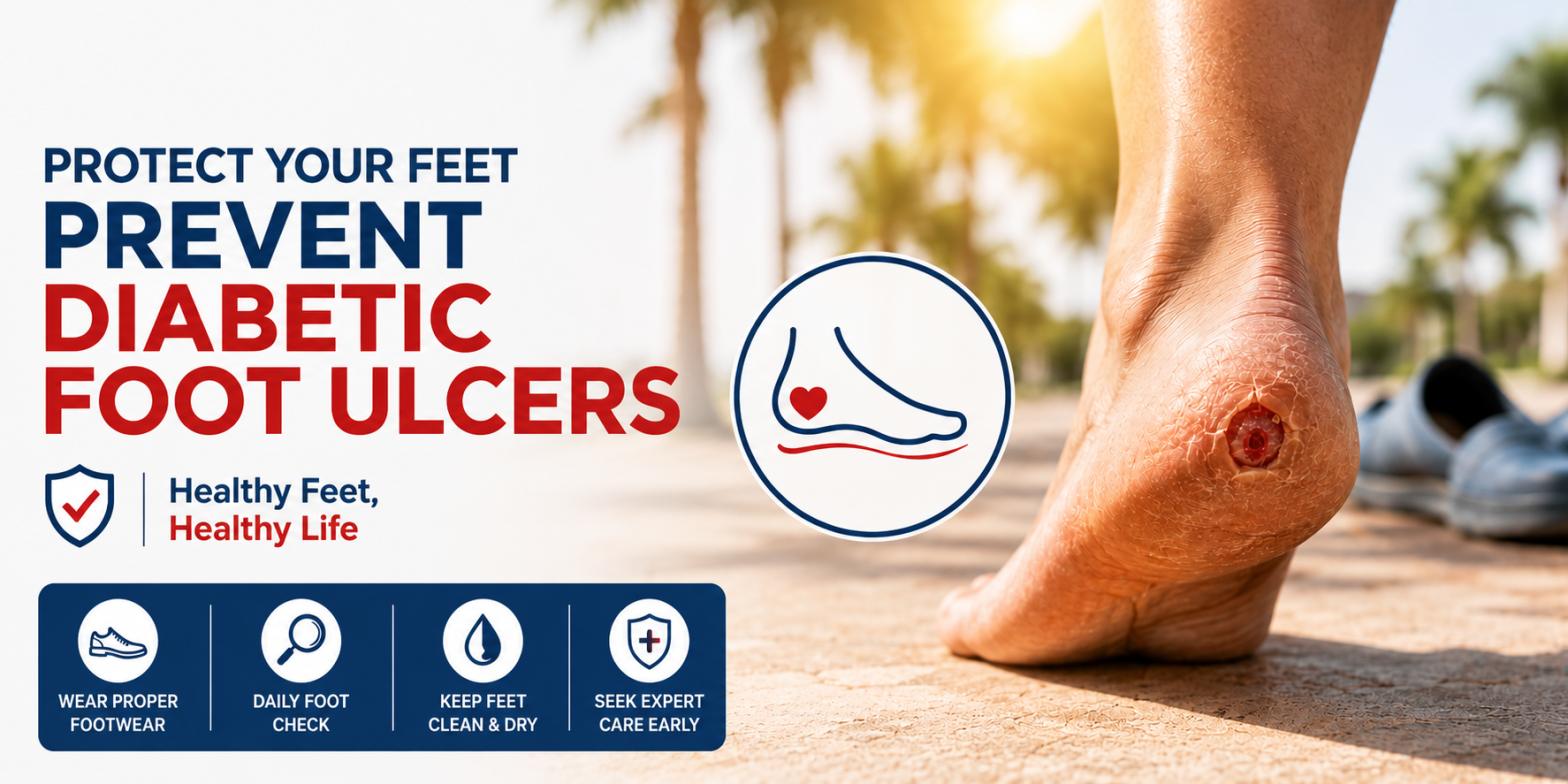
Preventing Diabetic Foot Ulcers in Extreme Summer
By Dr. Saibal Chakravorty Dr. Sameer Gupta in Internal Medicine Interventional Cardiology
Jun 8, 2026
Preventing Diabetic Foot Ulcers in Extreme Summer: Essential Vascular Care Tips for Diabetics
As the peak summer heatwave intensifies across Delhi-NCR, public health advisories focus heavily on hydration and heat exhaustion. However, for the millions of individuals living with diabetes, the scorching months of May and June bring a hidden, limbs-threatening medical risk: Diabetic Foot Ulcers.
During extreme summer weather, a combination of increased sweating, peripheral vascular strain, and a higher likelihood of walking barefoot indoors or at social gatherings leads to a sharp spike in emergency diabetic foot infections. Because diabetes progressively damages both the nerves and blood vessels in the lower extremities, what begins as a minor summer blister or a small sweat-induced fungal scratch can rapidly degenerate into a deep, non-healing ulcer, potentially leading to gangrene and amputation if left untreated.
At Metro Hospital and Heart Institute, Noida (Sector 11 & 12), our advanced Vascular Surgery, Endovascular Interventions, and Diabetology departments work in tandem to treat complex diabetic lower-limb complications. Understanding how extreme heat impacts diabetic feet, recognizing the early structural warning signs, and adopting advanced vascular care habits can safeguard your mobility throughout the summer season.
The Dual Threat: How Summer Heat Damages Diabetic Feet
To understand why summer is exceptionally dangerous for diabetic individuals, it is necessary to examine how diabetes fundamentally alters the lower limbs through two distinct clinical conditions: Peripheral Neuropathy and Peripheral Arterial Disease (PAD).
When these pre-existing conditions collide with extreme summer temperatures, a perfect storm is created:
1. The Neuropathy Trap and Thermal Burns
Diabetic neuropathy damages the nerves in the feet, leading to diminished or complete loss of sensation to pain, heat, and cold. During summer, surfaces like concrete floors, tiled balconies, sand, or even carpeted areas near windows can reach blistering temperatures. A diabetic individual can walk barefoot across a hot surface, sustain severe thermal burns and blisters, and remain completely unaware of the injury until the wound becomes infected or starts draining fluid.
2. Autonomic Changes and Skin Fissures
Diabetes also damages the autonomic nerves that control sweating in the feet. This can leave the skin on the soles and heels severely dry, cracked, and prone to deep fissures. Conversely, excessive sweating between the toes due to humid summer heat creates a damp environment where fungal infections (like Athlete’s Foot) thrive. Fungal infections can weaken the skin, allowing bacteria to enter more easily and cause additional infections.
3. Vasodilation and Swelling (The Vascular Strain)
In hot weather, blood vessels naturally dilate (widen) to help the body cool down. For diabetics with poor circulation or underlying vein issues, this vasodilation causes fluid to pool in the lower legs and ankles, leading to peripheral edema (swelling). This swelling makes standard footwear fit tightly, generating friction against the skin and causing localized pressure ulcers or blisters within hours.
Advanced Interventional Vascular Solutions at Metro Hospital Noida
Historically, a deep, infected diabetic foot ulcer often resulted in foot or leg amputation due to a lack of blood flow to heal the tissue. At Metro Hospital Noida, advanced minimally invasive endovascular procedures are used to restore blood circulation and help preserve affected limbs.
If a wound or ulcer is not healing because of poor circulation, our Endovascular and Vascular Surgery experts can perform targeted procedures to improve blood flow and promote recovery.
- High-Definition Color Doppler & Angiography: We map the blood vessels of the leg with millimeter precision to locate the exact areas of blockage or narrowing.
- Peripheral Angioplasty and Stenting: Using a microscopic catheter inserted through a tiny puncture in the groin, our specialists navigate down to the blocked artery in the leg. A specialized balloon is inflated to open the vessel, and a flexible mesh tube (stent) may be placed to keep the artery wide open. This instantly restores the rich, oxygenated blood flow required for the foot ulcer to heal.
- Advanced Wound Care and Debridement: Alongside revascularization, our specialized wound care team utilizes advanced hydrocolloid dressings, negative pressure wound therapy (NPVWT/Vacuum therapy), and meticulous hyperbaric support to accelerate tissue regeneration.
Essential Summer Foot Care Checklist for Diabetics
Effective prevention of diabetic foot ulcers depends on regular foot care, early detection of problems, and consistent self-monitoring.
- Never Walk Barefoot: Whether you are inside your home, on a tiled balcony, at a religious place, or near a swimming pool, always wear protective footwear. Choose seamless, breathable diabetic socks and orthotic-molded footwear designed to reduce friction and enhance foot comfort.
- The Daily Foot Inspection: Because you may not feel a minor injury, inspect the tops, bottoms, and sides of your feet every single night under good lighting. Use a handheld mirror or ask a family member to check for red spots, blisters, cuts, swelling, or ingrown toenails.
- Wash Daily, Dry Thoroughly: Wash your feet daily with lukewarm water and mild soap. Most importantly, gently dry the areas between your toes with a soft towel, as moisture trapped in these spaces can encourage fungal growth.
- Moisturize Strategically: Apply a thin layer of moisturizing cream or specialized diabetic foot lotion to the tops and bottoms of your feet to prevent cracking. Never apply lotion between your toes, as trapped moisture encourages fungal infections.
- Inspect the Inside of Your Shoes: Before slipping your feet into your shoes, shake them out and run your hand inside to check for small pebbles, torn linings, or sharp objects that could cause friction against your skin.
Frequently Asked Questions (FAQs)
Q1. Who is the best vascular surgeon or diabetic foot specialist in Noida Sector 11 or 12?
Ans. Metro Hospital and Heart Institute (Sector 11/12, Noida) features a highly integrated team of Senior Diabetologists, Vascular Surgeons, and Interventional Endovascular Specialists. The hospital is widely recognized across Delhi-NCR for its comprehensive diabetic limb-salvage programs and advanced wound care infrastructure.
Q2. How can I tell if a small summer blister on my foot is turning into a dangerous ulcer?
Ans. If you notice oozing fluid, pus, a foul odor, localized redness that spreads outward, localized warmth, or if the center of the blister darkens or turns black, these are critical warning signs of a deep tissue infection. You should bypass home remedies and see a vascular specialist immediately.
Q3. Is diabetic foot ulcer surgery or angioplasty covered under government medical panels like CGHS or ESIC at Metro Noida?
- Ans. Yes, absolutely. At Metro Hospital Noida, eligible beneficiaries under CGHS, DGHS, ECHS, and ESIC schemes can access comprehensive cashless treatment services, including vascular interventions, angioplasty, and advanced diabetic wound care hospitalization.
Location & Accessibility
Metro Hospital and Heart Institute is centrally located at X-1, Sector 12, Noida, U.P., providing seamless connectivity and rapid transit accessibility for patients and families traveling across Noida, Greater Noida, Ghaziabad (including Indirapuram), and East Delhi (including Mayur Vihar and Laxmi Nagar).