Silent Signals: Early Lung Cancer Signs You Shouldn’t Ignore
By Dr. Kanishka Kumar in Pulmonology, Respiratory & Sleep Medicine
Aug 3, 2026
Silent Signals: Early Lung Cancer Signs You Shouldn’t Ignore
Globally, lung cancer stands as one of the most significant and urgent public health challenges. However, many people associate it only with a severe, chronic cough or advanced symptoms. The truth is that early-stage lung cancer often develops quietly, presenting subtle warning signs that are easy to brush off as a common cold, seasonal allergies, or simply getting older.
Recognizing these early signals can dramatically change treatment outcomes. When caught early, healthcare providers have a much broader range of effective treatment options available. Here is an essential guide to the early warning signs of lung cancer—starting with key symptoms you should never ignore
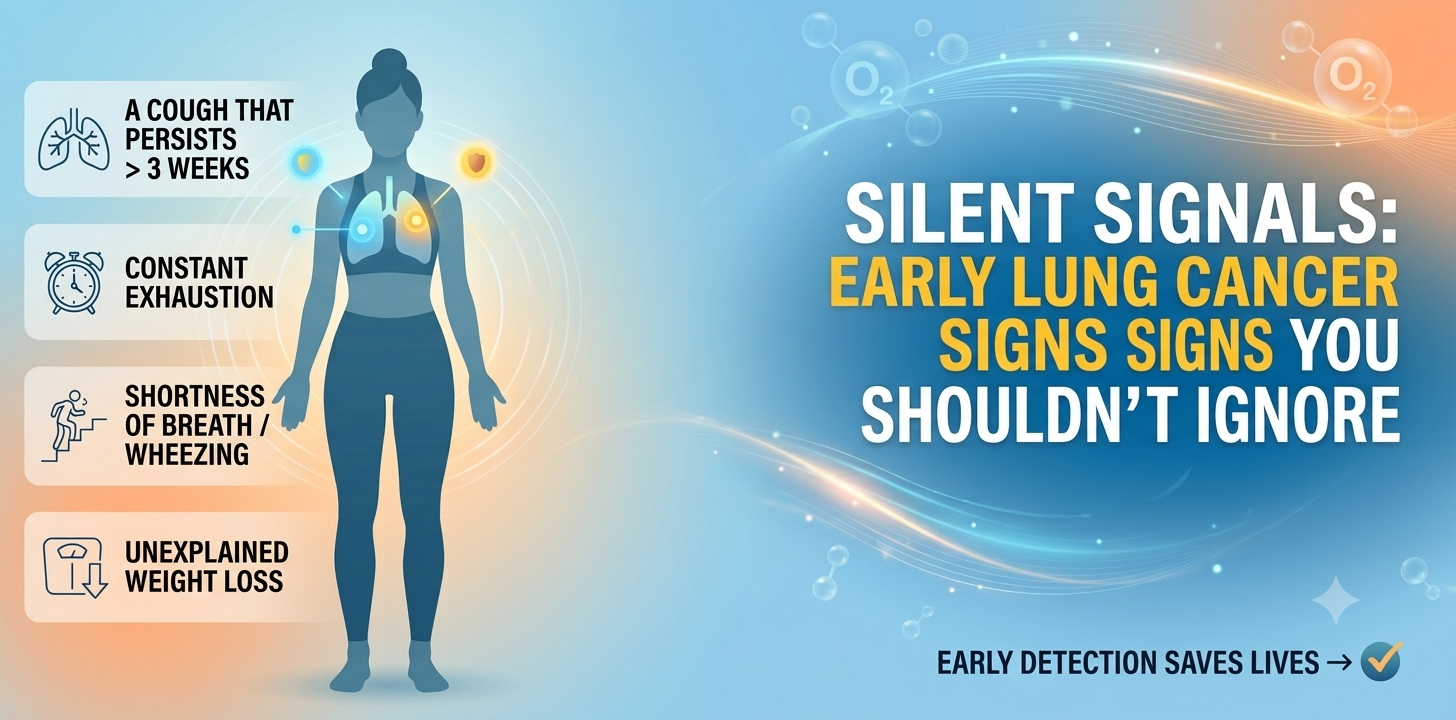
1. A Cough That Persists Beyond 3 Weeks
While a standard cold or viral infection usually resolves within 7 to 14 days, a cough that lingers beyond this timeframe demands medical attention. However, if you develop a cough that lingers for three weeks or longer, it requires medical evaluation.
- What to watch for: Pay close attention to any changes in a chronic cough (often referred to as a “smoker’s cough”). If it becomes more frequent, deeper, harsher, or produces unusual mucus, it is time to consult a respiratory specialist.
2. Shortness of Breath or Wheezing
Feeling winded after climbing a flight of stairs or carrying heavy groceries might seem like a sign of poor fitness, but sudden or unexplained shortness of breath (dyspnea) is a common early indicator of lung issues.
- Why it happens: As a tumor develops, it can block or narrow an airway, restricting the flow of air into and out of the lungs.
- Wheezing: If you hear a whistling or wheezing sound when you breathe, it may indicate that your airways are constricted or obstructed. While wheezing can also stem from asthma or allergies, a proper clinical evaluation is essential to rule out structural blockages.
3. Unexplained Chest, Shoulder, or Back Pain
Chest pain is not always related to heart problems; it is also a frequent symptom of lung conditions.
- How it feels: Pain caused by lung cancer is often described as dull, aching, or sharp. It may worsen when you:
- Take a deep breath
- Cough or sneeze
- Laugh
- Referred Pain: Lung tumors located near the top of the lungs or near the chest wall can press on surrounding nerves, causing pain that radiates to your shoulders, back, or even down your arms.
4. Coughing Up Blood (Hemoptysis)
Coughing up even a small amount of blood—or noticing rust-colored sputum/phlegm—is a symptom that should never be ignored, regardless of how small the quantity appears.
- Immediate Action: Even a single instance of coughing up blood is a critical warning sign that warrants immediate medical evaluation. It often signals irritation or bleeding within the bronchial tubes.
5. Unexplained Weight Loss and Sudden Loss of Appetite
Losing weight without trying may sound ideal to some, but sudden, significant weight loss (losing 5% or more of your body weight within 6 to 12 months) is a red flag for many systemic health conditions, including cancer.
- The Medical Connection: Cancer cells consume a large amount of the body’s energy. Additionally, tumors can alter the way your body metabolizes nutrients, leading to unexpected weight loss, fatigue, and a reduced appetite.
6. Persistent Fatigue and Weakness
Feeling tired after a long work week is normal; feeling constantly exhausted despite getting adequate sleep is not.
- Cancer-Related Fatigue: This type of fatigue is distinct from ordinary tiredness. It feels heavy, overwhelming, and does not improve with rest. As your immune system works overtime and the body’s energy reserves are diverted to deal with tumor growth, chronic exhaustion can set in.
7. Frequent Respiratory Infections
If you find yourself struggling with recurrent bronchitis, lingering pneumonia, or chest infections that keep returning, it could indicate an underlying airway issue.
- Why it recurs: A tumor near an airway can prevent normal fluid drainage from the lungs, creating an environment where bacteria thrive and cause recurrent infections in the same area.
8. Hoarseness or Voice Changes
If your voice begins to sound raspy, deep, or hoarse for more than two weeks without an obvious cause like a viral sore throat, it is worth having your vocal cords and chest evaluated.
- The Nerve Link: The recurrent laryngeal nerve passes close to the lungs and heart before traveling back up to the vocal cords. A tumor in the chest can press on this nerve, affecting your vocal cords and altering your voice.
Understanding the Risk Factors
While smoking is the leading risk factor for lung cancer, it is important to remember that non-smokers can also develop lung cancer. Key risk factors include:
- Tobacco Use: Active cigarette, cigar, or pipe smoking.
- Second-Hand Smoke: Inhaling environmental tobacco smoke from cigarettes, cigars, or pipes smoked by others.
- Environmental Exposures: High levels of air pollution, industrial fumes, dust, or occupational toxins like asbestos.
- Family History: A genetic predisposition or a history of lung diseases within your immediate family.
When to See a Doctor
If you or a loved one notice any of these symptoms—especially a cough lasting more than 3 weeks, unexplained chest discomfort, or sudden breathlessness—schedule an appointment with a pulmonologist or respiratory physician promptly. Early diagnostic testing, such as chest imaging (X-rays, low-dose CT scans) and specialized lung function evaluations, can identify issues before they progress.
Key Takeaway: Listening to your body and seeking early medical evaluation is the single most important step you can take. Early detection saves lives.
Frequently Asked Questions (FAQs) About Early Lung Cancer Signs
Q1. What is usually the first sign of lung cancer?
The most common early sign is a persistent cough that lasts more than 3 weeks or a chronic cough that changes in tone, intensity, or mucus production. Other initial symptoms include mild breathlessness, localized chest discomfort, or recurrent chest infections like bronchitis.
Q2. Can you have lung cancer without a cough?
Yes. While a persistent cough is common, early-stage lung cancer can present with non-cough symptoms such as unexplained weight loss, constant fatigue, shoulder or back pain, hoarseness in voice, or shortness of breath during routine activities.
Q3. How long can you have lung cancer without knowing?
Lung cancer can grow silently in the body for months or even years without causing noticeable symptoms. This is why paying attention to subtle warning signs—like lingering fatigue, mild breathlessness, or chest discomfort—is critical for early diagnosis.
Q4. Can non-smokers get lung cancer?
Yes, non-smokers can and do develop lung cancer. Key risk factors for non-smokers include second-hand smoke exposure, high levels of air pollution, indoor radon gas, industrial chemical fumes, and genetic factors or family history.
Q5. When should I see a doctor for a cough?
You should consult a pulmonologist or respiratory specialist if your cough:
- Lasts longer than 3 weeks
- Produces blood or rust-colored sputum
- Is accompanied by chest pain or shortness of breath
- Does not improve with standard medications
Q6. What tests are used for early detection of lung cancer?
Healthcare providers typically use advanced diagnostic tools including:
- Low-Dose CT (LDCT) Scan: The gold standard for early lung screening.
- Chest X-Rays: Initial imaging for pulmonary changes.
- Bronchoscopy & EBUS (Endobronchial Ultrasound): High-precision internal airway evaluation.
- Sputum Cytology: Microscopic examination of mucus samples.