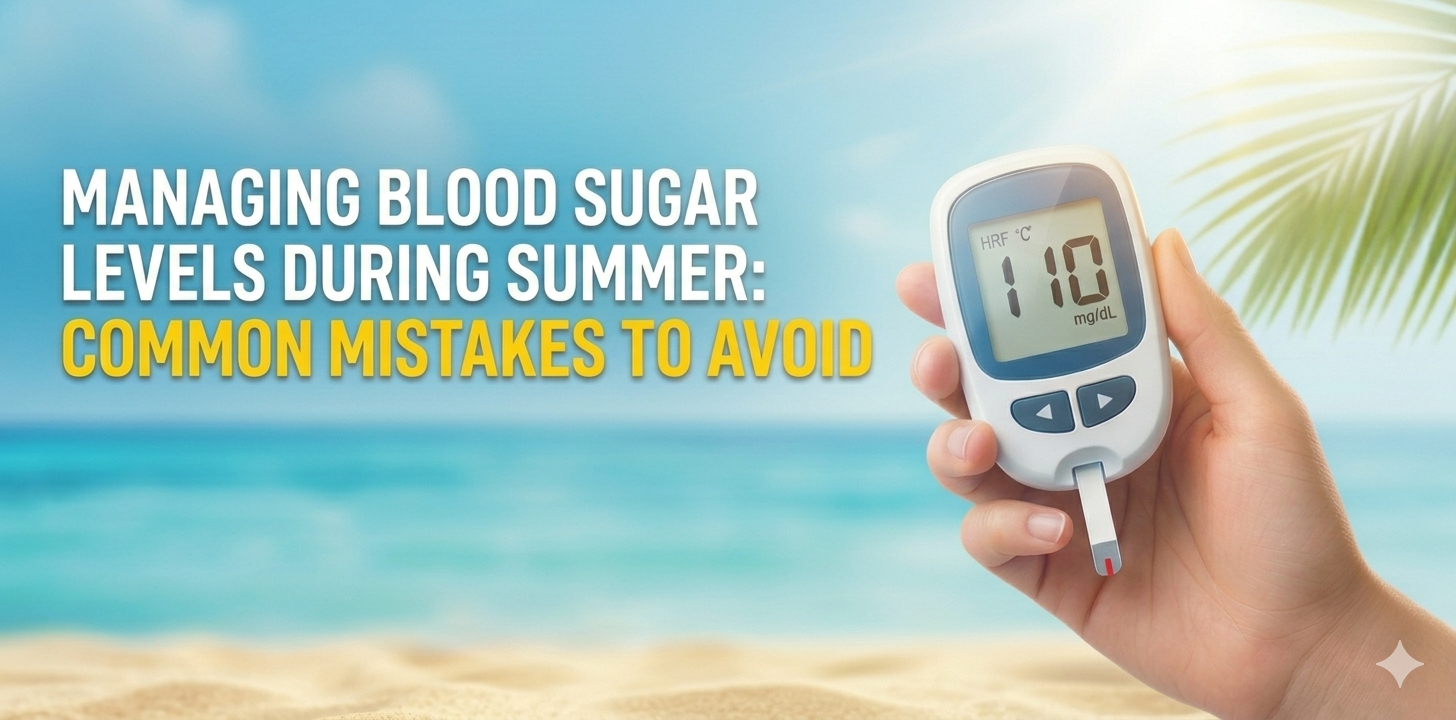
Managing Blood Sugar Levels During Summer: Common Mistakes to Avoid
By Dr. Akshay Chugh in Internal Medicine
May 8, 2026
Managing Blood Sugar Levels During Summer: Common Mistakes to Avoid
For individuals living with diabetes, the summer season presents a unique set of physiological challenges. While most people focus on heatstroke or dehydration, those managing blood sugar levels must navigate a complex relationship between rising temperatures, metabolic shifts, and lifestyle changes. In urban environments where high heat is often coupled with pollution, the body’s ability to regulate glucose becomes even more strained.
Managing diabetes in the summer is not just about avoiding sweets; it is about understanding how extreme weather affects insulin sensitivity and fluid balance. Here is a comprehensive guide on the common mistakes to avoid and how to maintain optimal glycemic control during the hottest months.
1. Underestimating “Heat-Induced” Blood Sugar Fluctuations
One of the most common mistakes is assuming that blood sugar remains stable regardless of the temperature. High heat can cause blood sugar levels to fluctuate unpredictably.
- The Stress Response: When the body is exposed to extreme heat, it triggers a stress response, releasing hormones like cortisol and adrenaline. These hormones can cause the liver to release more glucose into the bloodstream, leading to hyperglycemia (high blood sugar).
- The Vasodilation Effect: Conversely, heat causes blood vessels to dilate (expand). This can increase the speed of insulin absorption, potentially leading to sudden hypoglycemia (low blood sugar), especially if you have just administered a dose before heading outdoors.
Tip: Increase the frequency of your glucose monitoring. What worked for you in the spring may not apply when the temperature crosses 40°C.
2. Mistaking Dehydration for High Blood Sugar
Dehydration is the silent enemy of diabetes management. When you lose fluids through sweat, the glucose in your blood becomes more concentrated. This “concentrated” blood sugar can lead to a vicious cycle: high blood sugar causes increased urination, which further dehydrates the body.
Many patients mistake the early signs of dehydration—thirst, fatigue, and dizziness—as simple heat exhaustion, when in fact, their blood sugar is spiking.
The Importance of Cellular Defense
As discussed in specialized clinical research, such as studies on the “Role of Glutathione in Sepsis,” the body’s cellular defense mechanisms are heavily dependent on maintaining a proper redox balance and hydration. While the study focuses on critical care, the underlying principle remains: a dehydrated cell is a stressed cell, and a stressed cell cannot manage glucose effectively.
3. Improper Storage of Insulin and Testing Supplies
Insulin is a protein, and like all proteins, it breaks down when exposed to heat. A very common mistake is leaving insulin pens, pumps, or test strips in a hot car, a sunny windowsill, or a gym bag.
- Insulin Degradation: Once insulin is exposed to extreme heat, it loses its potency. You might be administering the correct dose, but if the insulin has “spoiled,” your blood sugar will remain high.
- Damaged Test Strips: Extreme heat and humidity can damage the chemicals in glucose test strips, leading to inaccurate readings. An inaccurate low reading could lead you to consume sugar you don’t need, while an inaccurate high reading could lead to over-medicating.
The Fix: Always use a cooling pouch or an insulated bag when traveling, and never store your supplies in direct sunlight.
4. Over-Reliance on “Summer Drinks”
When the heat hits, the temptation to reach for a “refreshing” drink is high. However, many summer beverages are hidden sugar traps:
- Fruit Juices & Smoothies: Even “natural” juices can cause a rapid spike in blood glucose because they lack the fiber found in whole fruits.
- Sports Drinks: Unless you are engaging in intense athletic activity, most sports drinks contain more sugar than your body can safely process during a heatwave.
- Alcohol: Summer cocktails can lead to delayed hypoglycemia, especially if consumed on an empty stomach, as the liver prioritizes processing alcohol over maintaining glucose levels.
Better Alternative: Stick to infused water (lemon, cucumber, or mint), unsweetened buttermilk, or cold herbal teas.
5. Ignoring “Summer Foot Syndrome”
For those with diabetic neuropathy, summer footwear—or the lack thereof—is a major risk.
- Walking Barefoot: Walking barefoot on hot sand or pavement can cause severe burns that a person with decreased sensation might not feel immediately.
- Tight Sandals: Heat causes feet to swell. Wearing tight sandals can lead to blisters, which, in a diabetic patient, can quickly turn into non-healing ulcers or infections.
The Fix: Always wear well-fitting, breathable shoes and perform a daily foot check to catch minor redness or blisters before they escalate.
6. Poorly Timed Outdoor Exercise
Exercise is vital for diabetes management, but timing is everything in the summer. Exercising during the peak sun hours (11:00 AM to 4:00 PM) puts immense strain on the cardiovascular system.
Since cardiovascular health and diabetes are deeply linked, overexertion in the heat can trigger cardiac stress. As noted in the expertise of our consultants at Metro Hospital, Management of Diabetes and Cardiovascular Disease requires a synchronized approach. High-intensity exercise in the heat can lead to a sudden drop in glucose while simultaneously overworking the heart.
The Fix: Shift your walks or workouts to the early morning or late evening when the AQI and temperature are at their lowest.
FAQs: Common Concerns
Q1. Can I use a glucose monitor at the beach?
Yes, but keep it in the shade. Direct sunlight can overheat the electronic components and the test strips, causing “Error” messages or false readings.
Q2. Does sweating affect how my insulin works?
Sweating itself doesn’t change insulin, but the heat that causes sweating increases blood flow to the skin, which can make injected insulin absorb faster than usual.
Q3. What is the best way to cool down quickly if I feel a sugar crash?
Carry “Rapid-Acting Glucose” (like glucose tablets or a small juice box). If you feel a crash coming on, move to a shaded or air-conditioned area immediately, as the heat will only make the symptoms of hypoglycemia feel more severe.
Q4. How much extra water should I drink?
While 2-3 liters is standard, during a heatwave in a city like Noida, you may need 3-4 liters depending on your activity level. Listen to your body—if your urine is dark, you are already dehydrated.
Conclusion: A Proactive Approach
Managing blood sugar in the summer requires a “Prevention First” mindset. By avoiding these common pitfalls—improper storage, dehydration, and poorly timed activity—you can enjoy the season without compromising your health.
If you find that your blood sugar levels remain erratic despite your best efforts, it may be time to consult a specialist. At Metro Hospital and Heart Institute, Sector 11, Noida, our team specializes in the Management of Diabetes and Cardiovascular Disease, providing advanced diagnostic and personalized care plans to help you stay balanced all year round.