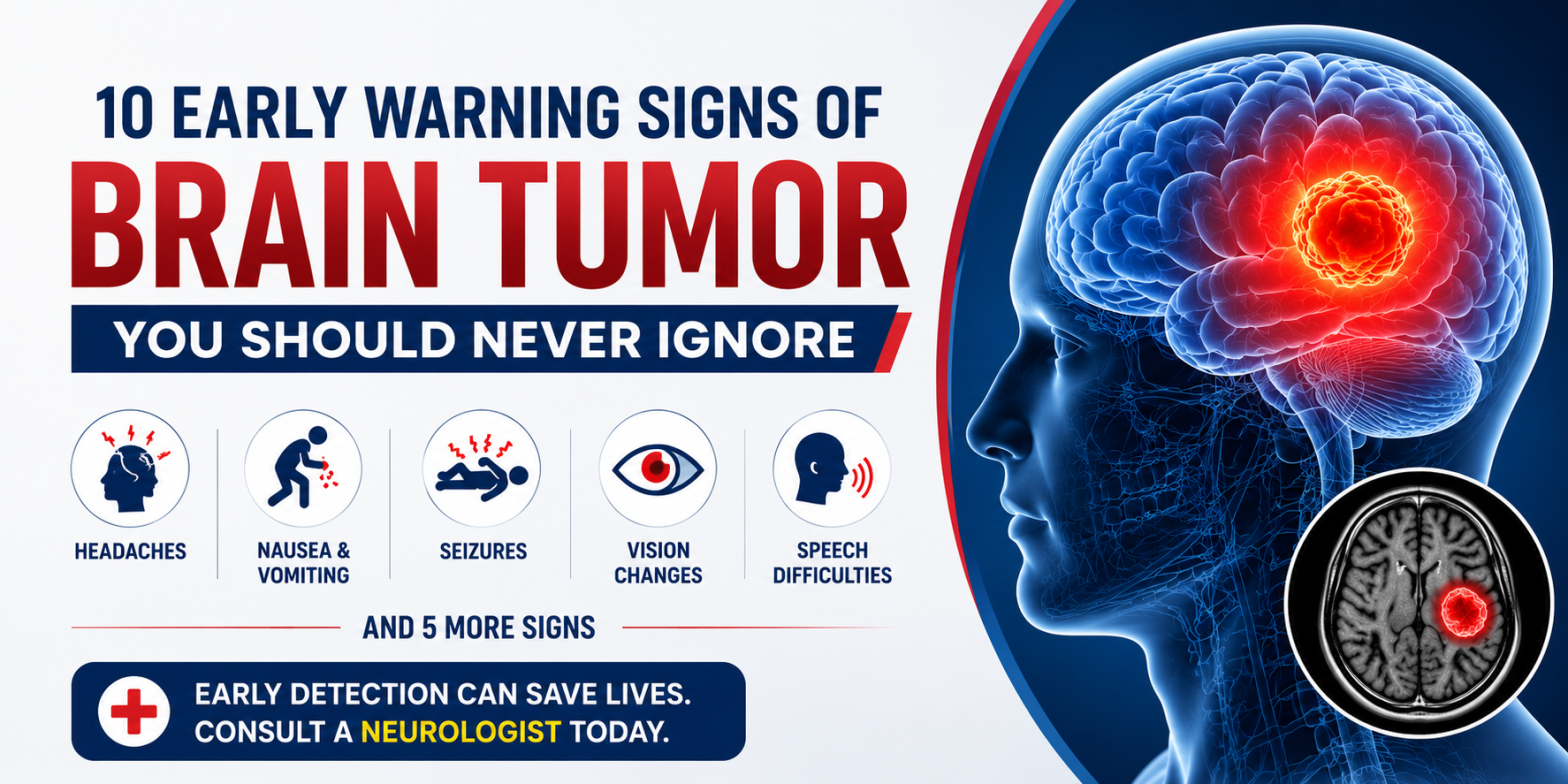
10 Early Warning Signs of Brain Tumor You Should Never Ignore
By Dr. Anutosh Singh in Neuro & Spine Surgery
Jul 22, 2026
10 Early Warning Signs of Brain Tumor You Should Never Ignore
The human brain is a complex command center controlling every thought, emotion, movement, and sensory experience. Because the brain is enclosed within the rigid structure of the skull, even a small, non-cancerous growth or tumor can exert pressure on surrounding brain tissue, leading to distinct physical and neurological symptoms.
Recognizing the early indicators of a brain tumor is crucial. Early detection allows neurosurgeons and neuro-oncologists to intervene before a tumor expands or causes irreversible damage to brain function. While many symptoms mimic everyday health issues like stress, migraines, or fatigue, understanding when a symptom becomes a red flag can be life-saving.
Here are 10 early warning signs of a brain tumor that warrant an immediate medical evaluation.
1. Persistent or Changing Headache Patterns
While everyday headaches are common, a headache caused by a brain tumor or intracranial mass often feels and behaves quite differently. As a tumor grows, it increases pressure within the skull (intracranial pressure).
- Morning Severity: Pain is typically worse upon waking up and may improve slightly as the day progresses.
- Exacerbation: The pain often intensifies during coughing, sneezing, bending over, or straining.
- Resistance to Medication: Unlike tension headaches or typical migraines, these headaches rarely respond to standard over-the-counter painkillers and gradually worsen over weeks.
2. Unexplained Nausea and Vomiting
Nausea and vomiting that occur without any dietary trigger or gastrointestinal infection can indicate elevated pressure within the brain.
- Projected Symptoms: Vomiting often occurs suddenly in the morning, accompanied by a dull headache.
- Persistent Nature: If nausea persists for days without common digestive causes, it requires a neurological assessment rather than gastrointestinal medication alone.
3. Seizures and Convulsions
Seizures are one of the most frequent first symptoms that lead to a brain tumor diagnosis. A growing tumor disrupts the normal electrical signals between brain cells, triggering abnormal electrical discharges.
- Types of Seizures: Symptoms can range from full-body convulsions (grand mal seizures) to sudden, subtle muscle twitching, sensory numbness, or brief staring spells (absence seizures).
- First-Time Occurrences: Experiencing a seizure for the first time in adulthood—without a prior history of epilepsy—is a strong clinical indication for an immediate brain MRI or CT scan.
4. Gradual Vision or Hearing Changes
Because specific regions of the brain process visual and auditory information, tumors located near the optic or auditory nerves produce noticeable sensory deficits.
- Vision Abnormalities: Blurry vision, double vision (diplopia), loss of peripheral vision (tunnel vision), or sudden floating spots.
- Single-Ear Hearing Loss & Tinnitus: Gradual hearing loss in one ear with constant ringing (tinnitus) often points to an acoustic neuroma, a tumor on the vestibular nerve.
5. Speech Difficulties and Language Confusion
A tumor located in the left hemisphere of the brain (specifically in Broca’s or Wernicke’s areas) directly affects speech production and comprehension.
- Expressive Aphasia: Struggling to find common words, slurring speech, or halting mid-sentence.
- Receptive Aphasia: Difficulty understanding what others are saying or reading simple written text, often leading to confusion during routine conversations.
6. Loss of Balance and Coordination Issues
The cerebellum, located at the back and base of the brain, manages motor control, balance, and fine motor skills.
- Unsteadiness: Stumbling while walking, feeling constantly off-balance, or bumping into doorways and furniture.
- Fine Motor Decline: Clumsiness in hands, such as difficulty buttoning a shirt, holding a cup steadily, or writing legibly.
7. Unexplained Cognitive and Memory Decline
When a tumor develops in the frontal or temporal lobes, it impacts high-level cognitive functioning, decision-making, and memory storage.
- Short-Term Memory Loss: Forgetting recent events, misplacing daily items frequently, or losing track of daily tasks.
- Cognitive Slowing: Taking significantly longer to process information, solve simple problems, or execute familiar routine tasks at work or home.
8. Personality and Behavioral Changes
Drastic shifts in personality can be deeply distressing for family members and are often misattributed to stress, depression, or aging.
- Emotional Instability: Uncharacteristic mood swings, sudden irritability, apathy, or loss of interest in previously enjoyed activities.
- Inappropriate Reactions: Showing unexpected aggression, loss of social inhibitions, or uncharacteristic risky behaviors caused by frontal lobe compression.
9. Progressive Numbness or Weakness on One Side of the Body
The motor cortex of the brain controls voluntary movement across opposite sides of the body. A tumor impacting these pathways weakens muscle control.
- Unilateral Weakness: Slowly developing weakness or numbness in the face, arm, or leg on one side of the body.
- Functional Loss: Difficulty lifting objects with one hand or dragging one foot while walking (foot drop).
10. Hormonal Imbalances and Unexplained Weight Changes
Tumors located on or near the pituitary gland (located at the base of the brain) alter hormone production, triggering systemic bodily changes.
- Physical Symptoms: Rapid, unexplained weight gain or loss, extreme fatigue, changes in menstrual cycles, or abnormal breast milk production (galactorrhea).
- Growth Shifts: In rare cases, abnormal growth in the hands, feet, or facial structures (acromegaly).
Diagnostic Timeline: When to Consult a Specialist
| Symptom Category | Red Flag Indicator | Recommended Medical Action |
| Headaches | Progressive, worse in the morning, with nausea | Consult a Neurologist for a clinical exam |
| Seizures | Any first-time seizure event | Emergency Department / Immediate Brain Imaging |
| Sensory Loss | Unilateral vision changes, speech slurring, or weakness | Comprehensive Neuro-imaging (MRI with Contrast) |
Frequently Asked Questions (FAQs)
Q1. Are all brain tumors cancerous (malignant)?
Ans: No. Brain tumors are categorized as either benign (non-cancerous) or malignant (cancerous). However, both types can cause severe symptoms due to pressure buildup inside the skull and require prompt medical management.
Q2. How is a brain tumor definitively diagnosed?
Ans: A definitive diagnosis involves a clinical neurological examination followed by advanced imaging techniques, primarily a Contrast-Enhanced MRI or CT Scan. A tissue biopsy or surgical excision confirms the exact tumor type and grade.
Q3. Can stress or migraines turn into a brain tumor?
Ans: No. Neither stress nor migraine headaches cause or transform into brain tumors. However, a brain tumor headache can initially mimic a migraine, which is why persistent, changing headache patterns require proper evaluation.
Advanced Neuro-Care at Metro Hospital
If you or a loved one experience persistent, unexplained neurological symptoms, early diagnosis is your most effective tool. The Department of Neurosciences & Neuro-Surgery at Metro Hospital offers advanced diagnostic imaging (3T MRI, CT Scans), minimally invasive neurosurgical techniques, and comprehensive rehabilitation care.