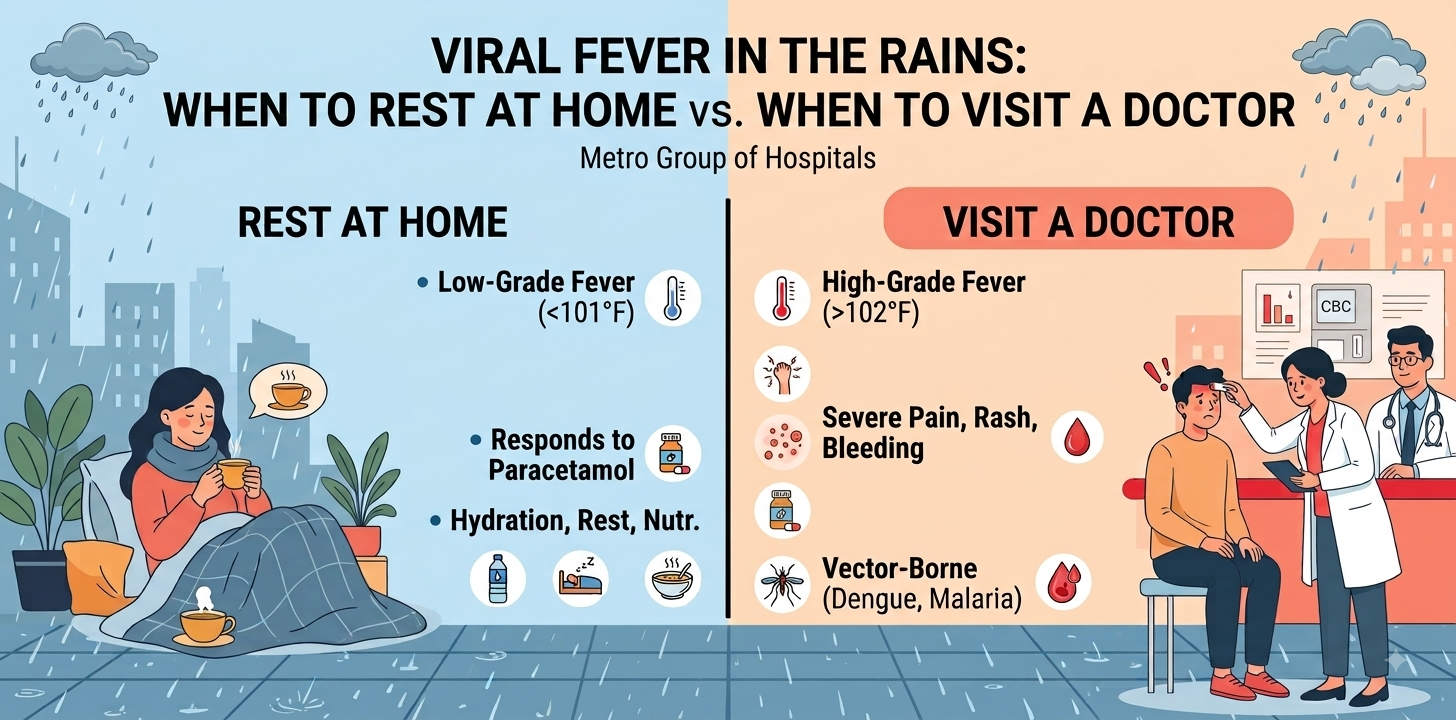
Viral Fever in the Rains: When to Rest at Home vs. When to Visit a Doctor
By Dr. Kush Ohri in Internal Medicine
Aug 12, 2026
Viral Fever in the Rains: When to Rest at Home vs. When to Visit a Doctor
By Metro Group of Hospitals | Department of Internal Medicine
The arrival of the monsoon brings welcome relief from the summer heat, but it also triggers a sharp rise in seasonal health complications. Across Delhi-NCR, Noida, and surrounding regions, outpatient clinics experience a heavy surge in patients presenting with sudden body aches, chills, fatigue, and temperature spikes.
During the rainy season, sudden temperature fluctuations, elevated humidity, and the proliferation of pathogens create ideal conditions for viral transmission. While most monsoon fevers are mild self-limiting viral infections, others—such as dengue, chikungunya, typhoid, or malaria—can escalate rapidly if left unmonitored.
Knowing whether your symptoms simply require bed rest or demand immediate medical evaluation is critical to ensuring a smooth, safe recovery.
Why Are Viral Fevers More Common During the Monsoon?
During the rainy season, your body’s immune system frequently contends with rapid environmental shifts:
- Temperature Spikes & Humidity: Moving between air-conditioned indoor spaces and humid outdoor environments weakens the natural protective barrier of the upper respiratory tract.
- Pathogen Survival: High humidity allows airborne viruses (such as Influenza and Rhinovirus) to persist longer in the air and on shared surfaces.
- Water & Food Contamination: Waterlogging leads to contaminated water lines, increasing the incidence of waterborne fevers like Typhoid and Hepatitis A/E.
- Vector Proliferation: Stagnant rainwater provides breeding grounds for mosquitoes, spiking cases of Dengue, Malaria, and Chikungunya.
Scenario A: When It Is Safe to Rest and Recover at Home
A routine seasonal viral fever typically follows a predictable 3-to-5-day trajectory. If your symptoms match the criteria below and you have no underlying chronic illnesses, conservative home management is usually sufficient.
Symptoms Suited for Home Care:
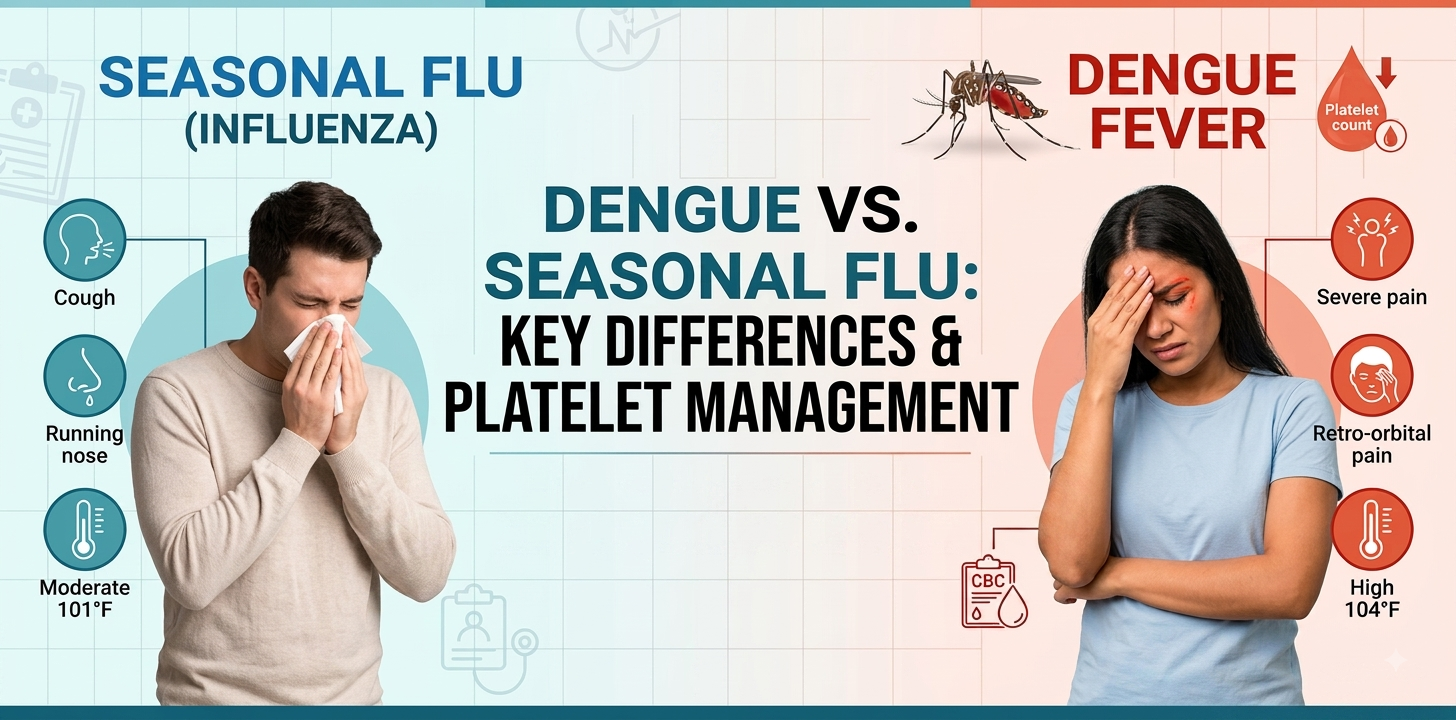
- Low to moderate-grade fever (under 101°F or 38.3°C) that responds well to paracetamol.
- Mild nasal congestion, sneezing, or a dry cough.
- Mild generalized muscle aches and mild headache.
- Slight loss of appetite without persistent vomiting.
- Maintaining good urine output (passing clear or light-yellow urine 4–5 times a day).
Doctor-Approved Home Care Protocol:
- Hydration First: Drink at least 2.5 to 3 liters of fluids daily. Electrolyte solutions (ORS), warm herbal teas, clear vegetable soups, and fresh coconut water help replenish fluids lost through sweating and fever.
- Adequate Rest: Physical exertion forces the immune system to divert energy needed to fight off the virus. Ensure you get 8 to 9 hours of restful sleep to support your immune system’s recovery.
- Fever Management: Use over-the-counter Paracetamol as directed by a physician to keep temperature and body aches manageable. Avoid taking antibiotics, as they are completely ineffective against viral strains and can harm gut flora.
- Light Nutrition: Eat warm, easily digestible, home-cooked meals like dal-khichdi, oats, or clear broths. Avoid fried, spicy, or street food.
Scenario B: Red Flag Symptoms – When You Must Visit a Doctor
While most viral fevers resolve on their own, certain “red flag” signs indicate that the illness is either a severe viral infection or a vector-borne/bacterial condition requiring immediate clinical intervention.
Schedule a Doctor’s Appointment or Visit an OPD If:
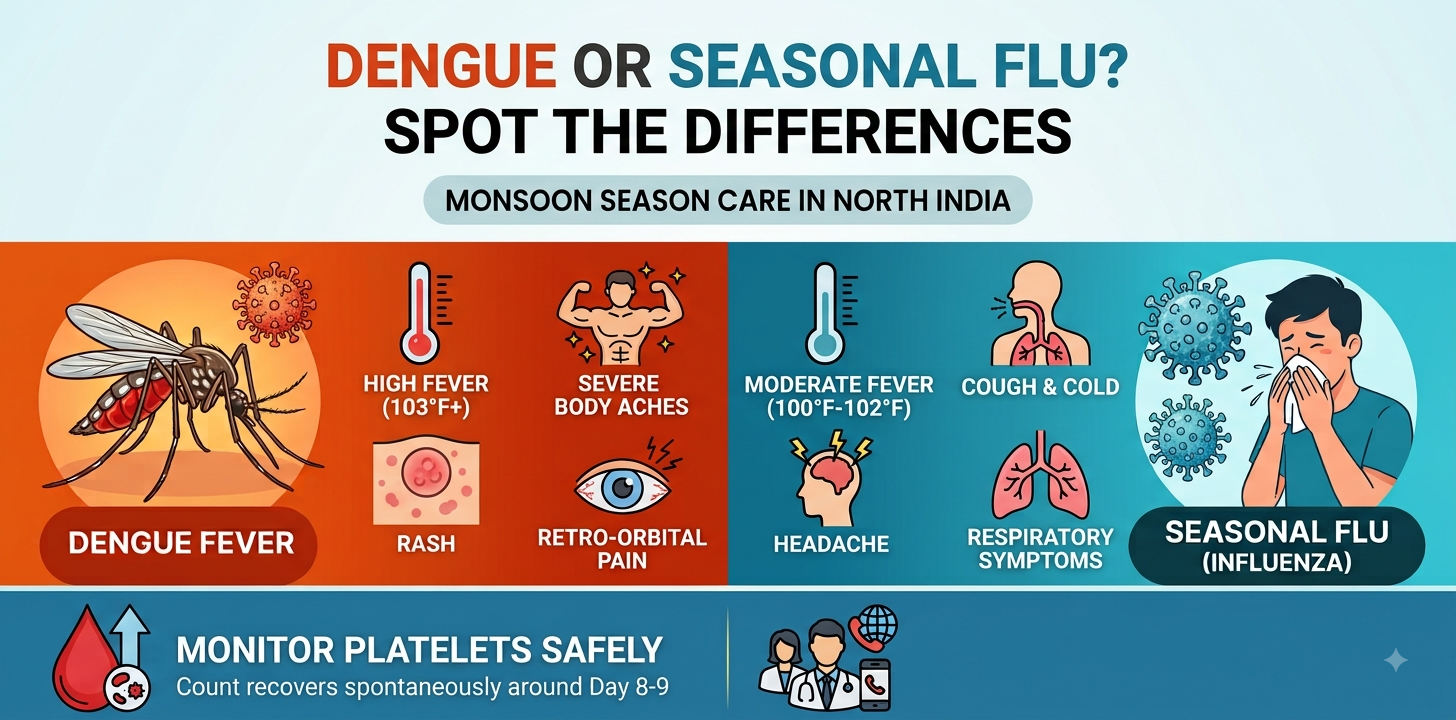
- Fever Persists Beyond 3 Days: High-grade fever (above 102°F) that does not come down despite taking paracetamol.
- Severe Body or Joint Pain: Excruciating joint pain (indicative of Chikungunya) or retro-orbital pain behind the eyes (a hallmark of Dengue).
- Persistent Vomiting or Inability to Retain Fluids: If you cannot keep fluids down for more than 12–24 hours, dehydration risk escalates rapidly.
- Skin Rashes or Petechiae: Appearance of tiny red/purple spots on the skin.
- Underlying Health Conditions: You have pre-existing diabetes, hypertension, heart disease, kidney disease, or are immunocompromised.
Scenario C: Emergency Red Flags – Seek Immediate ER Care
If you or a family member develop any of the following critical symptoms, go directly to the nearest hospital Emergency Department:
- Difficulty breathing, chest tightness, or rapid, shallow respiration.
- Extreme lethargy, confusion, slurred speech, or difficulty waking up.
- Uncontrolled bleeding (from the nose, gums, in vomit, or dark stools).
- Sudden drop in body temperature accompanied by cold, clammy skin.
- Severe, unremitting abdominal pain.
Essential Diagnostic Tests for Monsoon Fevers
If your fever lasts longer than 48–72 hours, a physician will typically advise baseline blood investigations to pinpoint the exact cause:
- Complete Blood Count (CBC): Evaluates white blood cell counts to detect infections, tracks hematocrit levels, and closely monitors platelet counts.
- Dengue NS1 Antigen / IgM Test: Detects dengue viral markers early in the fever cycle.
- Malarial Parasite (MP) / Rapid Diagnostic Test: Rules out malarial infection.
- Typhoid (Widal / Typhidot): Evaluates for bacterial salmonella infection if digestive symptoms are present.
Preventive Measures to Stay Safe This Monsoon
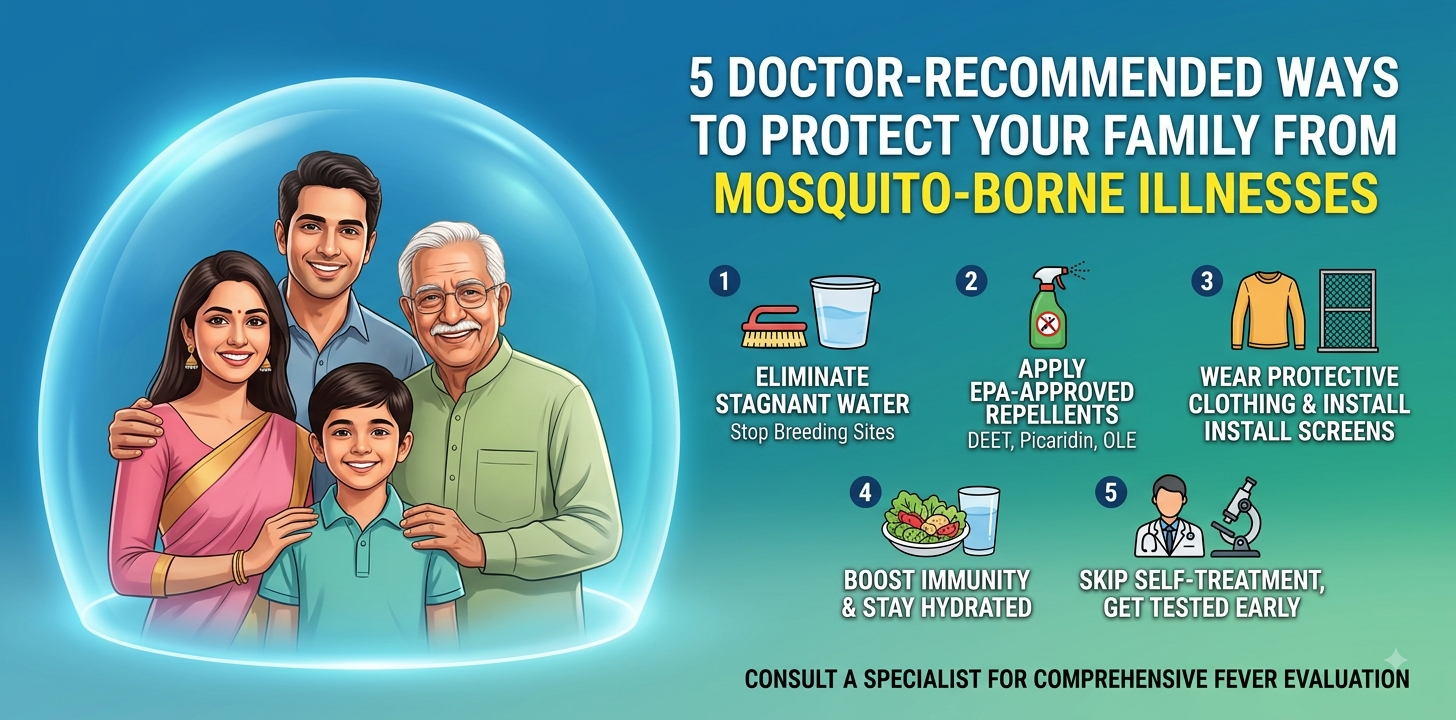
- Prevent Mosquito Bites: Apply insect repellent, use mosquito nets, and wear loose, full-sleeved clothing.
- Eliminate Stagnant Water: Check cooler trays, flower pots, and balcony drains twice a week to prevent mosquito breeding.
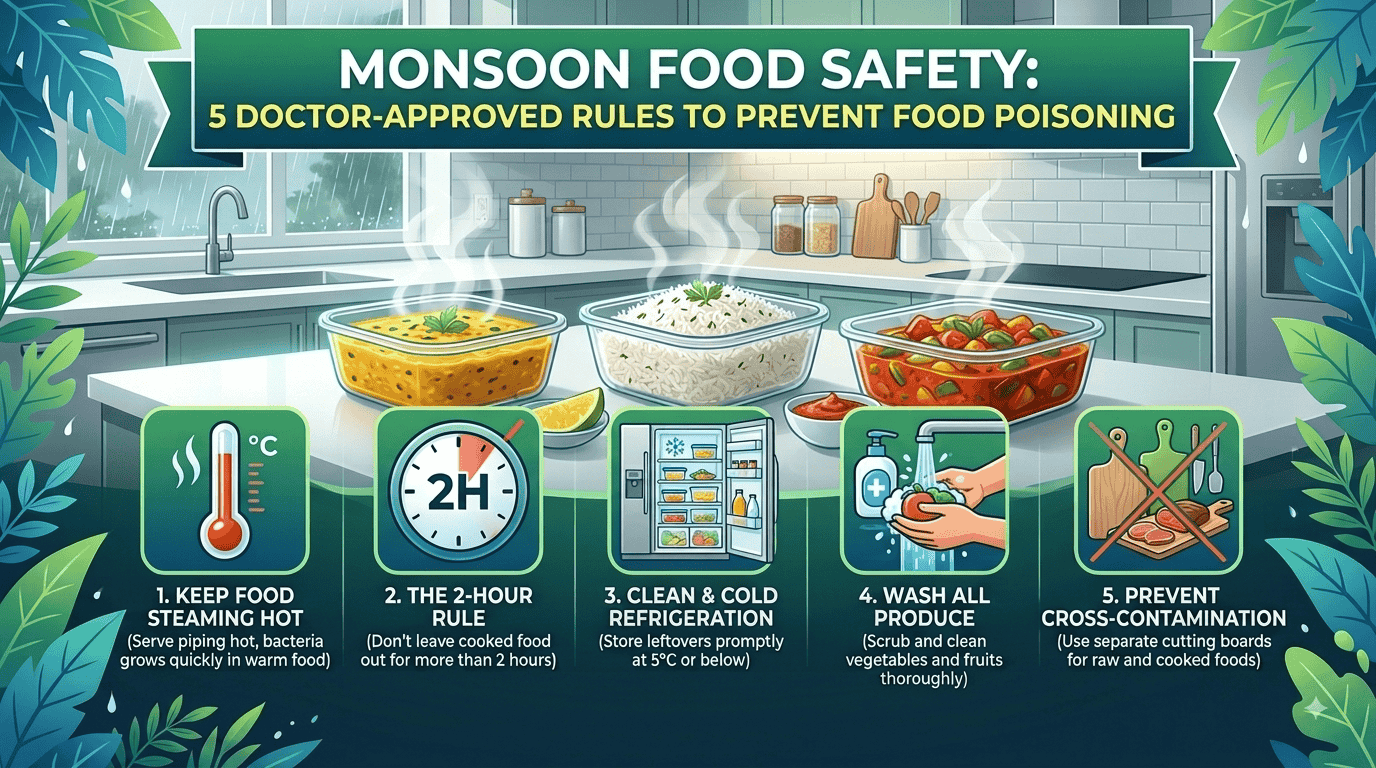
- Practice Food Hygiene: Avoid unpasteurized juices, cut street fruits, and untreated tap water during the rains.
- Maintain Hand Hygiene: Wash hands regularly with soap and water, especially before meals and after returning from public places.
A Message From Our Medical Experts
Distinguishing between a routine viral fever and a serious seasonal infection early can prevent severe health complications. While home rest, proper hydration, and nutritious food are the pillars of recovery for mild fevers, never hesitate to seek professional medical care if symptoms escalate or persist past three days.
If you or your family members are experiencing persistent fever or monsoon-related symptoms, visit the Internal Medicine Department at Metro Group of Hospitals for accurate diagnostics and expert care. Book an appointment today at www.metrohospitals.com.